Graceful Bolete Care (Austroboletus gracilis)

Graceful Bolete

About Graceful Bolete

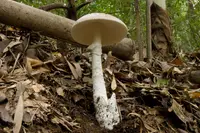
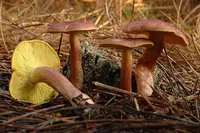
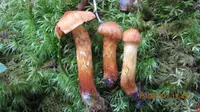
The graceful bolete, Austroboletus gracilis, is a fleshy wild mushroom rather than a leafy plant. It forms slender, pale stems topped with smooth, usually pinkish to tan caps. The spongy underside replaces gills and releases spores.

This species typically appears on the ground in forests, often near trees that form a root partnership called mycorrhiza, where fungus and tree exchange nutrients. It occurs in various temperate regions, but is not a common cultivated species.

Because it depends on complex soil fungi and tree roots, it is difficult to grow intentionally, and guidance on how to care for Graceful Bolete at home is limited. It generally favors undisturbed woodland conditions with consistent moisture and leaf litter.

Main Plant Requirements

Care Difficulty

Hard Care

Light Preference

Partial Shade

Water Requirements

Keep Soil Moist

Temperature Preference

Cool Climate

Hardiness Zone

Unknown

Soil Texture

Loamy, Silty, Organic-rich

Soil pH

Acidic (5.5–6.5)

Soil Drainage

Moist but well-drained

Fertilization

Minimal (feed rarely)

Get Personalized Care Plan

Scan your plant to receive care tips personalized for your specific plant

Available on iOS and Android

How to Care for the Graceful Bolete

This mycorrhizal fungus prefers forest light conditions rather than open-field sun exposure.

  • Provide dappled or filtered light under trees, with about 2–4 hours of gentle morning sun and shade or deep shade the rest of the day.
  • Avoid strong midday and afternoon sun, which can overheat the soil surface and dry the upper fungal habitat layer too quickly.
  • In summer, choose east-facing or shaded woodland edges; in cooler seasons, slightly more open shade helps Graceful Bolete fruit more reliably.

This species depends on naturally moist but not waterlogged forest soil.

  • Allow the top 2–5 cm of soil to dry slightly between rains or supplemental watering, keeping the deeper layer evenly moist where the fungal mycelium lives.
  • Use well-drained, humus-rich soil; avoid compacted or waterlogged ground, which increases risk of rot and loss of Austroboletus gracilis mycelium.
  • In hot, dry periods, look for shrinking or cracking soil and wilting nearby host roots, then add water slowly to re-moisten to 10–15 cm depth.

This woodland fungus thrives in mild to warm conditions and declines in temperature extremes.

  • Optimal growth and fruiting occur around 60–77°F (16–25°C), with a consistent cool to mildly warm forest floor microclimate.
  • It tolerates brief drops near 40°F (4–5°C) in soil, but repeated frost or hard freezes below 32°F (0°C) can damage or delay fruiting bodies.
  • Sustained heat above 86°F (30°C), especially with dry soil, suppresses fruiting, so shaded, mulched sites help buffer summer temperature swings.

Humidity is not a key factor for Austroboletus gracilis, which grows naturally in outdoor woodland conditions.

This mycorrhizal fungus relies on natural woodland soils rather than conventional potting mixes.

  • Target a loose, friable, well-drained forest soil with a mix of leaf litter, fine roots, and mineral soil.
  • Maintain slightly acidic conditions, roughly pH 5.0–6.5, often found under mixed hardwood or conifer stands.
  • Inoculate host tree root zones with small amounts of colonized woodland soil instead of adding compost, perlite, or sand.
  • Avoid compacted, waterlogged, or highly fertilized substrates, which disrupt the fine root–fungus association Austroboletus gracilis depends on.

This species is not suitable for typical container cultivation, as it depends on complex mycorrhizal relationships with living trees in natural soil.

This ectomycorrhizal fungus relies mainly on its tree host for nutrition, so Graceful Bolete usually needs no direct fertilization.

  • Avoid applying high-nitrogen synthetic fertilizers around host tree roots, as these can reduce mushroom formation.
  • If soil is very poor, use a light surface dressing of well-rotted compost once a year, kept several cm from the trunk.
  • Do not fertilize during winter; maintain a stable, low-input forest-like soil environment year-round.

Pruning is not applicable to Austroboletus gracilis, because it is a mycorrhizal fungus rather than a leafy plant.

Transplanting focuses on the associated tree and soil rather than the fungus itself, which forms fine root partnerships underground.

  • Consider moving only when the young host tree clearly outgrows its container or planting site and shows slow, stunted growth.
  • Plan transplanting for cool, moist conditions in early spring or early fall to reduce stress on the tree–fungus association.
  • Lift and move the root ball with as much original soil as possible, disturbing roots and surrounding mycelium as little as you can.
  • Water thoroughly after planting and keep soil evenly moist, not waterlogged, to support recovery of fine roots and fungal threads.

Propagation of Austroboletus gracilis is specialized and rarely attempted by home growers, as it depends on complex mycorrhizal relationships.

This forest fungus is naturally cold hardy in its native range and usually needs no special winter care.

  • Avoid disturbing the leaf litter layer in fall and winter, since it insulates the soil and fungal network.
  • If the host tree is in a very exposed site, a light mulch around the root zone helps moderate freeze–thaw cycles.
  • Container-grown host trees in colder regions can be moved to a sheltered, unheated area to limit root freezing.

Care Tips

Substrate rotation

Rotate your outdoor patch between different shaded spots every 2–3 years to reduce pathogen buildup in the soil and maintain reliable flushes when growing Graceful Bolete.

Leaf litter management

Maintain a thin, continuous layer of loose hardwood leaf litter over the mycelium zone to protect it from drying and temperature swings, but avoid piling it thicker than 3–5 cm so fruiting bodies can emerge easily.

Root-zone protection

Mark the approximate mycorrhizal root zone around host trees and avoid deep digging, heavy foot traffic, or lawn aeration there to prevent mechanical damage to the fungal network.

Targeted watering corridor

If supplemental watering is needed, apply water in a wide ring at the drip line of the host tree rather than directly on emerging mushrooms to hydrate the mycelium without causing fruit body rot.

Minimal disturbance harvesting

Use a clean, sharp knife to cut mushrooms at the base instead of pulling them out, and gently replace any displaced leaf litter to keep the mycelium covered and reduce entry points for pathogens.

Common Pests and Diseases

Mycophagous springtails

These insects feed on the fruiting bodies and mycelium, causing small pits, tunnels, and rapid degradation of caps and stems. Symptoms include surface pitting, irregular holes, and a frayed or collapsing pore surface.

Solution

Harvest mushrooms promptly when mature, keep collection and cultivation areas clean of decaying organic debris, and avoid overly wet substrates that favor large springtail populations. In controlled culture, improve drainage, reduce standing water, and, if needed, use sticky traps and fine mesh screens to limit adult movement into the growing area when focusing on Austroboletus gracilis care instructions.

Fungus gnat larvae

This pest lives in moist substrates and can chew on developing mycelium and young fruiting bodies, leading to distorted, stunted, or partially hollow stems. This pest also creates entry wounds that favor secondary mold infections.

Solution

Reduce excess moisture in the substrate, improve ventilation, and remove heavily damaged flushes quickly. In semi-controlled or indoor setups, use yellow sticky traps for adults, cover substrate surfaces with breathable fine mesh, and allow the top layer to dry slightly between waterings to break the larval cycle.

Parasitic Hypomyces mold

This disease is caused by parasitic fungi that overgrow boletes, forming white to yellowish crusts or felt-like coatings on caps and pores. Symptoms include distorted fruiting bodies, loss of normal color, and a powdery or crusty surface that may spread rapidly across clustered mushrooms.

Solution

Remove and discard all infected mushrooms and nearby debris as soon as symptoms are seen, taking care not to shake spores into surrounding areas. Avoid handling healthy fruiting bodies after touching infected ones, clean knives and baskets, and in cultivation spaces increase air movement and avoid overcrowded flushes to reduce humidity spikes that favor Hypomyces spread.

Bacterial blotch

This disease causes slimy, water-soaked, and discolored patches on caps and stems, especially under very wet conditions or after mechanical damage. Symptoms include tan to dark brown spots that feel greasy and may spread along handling wounds.

Solution

Limit direct water contact on fruiting bodies, avoid overhead misting, and improve airflow so surfaces dry quickly after humidity cycles. Harvest gently to reduce bruising, promptly remove affected mushrooms, and clean tools and collection containers between uses to lower bacterial carryover.

Interesting Facts

Slender pore pattern

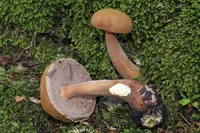
The underside of the cap has small, whitish pores that become slightly pinkish or brownish with age, a feature that helps separate this species from many other boletes with wider, yellow pores.

Rooted in acidic soils

This species characteristically fruits in acidic, sandy or poorly developed soils, especially under conifers, and is much less common in richer, calcareous forest soils.

Distinct spore print color

Its spore print is pale pinkish to pinkish-brown, a relatively subtle but important diagnostic character among bolete mushrooms that often show olive or brown spore colors.

FAQs about Graceful Bolete

This bolete is considered edible but poor quality, with thin flesh and limited flavor. It can be confused with inedible or toxic boletes, so foraging is recommended only for experienced mushroom identifiers with reliable regional guidance.

Grow Healthy Plants with Botan Care

Keep your plants happy and healthy with plant identification, disease detection, and easy care guidance.

Botan plant care app — identify plants on mobile

Explore More Plants