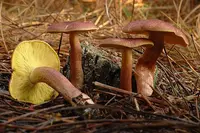
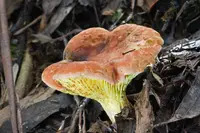
Deceiving Knight Care (Tricholoma sejunctum)

Deceiving Knight

About Deceiving Knight

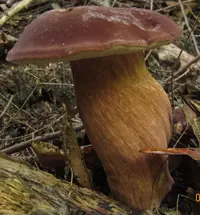
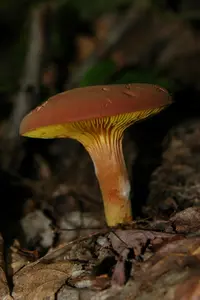
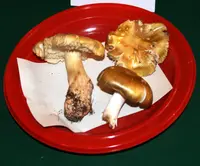
Deceiving knight, Tricholoma sejunctum, is not a plant but a wild mushroom species found mainly in temperate forests. It typically grows on the ground among leaf litter or moss, often near conifers or mixed woodland trees. Caps are usually yellowish to greenish with darker streaks, and the gills are pale, giving it a somewhat attractive but misleading look. Identification is difficult, as it resembles some edible and other toxic Tricholoma species. This makes collection risky for beginners and even for more experienced foragers. It is not suitable for home cultivation, so information on how to care for Deceiving Knight focuses mostly on safe identification and avoidance rather than active growing conditions.

Main Plant Requirements

Care Difficulty

Hard Care

Light Preference

Partial Shade

Water Requirements

Regular Water

Temperature Preference

Cool Climate

Hardiness Zone

Unknown

Soil Texture

Loamy, Sandy, Organic-rich

Soil pH

Acidic (5.5–6.5)

Soil Drainage

Moist but well-drained

Fertilization

Minimal (feed rarely)

Get Personalized Care Plan

Scan your plant to receive care tips personalized for your specific plant

Available on iOS and Android

How to Care for the Deceiving Knight

This ectomycorrhizal mushroom prefers cool, dappled forest light rather than direct, open sun.

  • Aim for conditions similar to mixed woodland: 2–4 hours of soft morning sun with the rest of the day in partial shade or bright, filtered light under trees.
  • Avoid strong midday or afternoon sun, which can dry leaf litter and upper soil too quickly, reducing fruiting of Deceiving Knight and stressing its fine mycelium network.
  • In summer, rely on canopy shade from deciduous or coniferous trees; in early spring or late fall, brief increased light is acceptable if soil stays cool and moist.

This forest-dwelling fungus relies on consistently moist, not waterlogged, soil around its host trees.

  • Maintain evenly moist top 3–5 cm of soil or leaf litter; allow the surface to lose its sheen but not become dusty dry before adding water if you are managing a cultivated patch.
  • Ensure soil drains freely; standing water or sour, swampy smell indicates overwatering, which can suffocate the mycelium of Tricholoma sejunctum and favor rot-causing microbes.
  • In hot, dry periods, increase moisture by gentle, infrequent soaking that penetrates 8–10 cm, while in cool, wet seasons, rely mostly on rainfall and intervene only if the surface begins to crack.

This species develops best in cool to mild conditions typical of temperate forests.

  • Optimal fruiting usually occurs around 50–64°F (10–18°C), with steady cool nights helping trigger mushroom formation and maintain cap quality.
  • The mycelium in soil can tolerate down to about 23–28°F (-5 to -2°C) for short periods, but hard, prolonged frost can reduce future fruiting and damage fine feeding strands.
  • Sustained heat above 77–82°F (25–28°C), especially with dry air, slows growth and fruiting, so shade, mulch, and stable moisture help buffer summer temperature swings.

This ectomycorrhizal mushroom prefers moderately moist air but relies far more on soil moisture than ambient humidity.

  • Aim for 50–70% humidity in the growing area, avoiding prolonged hot, dry winds that desiccate caps and mycelium.
  • It tolerates brief drier spells if the soil stays evenly moist, but extended low humidity with dry soil suppresses fruiting of Deceiving Knight.
  • Signs of humidity stress include cracking caps, dry gills, and slow or aborted mushroom formation; mist the surrounding leaf litter, not the caps, to raise local humidity.

This species requires specific forest-like soil conditions rather than conventional garden bed preparation.

  • Tricholoma sejunctum fruits in loose, well-aerated, organic-rich forest soil, typically a sandy or loamy layer over mineral subsoil beneath compatible host trees.
  • Soil should drain freely yet retain steady moisture; aim for a structure that feels springy with plenty of leaf litter and fine roots, not compacted or waterlogged.
  • A slightly acidic pH of about 4.5–6.0 is typical; incorporating decomposed conifer needles or oak leaf mold helps maintain acidity and fungal-friendly structure.
  • To encourage Tricholoma sejunctum plant care outdoors, enrich the top 5–10 cm with shredded leaves, fine bark, and wood-rich compost while avoiding synthetic fertilizers and heavy manures that disrupt the mycorrhizal balance.

This forest mushroom is not realistically suitable for long-term container growing because it depends on living tree roots in natural soil profiles.

This mycorrhizal fungus relies on its tree partners for nutrition and does not benefit from direct fertilization in garden conditions.

Tricholoma sejunctum is a wild, mycorrhizal mushroom and is not managed by pruning like an ornamental plant.

This species is not suited to pots and is rarely, if ever, transplanted successfully because it depends on a living host tree and complex soil fungi networks.

  • Transplant attempts usually fail, as the fungus forms fine mycelial threads tightly integrated with specific tree roots.
  • If habitat must be disturbed, leave the root zone as intact as possible and avoid removing associated soil.
  • For any experimental cultivation, plant suitable host trees in appropriate soil rather than moving established colonies.

Propagation of Tricholoma sejunctum in home or garden settings is very difficult and not reliably achieved with simple techniques.

This forest-dwelling fungus is naturally cold hardy in its native range and needs no special winter care when left in place with its host trees.

Care Tips

Spore Slurry Inoculation

Collect fresh, mature caps, blend them gently in non-chlorinated water, and pour the spore slurry around suitable host tree roots (such as conifers or oaks) to increase the chances of new colonies forming over several seasons.

Host Root Management

Maintain healthy, unstressed host trees by avoiding root disturbance, soil compaction, and heavy fertilization near their drip line, since this fungus depends on fine feeder roots for its mycorrhizal partnership.

Soil Compaction Control

Limit foot traffic and equipment use in fruiting areas, and if compaction is already present, use a garden fork to aerate the top 5–10 cm of soil carefully without tearing major roots.

Leaf Litter Strategy

Retain a thin, natural layer of leaf litter and small twigs over the soil to stabilize moisture and temperature, but avoid thick, matted mulch that stays waterlogged and may favor competing fungi and molds.

Long-Term Site Monitoring

Map and mark spots where fruiting occurs, then record weather patterns, host species, and timing each year, as this data helps adjust how to take care of Deceiving Knight by fine-tuning moisture management and disturbance levels at that site.

Common Pests and Diseases

Mycophagous springtails

These insects may feed on developing fruiting bodies and mycelium in very damp substrates, especially in indoor or controlled cultivation setups. Symptoms include small surface pits, deformed caps, and tiny white to gray jumping insects visible around the substrate.

Solution

Reduce excessive moisture by improving substrate drainage and ventilation, and allow the surface to dry slightly between misting while still maintaining overall humidity needed for fruiting. Remove heavily damaged fruiting bodies and, if populations remain high, use sticky traps and careful spot applications of an insecticidal soap solution on non-fruiting surfaces only, avoiding direct contact with mushrooms intended for consumption.

Fungus gnat larvae

These insects develop in moist, organic-rich substrates and can damage mycelium and young primordia by feeding on them. Symptoms include slow or uneven colonization, aborted pins, and small black adult gnats flying near the growing area.

Solution

Allow the upper layer of the substrate or casing to dry slightly between watering while keeping internal moisture adequate for mycelial health, and remove any decaying organic debris on the surface. Use yellow sticky traps to reduce adult numbers and apply a biological control such as Bacillus thuringiensis israelensis (BTI) in irrigation water if larvae persist.

Green Trichoderma mold

This disease appears as fast-spreading white mycelium that soon turns bright to dark green, often outcompeting the Tricholoma sejunctum mycelium. Symptoms include stalled fruiting, patchy growth, and a dusty green surface on parts of the substrate or casing layer.

Solution

Promptly remove and discard any clearly contaminated sections of substrate and fruiting bodies to prevent spore spread, and avoid disturbing moldy areas more than necessary. Improve hygiene by sterilizing or thoroughly pasteurizing substrates before use, disinfecting tools and containers, and increasing fresh air exchange to reduce stale, overly humid pockets where Trichoderma thrives, which is a key part of reliable Tricholoma sejunctum care instructions.

Bacterial blotch

This disease is caused by bacteria thriving on persistently wet mushroom caps and humid, stagnant air. Symptoms include greasy yellow to brown spots, slimy patches on caps, and a sour or unpleasant odor from affected fruiting bodies.

Solution

Reduce surface wetness on caps by using finer misting, shortening watering duration, and increasing air movement so caps dry quickly while overall humidity stays high. Discard severely affected mushrooms, clean growing chambers or containers with a mild disinfectant, and avoid overhead watering that leaves standing droplets on the caps.

Interesting Facts

Easily Confused Lookalike

This species closely resembles several other yellowish Tricholoma species, including some that are considered toxic, which makes reliable identification in the field challenging even for experienced mycologists.

Acidic Conifer Specialist

It typically fruits in late summer to autumn in association with conifers on acidic, often sandy or poor soils, indicating a preference for nutrient-poor habitats where ectomycorrhizal fungi are especially important for tree nutrition.

Variable Cap Coloration

The cap often shows a greenish-yellow ground color with darker fibrils or streaks and a paler, sometimes almost whitish margin, a combination that helps separate it from uniformly colored relatives when studied carefully.

Botan icon

Did you know?

This fungus forms ectomycorrhizal partnerships with conifer roots, creating a mutual exchange in which the fungus supplies water and mineral nutrients such as nitrogen and phosphorus while receiving plant-derived sugars, thereby contributing significantly to forest nutrient cycling and tree health.

FAQs about Deceiving Knight

This mushroom is generally considered inedible or at least highly questionable. Identification is difficult, and confusion with toxic Tricholoma species is common. It should not be collected for food and is best left in the habitat.

Grow Healthy Plants with Botan Care

Keep your plants happy and healthy with plant identification, disease detection, and easy care guidance.

Botan plant care app — identify plants on mobile

Explore More Plants