


Substrate mimicry
When cultivating this mycorrhizal fungus, mix sterilized leaf litter and a small amount of well-rotted hardwood chips into the substrate to better mimic the humus-rich forest floor it naturally colonizes.

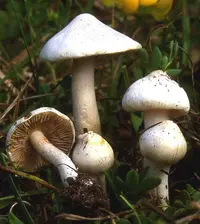
White fibrecap, Inocybe geophylla, is a small, ground-dwelling mushroom rather than a leafy plant. It forms pale cream to white caps with a fibrous, often cracked surface and a slender stem.
This fungus typically appears in woodland, heathland, and grassy habitats, often near broadleaf or coniferous trees, where it lives in symbiosis with roots. It is not suitable for home cultivation, and attempts to care for White Fibrecap are discouraged because it is poisonous and relies on complex soil and root relationships.
In nature it favors undisturbed, moist but well-drained soils with organic matter and moderate shade, emerging seasonally after rain in cool to mild conditions.

Care Difficulty
Hard Care

Light Preference
Partial Shade

Water Requirements
Moderate Water

Temperature Preference
Cool Climate

Hardiness Zone
Unknown

Soil Texture
Loamy, Sandy, Organic-rich

Soil pH
Acidic (5.5–6.5), Slightly acidic (6.5–7.0)

Soil Drainage
Well-drained

Fertilization
Minimal (feed rarely)
Scan your plant to receive care tips personalized for your specific plant
Available on iOS and Android
This woodland fungus prefers low to moderate light, similar to a shaded forest floor.
This mycorrhizal fungus depends on evenly moist, well-drained soil rather than direct watering of the fruiting bodies.
This species is adapted to temperate climates with cool to mild conditions.
Humidity is not a primary factor for this ground-dwelling fungus compared with moisture in the soil.
This mycorrhizal fungus requires specific outdoor soil conditions rather than a standard potting substrate.
This woodland fungus is not suitable for conventional container growing because it depends on living host tree roots and complex soil life.
Inocybe geophylla is a wild, mycorrhizal fungus that normally does not benefit from added fertilizer in garden or container settings.
Inocybe geophylla does not require pruning because it is a wild mushroom rather than an ornamental plant.
This species is a mycorrhizal woodland fungus, so it is not suited to typical repotting or transplanting like a houseplant or potted shrub.
Propagation of Inocybe geophylla is not a standard home-gardening task because it depends on complex mycorrhizal relationships with tree roots.
This woodland fungus is naturally cold hardy in its native range and needs no specific winter care from gardeners.

Plant Health Check
Not sure what's wrong with your plant? Check your plant's health inside the app.
This species is one of the most muscarine-rich small agaric mushrooms, and even a single cap can cause serious poisoning with sweating, salivation, blurred vision, and low heart rate.
It shows a classic pale, almost white form and a lilac-tinged variant once treated as a separate species (Inocybe lilacina var. geophylla), now understood as colour forms of the same taxon.
This fungus forms ectomycorrhizae, a root symbiosis with trees such as beech and oak, exchanging mineral nutrients for plant sugars, and occurs across temperate regions of Europe, North America, and parts of Asia.

Molecular and microscopic studies have shown that what mushroom guides long treated as several closely related taxa around this species actually represent a complex of cryptic lineages, illustrating how DNA sequencing has reshaped the modern understanding of small brown fungi.
This mushroom is highly poisonous. It contains muscarinic toxins that overstimulate the nervous system. Ingestion can cause sweating, salivation, vomiting, diarrhea, breathing difficulty, and in severe cases collapse. Pets and children are at particular risk and require urgent veterinary or medical care.
Keep your plants happy and healthy with plant identification, disease detection, and easy care guidance.

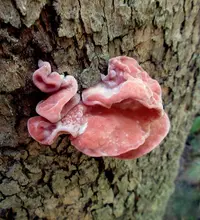
wood ear
Auricularia angiospermarum
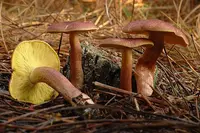
Plums-and-Custard
Tricholomopsis rutilans
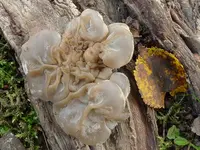
Tripe Fungus
Auricularia mesenterica
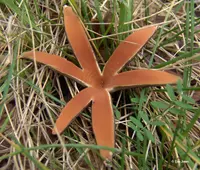
Texas Star
Chorioactis geaster
False Yellowfoot
Chrysomphalina chrysophylla
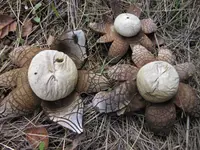
Hygroscopic Earthstar
Astraeus hygrometricus
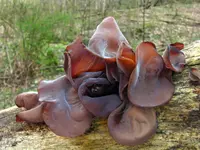
Jelly Tree Ear
Auricularia americana
Golden Gilled Bolete
Phylloporus rhodoxanthus