Manure substrate prep
Pasteurize well-aged horse manure mixed with straw at 60–70°C for 60–90 minutes to reduce competing fungi and bacteria while keeping beneficial microbes that support strong fruiting.

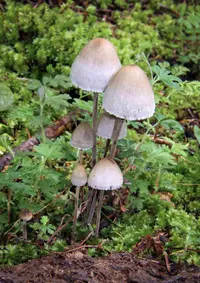
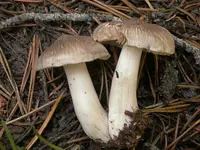
Petticoat mottlegill, Panaeolus papilionaceus, is a small saprobic mushroom that lives on dung and very rich organic soils rather than forming a typical houseplant. It produces slender, dark stems topped with bell-shaped, brownish caps that often show mottled, patchy patterns as the spores mature.
This species is widespread in temperate regions and is often found in pastures, fields, and disturbed ground where animal manure is present. It can be challenging to cultivate intentionally, since it depends on specific decomposing substrates and humidity conditions. For those studying fungi or trying to learn how to care for Petticoat Mottlegill, it is best treated as a specialist organism rather than a decorative indoor specimen.

Care Difficulty
Hard Care

Light Preference
Partial Shade

Water Requirements
Keep Soil Moist

Temperature Preference
Cool Climate

Hardiness Zone
Unknown

Soil Texture
Loamy, Organic-rich

Soil pH
Slightly acidic (6.5–7.0)

Soil Drainage
Moist but well-drained

Fertilization
Minimal (feed rarely)
Scan your plant to receive care tips personalized for your specific plant
Available on iOS and Android
This saprotrophic mushroom prefers bright but gentle light that mimics open grassland or pasture conditions.
This species requires consistently moist but not waterlogged substrate to fruit reliably in pastures or similar sites.
This mushroom fruits best in cool to mild conditions typical of temperate pastures.
Humidity plays a minor role for this outdoor saprophytic fungus, which tolerates a broad range if the substrate stays evenly moist.
This species fruits best on moist, organic-rich, well-aerated manure-based substrate rather than typical garden soil.
This fungus is not well suited to decorative container growing but can be cultivated in tubs or trays for observation under controlled conditions.
This decomposer mushroom does not benefit from added fertilizer in normal culture or observation settings.
Panaeolus papilionaceus does not require pruning in the usual horticultural sense.
This species is not managed like a potted plant, but the substrate can be refreshed or moved when culturing indoors.
Panaeolus papilionaceus is propagated by spores or mycelium transfer rather than by vegetative plant methods.
Outdoor populations of this fungus need no deliberate winter care in typical temperate climates.

Plant Health Check
Not sure what's wrong with your plant? Check your plant's health inside the app.
The gills of this mushroom show irregular dark mottling as the spores mature, a key feature that separates it from many similar small brown dung fungi.
It grows naturally on or near herbivore dung, especially from horses and cattle, playing a role in breaking down manure and returning nutrients to the soil.
Its spore print is characteristically black, which helps distinguish it from some look-alike Panaeolus species that have dark brown rather than pure black spores.
This mushroom is not recommended for consumption. It is small, insubstantial, and difficult to identify accurately, and may be confused with toxic or psychoactive lookalikes. For safety, treat it as inedible and avoid eating it.
Keep your plants happy and healthy with plant identification, disease detection, and easy care guidance.