Auricularia nigricans Care

Auricularia nigricans

About Auricularia nigricans

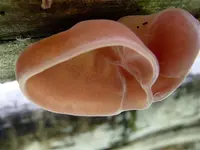
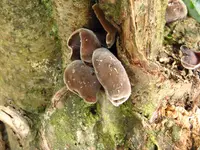
Auricularia nigricans is a jelly fungus rather than a typical green plant, forming soft, ear-shaped fruiting bodies on decaying wood. It has a dark, often blackish-brown surface with a rubbery, gelatinous texture when moist.

This species is usually found on dead branches or logs in warm, humid forests, especially in tropical and subtropical regions. It plays an important ecological role in breaking down dead wood.

Many Auricularia species are considered edible, but identification must be accurate, so beginners should be cautious. Those who want to learn how to care for Auricularia nigricans should focus on providing consistently damp, shaded conditions and wood-based substrates that mimic its natural habitat.

Main Plant Requirements

Care Difficulty

Moderate Care

Light Preference

Shade

Water Requirements

Keep Soil Moist

Temperature Preference

Warm Climate

Hardiness Zone

Unknown

Soil Texture

Organic-rich, Peaty

Soil pH

Acidic (5.5–6.5)

Soil Drainage

Waterlogged tolerant

Fertilization

Minimal (feed rarely)

Get Personalized Care Plan

Scan your plant to receive care tips personalized for your specific plant

Available on iOS and Android

How to Care for the Auricularia nigricans

This wood-inhabiting fungus prefers soft, indirect light rather than direct, intense sun.

  • Provide dappled or filtered light similar to a forest understory, with 2–4 hours of gentle morning sun and shade or bright indirect light the rest of the day.
  • Protect fruiting bodies from strong midday and afternoon sun, which can dry or scorch tissue and halt development, especially in exposed logs or substrates.
  • In summer, increase shading or use a more sheltered, north- or east-facing site; in winter, allow a bit more direct sun if ambient humidity stays high.

Moisture management focuses on keeping the substrate evenly damp without becoming waterlogged.

  • Maintain substrate moisture so it feels consistently moist but not soggy, avoiding standing water around logs or beds to prevent anaerobic rot and competing molds.
  • Allow the top 1–2 cm of exposed substrate to just start to lose surface shine before rewetting, using fine misting or gentle soaking rather than heavy, eroding streams.
  • Reduce frequency during cool periods when evaporation slows, and watch for drooping, leathery fruiting bodies as a sign of dryness or mushy, collapsing tissue as a sign of excess moisture.

Stable, mild temperatures support reliable colonization and fruiting.

  • Aim for 60–77°F (16–25°C) as the main growth range, which favors steady mycelial activity and healthy fruiting body formation.
  • Tolerates short dips to about 41°F (5°C) but is damaged by hard frost, so protect inoculated wood from freezing conditions and repeated freeze–thaw cycles.
  • Growth slows above 82–86°F (28–30°C); in hot spells, increase shading and humidity and avoid placing substrates near heat-reflective surfaces to limit overheating.

This wood-inhabiting fungus tolerates a broad humidity range but responds best to consistently moist air.

  • Aim for 60–85% humidity, mimicking the damp, shaded woodland where Auricularia nigricans typically occurs.
  • Dry air causes thinner, tougher fruiting bodies, curled edges, and slowed or halted new growth.
  • Increase humidity by keeping logs or substrate evenly moist, using a nearby open tray of water, or grouping other moisture-loving cultures nearby.

This species grows on wood rather than in soil, so focus on a suitable lignin-rich substrate instead of a standard potting mix.

  • Use hardwood logs or a mix of hardwood sawdust and chips, as the coarse, fibrous structure provides both support and aeration for the mycelium.
  • Ensure the substrate drains free water yet remains evenly damp; standing water creates anaerobic conditions that favor bacterial contamination.
  • Maintain a slightly acidic environment around pH 5.5–6.5 by using non-treated hardwoods and avoiding alkaline additives such as lime or wood ash.
  • Improve aeration and drainage by drilling spaced holes in logs or loosely packing sawdust substrates instead of compressing them tightly.

This fungus can be grown in containers when the container primarily holds inoculated wood or sawdust rather than soil.

  • Use sturdy plastic buckets or tubs with side and bottom holes so excess water drains quickly while fruiting bodies can emerge through openings.
  • Keep the container shaded and protected from direct wind to prevent the exposed substrate surface from drying faster than the interior.
  • Elevate the container slightly off the ground so drainage holes stay clear and oxygen can reach the lower substrate layer for healthier mycelium growth.

This saprophytic fungus usually grows on decaying wood and needs no additional fertilizer when established outdoors.

This wood-inhabiting fungus does not benefit from conventional pruning, but some management can keep host logs productive and tidy.

  • Remove obviously dead, mold-covered, or heavily insect-damaged sections of substrate to limit contamination.
  • Trim away old, dried, or decomposed fruiting bodies to encourage space and airflow for new growth.
  • Use a clean, sharp knife or pruning shears wiped with alcohol to reduce spread of competing fungi.

Cultivation of Auricularia nigricans focuses on managing colonized logs or substrate blocks rather than classic pot repotting.

  • Transplant or shift blocks only when mycelium has fully colonized the substrate and holds together firmly.
  • Choose mild weather, avoiding temperature extremes, to reduce stress and drying of the mycelium during handling.
  • Limit disturbance of the colonized substrate; move it gently and keep exposure to direct sun and wind as short as possible.
  • Place the new log or block location on well-drained, shaded ground or shelves to maintain stable moisture levels.

Propagation relies on mycelium rather than cuttings or seeds, so it is usually handled by experienced growers rather than casual home gardeners.

Outdoor colonies on hardy host wood usually tolerate normal temperate winters without special intervention.

  • In very cold regions, situate logs or substrate where they are shielded from prevailing winds to reduce freezing stress.
  • Apply a light mulch layer around ground-contact points to moderate soil temperature and moisture swings.
  • For container-grown substrate, move blocks to an unheated but frost-free shed or garage to avoid deep freezing damage.

Care Tips

Use hardwood blocks

Colonize clean, freshly cut hardwood logs or blocks (oak, beech, maple) rather than random yard wood to reduce contamination and produce more consistent fruiting bodies when growing Auricularia nigricans.

Score bark surface

Before outdoor inoculation, lightly score or roughen the bark where dowels or sawdust spawn will be inserted to improve mycelium contact with the wood and speed up colonization.

Staggered log placement

Arrange inoculated logs off bare soil on bricks, pallets, or concrete blocks and lean them slightly against a support so air can circulate while the wood stays evenly moist but not waterlogged.

Controlled hydration cycles

During dry periods, soak colonized logs in clean, non-chlorinated water for 6–12 hours, then let them drain fully, as this hydration–drying cycle often triggers denser and more uniform flushes.

Sanitary handling routine

Use clean tools, avoid touching inoculation points with bare hands, and promptly remove obviously moldy or off-smelling wood pieces to limit competitor fungi and keep caring for Auricularia nigricans more predictable and productive.

Common Pests and Diseases

Green mold (Trichoderma)

This disease appears as fast-spreading green patches that overgrow the brown jelly fruiting bodies and colonization surface. Symptoms include stalled growth of the mushroom culture and a strong earthy or slightly coconut-like odor from the contaminated substrate.

Solution

Remove and discard heavily contaminated blocks or trays, since Trichoderma spreads by abundant spores. For future growing Auricularia nigricans, use well-pasteurized or sterilized substrate, keep tools and containers clean, reduce excess moisture condensation, and increase fresh air exchange to avoid stale, still air that favors this mold.

Bacterial blotch

This disease causes slimy, water-soaked spots on the jelly-like fruiting bodies, which may become yellowish, brown, or darker and give off an unpleasant odor. Symptoms include soft, collapsing tissue and a greasy surface film under high humidity and poor air circulation.

Solution

Remove and discard affected fruiting bodies and any obviously slimy substrate. Improve hygiene by cleaning trays and surfaces, avoid overhead misting directly onto the mushrooms, keep humidity high but not dripping, and increase gentle airflow so surfaces dry slightly between misting cycles.

Fungus gnats

These insects are small, dark flies whose larvae feed on the substrate and can tunnel into developing fruiting bodies, causing deformed, pitted, or water-soaked areas. This pest thrives in constantly wet, rich organic substrates such as sawdust blocks or supplemented logs kept indoors.

Solution

Use yellow sticky traps to reduce adult populations and cover air inlets with fine mesh to limit entry. Allow the upper substrate surface to dry slightly between waterings, remove very decayed or moldy substrate, and, if needed, apply a biological control such as Bacillus thuringiensis israelensis (BTI) to the substrate according to label directions.

Mite infestation

These insects are microscopic or very small arthropods that feed on mycelium and young fruiting bodies, leading to poor colonization, rough or scarred mushroom surfaces, and slow or uneven flushes. Symptoms include powdery-looking patches on the substrate and fine moving specks when viewed closely.

Solution

Discard severely infested blocks or trays and clean the growing area thoroughly, including shelves and tools. For prevention, store raw materials in sealed containers, avoid bringing in contaminated straw or sawdust, and use physical barriers or clean plastic coverings around fruiting chambers to reduce mite entry and spread.

Interesting Facts

True jelly fungus

This species is a gelatinous wood-decay fungus that forms ear-shaped, rubbery fruiting bodies that can repeatedly dry out and rehydrate, resuming growth after rainfall.

White-rot decomposer

Auricularia nigricans performs white rot, meaning it breaks down both lignin and cellulose in dead wood, playing an important role in nutrient cycling and forest decomposition dynamics.

Species reclassification history

For many years this fungus was treated as a form of Auricularia auricula-judae, but detailed microscopic studies and DNA data supported its recognition as a distinct species, refining identification in field mycology and in Auricularia nigricans care instructions for cultivation.

Botan icon

Did you know?

Microscopic examination of Auricularia nigricans reveals densely packed, hair-like structures (setae) on the outer surface of the fruiting body, which help distinguish it from closely related Auricularia species under the microscope and are used as a key diagnostic character in taxonomic studies.

FAQs about Auricularia nigricans

This jelly-like bracket fungus is considered edible in several cuisines when properly identified and thoroughly cooked. Texture is gelatinous and crunchy, with mild flavor. Never eat wild fungi unless identified with certainty by a qualified mycologist.

Grow Healthy Plants with Botan Care

Keep your plants happy and healthy with plant identification, disease detection, and easy care guidance.

Botan plant care app — identify plants on mobile

Explore More Plants