Host Tree Matching
Establish this fungus only under compatible pine species, ideally where mature conifers already grow, since it forms a mycorrhizal partnership with living roots and will not persist in isolated log or straw beds.

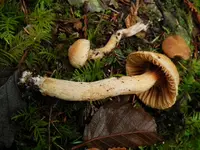
Chroogomphus tomentosus, commonly called woolly pine spike, is a mycorrhizal fungus that forms a symbiotic relationship with conifer trees, especially pines. It is not a typical houseplant but sometimes interests specialty growers and mushroom enthusiasts.
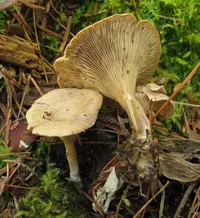
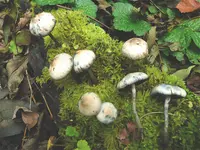
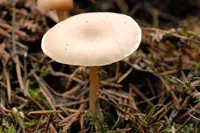
The fruiting bodies are slender, spindle-shaped mushrooms with a woolly to velvety surface in warm brown to orange tones. They usually appear in groups on soil or needle litter under conifers.
This species occurs mainly in temperate forests of North America, favoring cool, moist conditions and undisturbed, well-drained, organic-rich soil. It depends on living tree roots, so cultivation is challenging and slow.
Those who wish to learn how to care for Woolly Pine Spike must understand that success relies on maintaining healthy host trees and suitable forest-like conditions rather than treating it as an independent potted plant.

Care Difficulty
Hard Care

Light Preference
Partial Shade

Water Requirements
Keep Soil Moist

Temperature Preference
Cool Climate

Hardiness Zone
Unknown

Soil Texture
Loamy, Sandy, Organic-rich

Soil pH
Acidic (5.5–6.5), Slightly acidic (6.5–7.0)

Soil Drainage
Moist but well-drained

Fertilization
Minimal (feed rarely)
Scan your plant to receive care tips personalized for your specific plant
Available on iOS and Android
This ectomycorrhizal fungus develops best in cool, bright forest conditions with filtered light rather than open sun.
Chroogomphus tomentosus depends on consistently moist, not waterlogged, soil around its pine hosts.
This species prefers cool to mild conditions and fruits most reliably in temperate autumn climates.
Humidity is not a major factor for Chroogomphus tomentosus, which naturally grows in outdoor woodland conditions rather than as Woolly Pine Spike indoor care.
Chroogomphus tomentosus is a mycorrhizal fungus, so focus on suitable outdoor soil conditions around its pine partners rather than a potting mix.
This species is not suitable for container growing because it depends on a long-term mycorrhizal relationship with living pine roots in open ground.
Chroogomphus tomentosus is a mycorrhizal fungus that rarely benefits from direct fertilizing, since it relies on its host pine for nutrients.
Chroogomphus tomentosus does not require pruning, as mushroom fruiting bodies are temporary structures.
Transplanting focuses on the host pine rather than the fungus itself, which naturally spreads through soil and root contact.
Propagation of Chroogomphus tomentosus is not typically managed directly by gardeners, as it depends on spores and mycorrhizal association with pines.
This species is naturally cold hardy in suitable climates and usually requires no special winter care.

Plant Health Check
Not sure what's wrong with your plant? Check your plant's health inside the app.
This species produces small to medium orange to orange-brown caps densely covered with fine, matted hairs, giving the surface a distinct woolly or felted texture even in mature specimens.
It forms ectomycorrhizal associations with conifers, especially pines, exchanging mineral nutrients and water from the soil for sugars from the tree and typically fruiting near its hosts in late summer to autumn.
The stem often contains a gelatinous or watery core, a feature that helps distinguish it from similar orange-brown gilled mushrooms in the same habitat.
Molecular and morphological studies have shown that this species is more closely related to boletes than to many typical gilled mushrooms, which led to taxonomic revisions within the Gomphidiaceae and clarified that these gilled fungi sit within a largely bolete-related lineage.
This mushroom is considered edible but is not highly valued. Proper identification is critical, since similar orange-brown fungi can be poisonous. Always cook thoroughly and avoid specimens from polluted areas, roadsides, or contaminated soils.
Keep your plants happy and healthy with plant identification, disease detection, and easy care guidance.