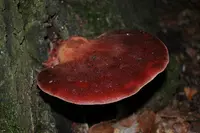
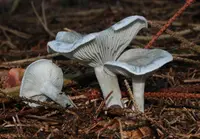
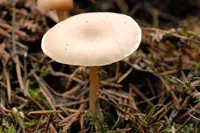
western jack-o'-lantern Care (Omphalotus olivascens)

Also known as: Western Jack-o'-lantern Mushroom, California Jack O' Lantern, Western American jack-o'-lantern
western jack-o'-lantern

About western jack-o'-lantern

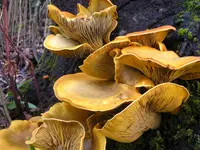
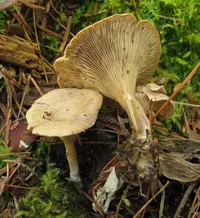
The western jack-o'-lantern, Omphalotus olivascens, is a wood-decomposing mushroom rather than a leafy plant. It forms dense clusters of fleshy, fan-shaped caps with orange to olive tones. At night, the gills can show a faint greenish glow, a weak natural bioluminescence.

This fungus is native to western North America, often found on buried roots, stumps, or dead hardwoods. It can be grown only by experienced fungal cultivators, since it has specific wood-based substrate needs and does not behave like common garden mushrooms.

For those who want to learn how to care for western jack-o'-lantern, it prefers stable moisture, cool to mild temperatures, and shaded conditions, but it remains a challenging species to manage in cultivation.

Main Plant Requirements

Care Difficulty

Hard Care

Light Preference

Partial Shade

Water Requirements

Regular Water

Temperature Preference

Warm Climate

Hardiness Zone

Unknown

Soil Texture

Loamy, Sandy, Organic-rich

Soil pH

Acidic (5.5–6.5)

Soil Drainage

Moist but well-drained

Fertilization

Minimal (feed rarely)

Get Personalized Care Plan

Scan your plant to receive care tips personalized for your specific plant

Available on iOS and Android

How to Care for the western jack-o'-lantern

This fungus prefers low to moderate natural light similar to shaded woodland conditions.

  • Provide bright shade or dappled light under trees; 1–3 hours of gentle morning sun is acceptable, while strong afternoon sun should be avoided.
  • Western jack-o'-lantern fruiting bodies form best where sunlight is filtered through canopy rather than in deep, sunless corners or exposed open ground.
  • Excess sun can dry the substrate and inhibit mycelium growth, while very dense shade combined with heavy leaf litter can reduce fruiting frequency.

Moist, not waterlogged, conditions support healthy development of this wood-decaying fungus.

  • Aim for consistently damp substrate; allow the top 2–5 cm of forest litter or wood to lose surface sheen before the next thorough soaking if artificially irrigated.
  • Omphalotus olivascens dislikes standing water; excess moisture without airflow encourages bacterial rot and competing molds in colonized wood or soil.
  • Signs of underwatering include brittle, cracking wood and shriveling caps, while overwatering shows as slimy surfaces, foul odor, and prolonged puddling around the substrate.

This species favors mild, coastal-type climates with cool to warm temperatures.

  • Optimal mycelium activity and fruiting occur around 55–70°F (13–21°C), especially in moist, shaded woodland or landscaped areas with decaying roots or stumps.
  • It tolerates brief drops near 30–32°F (-1–0°C), but repeated hard frosts can damage fruiting bodies and slow fungal colonization in exposed sites.
  • Heat above 85°F (29°C), particularly when combined with dry air, can halt fruiting, dry substrates, and cause caps to fade, crack, or abort prematurely.

This species tolerates a broad humidity range but fruits best in moderately moist air.

  • Aim for 60–80% humidity during active fruiting for stable mushroom development.
  • It copes with short periods at 40–50%, but very dry air slows growth and caps may crack or dry at the edges.
  • If air is dry, increase humidity with a plastic humidity tent, tray of damp perlite, or fine misting away from direct airflow when caring for western jack-o'-lantern.

This fungus does not grow in standard potting soil and instead colonizes nutrient-rich, well-aerated woody substrates.

  • Use a loose mix of hardwood sawdust, fine wood chips, and a small portion of wheat bran or similar supplement for Omphalotus olivascens.
  • Maintain a structure that holds moisture yet drains freely so the substrate feels moist but never waterlogged or muddy.
  • Keep pH slightly acidic to neutral (pH 5.5–7.0), avoiding strongly alkaline materials like large amounts of garden lime.
  • Improve aeration by avoiding compaction, filling containers loosely, and adding some coarse chips to create small air channels.

This species can be grown in containers if the focus is on maintaining a stable, moist but aerated substrate block.

  • Choose a deep, sturdy container that allows a thick substrate layer so the colonized block does not dry out quickly from the sides.
  • Use a container material and lid or cover that slow evaporation while still allowing some gas exchange through small filtered holes or vents.
  • Elevate the container and provide side drainage or small bottom holes so any excess water can escape without pooling around the substrate.

This wood-decaying fungus grows on nutrient-rich dead wood and usually needs no additional feeding in gardens or culture.

Pruning is not a standard practice for Omphalotus olivascens, since the visible fruiting bodies are temporary mushroom structures, not woody growth.

This species is rarely grown in containers; management focuses on where its mycelium and host wood are located rather than classic repotting.

  • Transplant by relocating colonized wood rather than disturbing individual mushrooms, since the main organism is the hidden mycelium in the substrate.
  • Move wood in late winter or early spring, before peak fruiting, to reduce stress on the fungal network.
  • Choose a new site with similar shade, moisture, and decaying hardwood to support continued growth.
  • Handle colonized logs gently and avoid letting them dry out; keep the substrate consistently moist but not waterlogged after moving.

Propagation of this fungus is specialized and not typically attempted by home growers, as it depends on establishing mycelium in suitable dead wood rather than standard plant methods.

In its native range, this fungus generally overwinters in wood without special attention, as the main body is protected within the substrate.

  • In regions with mild winters, outdoor colonies usually persist if the host wood stays moist and shaded.
  • In colder climates, maintain a leaf or bark mulch layer over colonized wood to moderate temperature swings.
  • Container logs or substrates can be moved to an unheated but frost-sheltered spot, such as a garage or shed, to limit freeze–thaw stress.

Care Tips

Secure host wood

Use well-seasoned hardwood logs or large branches from oak or similar hosts, drill 1–1.5 cm holes, and secure them in a shaded, stable position so the mycelium can colonize without the wood shifting or splitting.

Control moisture window

After inoculation, keep the log surface just damp (not wet) by misting or short soaks, then gradually reduce watering once fruiting bodies appear to limit bacterial rot and extend the life of each flush.

Shade and light management

Provide deep shade during colonization, then allow brief periods of low, indirect light at night when fruiting to make bioluminescence more visible without drying out the substrate.

Monitor substrate competition

Inspect inoculated wood every few weeks and remove obvious competing fungi or heavily contaminated sections to help the resident mycelium maintain dominance and improve long-term productivity when growing western jack-o'-lantern.

Use breathable covers

If conditions are windy or very dry, drape a loose, breathable fabric or horticultural fleece over the inoculated logs to reduce moisture loss while still allowing air exchange and preventing heat buildup.

Common Pests and Diseases

Fungivorous beetles

These insects are attracted to the fruiting bodies and feed on gills and caps, creating pits, tunnels, and ragged edges on the mushroom surface. Symptoms include scarred, discolored, or partially eaten caps that decay more quickly.

Solution

Collect and remove heavily damaged fruiting bodies to reduce breeding sites, and avoid leaving cut or decaying mushrooms on site. For cultivation settings, use fine mesh barriers around beds, maintain good sanitation, and turn or remove underlying woody debris where larvae may develop.

Fungus gnats

These insects lay eggs in moist, organic substrates, and the larvae feed on developing fungal tissue and mycelium, leading to distorted or aborted fruiting bodies. Symptoms include soft, water-soaked areas at the base of mushrooms and small black flies hovering around the patch.

Solution

Reduce excess surface moisture and organic debris, and allow the substrate surface to dry slightly between waterings in cultivation beds. Use yellow sticky traps to monitor adults and, in controlled setups, apply a biological control such as Bacillus thuringiensis israelensis (Bti) to the substrate according to label directions.

Trichoderma contamination

This disease appears as fast-growing, dense, white to green mold that overgrows mycelium or fruiting bodies, suppressing or deforming mushroom development. Symptoms include patchy green colonies on substrate or at the base of fruiting clusters and a reduction in healthy mushrooms.

Solution

Promptly remove and discard contaminated substrate and fruiting bodies, and avoid disturbing spores into nearby beds. For cultivation, improve airflow, avoid overwatering, sterilize or pasteurize fresh substrate, and clean tools and containers with a disinfectant before reuse.

Bacterial blotch

This disease causes water-soaked, greasy, yellow-brown spots on caps, often under cool, wet conditions with stagnant air. Symptoms include slimy lesions that can spread across the cap surface and speed up decay.

Solution

Limit overhead watering on fruiting bodies and water early in the day so surfaces dry quickly. Increase airflow, reduce overcrowding of fruiting clusters, and remove severely affected mushrooms to reduce bacterial spread in cultivation areas.

Slug and snail damage

These pests feed on soft fungal tissue during cool, humid periods, leaving irregular holes, scraped areas, and glistening slime trails on and around mushrooms. Symptoms include partially eaten caps and missing gill sections, especially at soil or litter level.

Solution

Hand-pick slugs and snails in the evening, remove dense ground cover that shelters them, and use physical barriers such as copper tape or rough diatomaceous earth rings around cultivation beds. In outdoor setups, targeted iron phosphate pellets can be used according to label instructions while avoiding contamination of harvest areas.

Interesting Facts

True jack-o'-lantern mimic

This western North American fungus produces dense clusters of orange, jack-o'-lantern–shaped fruiting bodies, which often leads foragers to confuse it with edible chanterelles, despite its toxic, non-edible nature.

Regionally restricted range

It is native to western North America, especially California and parts of the Pacific coast, where it fruits at the base of hardwoods and in wood-chip landscaping rather than appearing across broader temperate regions like its eastern relatives.

Wood-decaying specialist

This species is a saprotroph, meaning it feeds on dead wood and woody debris, contributing to forest nutrient cycling by breaking down lignin- and cellulose-rich tissues in stumps, buried roots, and mulched wood.

Botan icon

Did you know?

The gills of this species can exhibit a faint greenish bioluminescent glow in very dark conditions due to luciferin–luciferase chemistry, placing it among the relatively small group of mushrooms known to naturally emit light.

FAQs about western jack-o'-lantern

Yes. This fungus is strongly poisonous if eaten by humans or animals. It can cause severe stomach pain, vomiting, and diarrhea. Symptoms may appear several hours after ingestion. It should never be used as food.

Grow Healthy Plants with Botan Care

Keep your plants happy and healthy with plant identification, disease detection, and easy care guidance.

Botan plant care app — identify plants on mobile

Explore More Plants