Rot-spot checks
Inspect caps and gills after wet periods and promptly remove any waterlogged or foul-smelling clusters to slow the spread of bacterial and fungal rot through the colony.

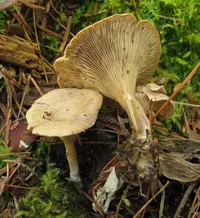
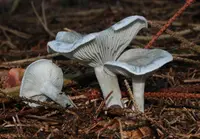
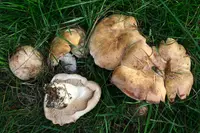
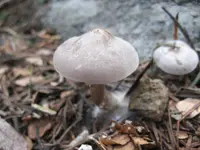
Clitocella popinalis is a small, fleshy fungus that typically appears in clusters on soil rich in organic matter, often in grassy or disturbed areas. The caps are usually pale to pinkish, with gills underneath and a short, sturdy stem. It is native to parts of Europe but can occur in other temperate regions where suitable habitat exists. The species is a saprotroph, meaning it feeds on decaying material and plays a role in nutrient recycling. Gardeners who want to care for Clitocella popinalis should know it generally favors moist, humus-rich soil and moderate shade, and appears seasonally rather than year-round.

Care Difficulty
Moderate Care

Light Preference
Partial Shade

Water Requirements
Moderate Water

Temperature Preference
Warm Climate

Hardiness Zone
Unknown

Soil Texture
Loamy

Soil pH
Slightly acidic (6.5–7.0)

Soil Drainage
Well-drained

Fertilization
Minimal (feed rarely)
Scan your plant to receive care tips personalized for your specific plant
Available on iOS and Android
This species performs best in bright, indirect light with limited direct sun exposure.
Watering should aim to keep the substrate evenly moist but never waterlogged.
Stable, cool to mild temperatures support healthy development of this species.
This saprotrophic mushroom species has minimal humidity sensitivity in typical outdoor conditions, so targeted humidity management is usually unnecessary.
Clitocella popinalis develops best in loose, well-aerated, organic-rich ground that mimics decomposing leaf litter or wood debris.
This fungus is not well suited to long-term container growing, as it relies on broader soil or litter layers to fruit consistently.
This fungus typically requires no fertilization when growing on its natural woody or organic substrates.
Pruning is not applicable to Clitocella popinalis, as it is a saprophytic fungus rather than a leafy or woody plant.
Transplanting is generally unnecessary, since this species is a wild saprophytic fungus that fruits where suitable decaying organic matter is present.
Propagation of this wild fungus is specialized and not typically attempted by home growers, so Clitocella popinalis care instructions focus on habitat rather than active propagation steps.
Specific winter care is not usually managed, as this saprophytic fungus appears and disappears with suitable seasonal conditions in its habitat.

Plant Health Check
Not sure what's wrong with your plant? Check your plant's health inside the app.
This saprobic mushroom often appears in repeated flushes on the same patch of soil or leaf litter, reflecting its efficiency at recycling organic matter in nutrient-rich, disturbed habitats such as parks and gardens.
The caps are hygrophanous, meaning they change color as they lose moisture, typically appearing more brownish when wet and becoming much paler, often almost whitish, as they dry.
This species was long placed in the large genus Clitocybe, but molecular DNA studies showed it forms a distinct lineage, leading to its transfer into the genus Clitocella in the 2010s.
This mushroom is considered inedible and should not be collected for food. Identification within this genus can be difficult, and look-alikes may be harmful. Treat it as a non-edible wild fungus and avoid consumption.
Keep your plants happy and healthy with plant identification, disease detection, and easy care guidance.