Spring division timing
Lift and divide congested clumps every 3–5 years in early spring just as new shoots emerge, then replant divisions at the same depth to keep the planting vigorous and uniform.

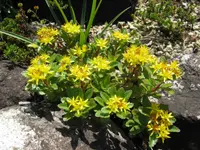
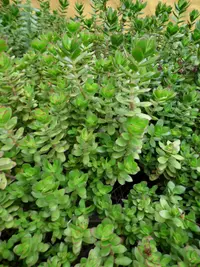
Aizoon stonecrop (Phedimus aizoon) is a hardy, herbaceous perennial succulent grown mainly for its fleshy leaves and clusters of star-shaped yellow flowers. It forms low, spreading clumps or loose mats that slowly expand, making it useful as a groundcover in sunny beds and rock gardens.
This species is native to parts of Eurasia, where it typically grows in open, well-drained, often rocky sites. It is valued for its toughness, drought tolerance, and ability to cope with relatively poor soils, which makes it easy to care for Aizoon Stonecrop in many home gardens.
The plant prefers full sun, moderate moisture, and freely draining soil, and usually needs minimal maintenance once established.

Care Difficulty
Easy Care

Light Preference
Full Sun

Water Requirements
Low Water

Temperature Preference
Cold Hardy

Hardiness Zone
3–8

Soil Texture
Sandy, Loamy, Rocky

Soil pH
Slightly acidic (6.5–7.0), Neutral (7.0)

Soil Drainage
Well-drained

Fertilization
Minimal (feed rarely)
Scan your plant to receive care tips personalized for your specific plant
Available on iOS and Android
This hardy perennial thrives in open sites with strong light and can handle a wide range of outdoor conditions.
This drought-tolerant succulent prefers infrequent, deep watering rather than constant moisture.
This cold-hardy species tolerates a wide temperature range but grows best in moderate conditions.
This species is highly tolerant of low humidity and rarely needs special humidity management.
This drought-adapted perennial prefers lean, sharply drained soil to prevent root rot.
This species is well suited to container growing in sunny, outdoor locations.
This hardy perennial needs only light feeding to maintain healthy growth.
Phedimus aizoon benefits from occasional, light pruning to stay compact and tidy.
This species is usually grown in the ground and only rarely needs transplanting or repotting.
This plant is commonly propagated to expand groundcover patches or share divisions.
This cold-hardy perennial generally requires minimal winter care in typical temperate climates.

Plant Health Check
Not sure what's wrong with your plant? Check your plant's health inside the app.
This species occurs naturally across a broad band of Eurasia, from parts of Eastern Europe through Siberia to East Asia, showing strong adaptation to cold, continental climates and poor, rocky soils.
Its fleshy shoots form dense summer clumps that often turn yellow to reddish in autumn before dying back to underground structures, an adaptation that helps it survive long, freezing winters.
The plant produces flat-topped clusters of star-shaped yellow flowers that offer accessible nectar and pollen to a variety of insects, including bees and hoverflies, during mid to late summer.

In parts of East Asia, especially northern China, this species has long been gathered as an edible wild vegetable, valued for its young shoots, which has led to its deliberate cultivation as both a useful and ornamental plant in rural landscapes.
This species forms clumps and slowly expands by short rhizomes and self-seeding. It can create a broad patch over time but is usually manageable. Regular division and removing unwanted seedlings control spread in mixed borders or rock gardens.
Keep your plants happy and healthy with plant identification, disease detection, and easy care guidance.