Rotate For Symmetry
Rotate the pot 90° every 2–3 weeks so stems receive light from different angles, which keeps the plant compact and prevents one-sided, leaning growth.

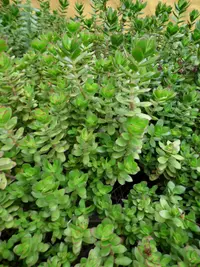
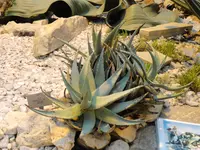
Crassula cultrata, commonly called Karky Stonecrop, is a shrubby, branching succulent grown mainly for its sculptural foliage. It forms upright stems with flattened, paddle-like leaves that often develop red or bronze edges in bright light.
This species is native to rocky slopes and dry areas of South Africa, so it is adapted to strong light, lean soil, and limited water. Its slow to moderate growth, compact size, and drought tolerance make it suitable for containers, rock gardens, and indoor collections.
For those who want to care for Karky Stonecrop successfully, it helps to provide bright light, good drainage, and infrequent but thorough watering.

Care Difficulty
Easy Care

Light Preference
Full Sun

Water Requirements
Low Water

Temperature Preference
Warm Climate

Hardiness Zone
10–11

Soil Texture
Sandy, Loamy, Rocky

Soil pH
Slightly acidic (6.5–7.0), Slightly alkaline (7.0–7.5)

Soil Drainage
Well-drained

Fertilization
Minimal (feed rarely)
Scan your plant to receive care tips personalized for your specific plant
Available on iOS and Android
Crassula cultrata thrives in bright light with some protection from intense midday sun.
Crassula cultrata prefers infrequent, deep watering and fast-draining soil.
This succulent prefers warm, dry conditions and is sensitive to hard frost.
This succulent handles typical home humidity well and rarely needs special adjustment.
Crassula cultrata needs fast-draining, gritty soil that dries quickly between waterings.
This species is well suited to container growing when drainage and stability are managed carefully.
Crassula cultrata is a modest feeder, so light, controlled fertilization is sufficient for healthy growth.
Crassula cultrata pruning is mainly used to maintain compact form and remove weak growth.
Container-grown Crassula cultrata benefits from occasional repotting to maintain root health and stable growth.
Crassula cultrata is commonly propagated from cuttings, which root reliably under the right conditions.
Crassula cultrata is frost tender and needs specific winter care in regions with cold winters.

Plant Health Check
Not sure what's wrong with your plant? Check your plant's health inside the app.
This species has distinctive flat, hatchet- or blade-shaped leaves with reddish margins, a feature that helps distinguish it from many other South African Crassula species with more cylindrical or rounded foliage.
In strong light and during drier periods, the grey-green leaves often develop pronounced red to copper tones along the edges, a response to sun exposure that also helps protect the tissue from excess radiation.
It is naturally distributed in arid and semi-arid regions of South Africa, especially the Eastern and Western Cape, where it typically grows among rocky outcrops and shrubland, taking advantage of crevices that offer both drainage and some protection from grazing.
This species often flowers only after reaching a certain age and size. Insufficient light, stress from recent repotting, or heavy nitrogen feeding can all reduce flowering. Stable conditions and time usually improve blooming performance.
Keep your plants happy and healthy with plant identification, disease detection, and easy care guidance.