Offset management
Detach basal offsets only when they have at least 4–5 leaves and visible roots, then replant them in individual pots to maintain airflow and reduce rot risk in the mother plant’s crown.

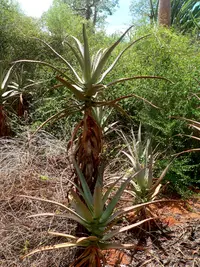
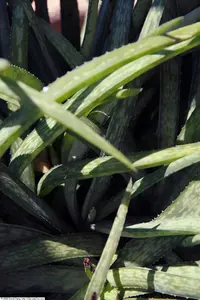
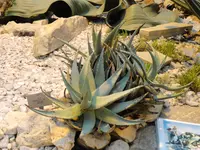
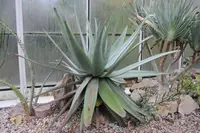
Aloe divaricata is a drought-tolerant succulent from Madagascar, where it grows in dry, rocky habitats with intense sun. It forms upright, branching stems topped with narrow, stiff leaves. The foliage is usually blue‑green to gray‑green, often with small teeth along the edges, giving the plant a strongly architectural look. Over time it can develop a shrubby, multi-stemmed clump. This species suits growers who like low-maintenance plants and can provide strong light and infrequent watering. It prefers free-draining, gritty soil and good air circulation. Understanding how to care for Aloe divaricata starts with treating it like a true desert plant, not a tropical houseplant.

Care Difficulty
Easy Care

Light Preference
Full Sun

Water Requirements
Low Water

Temperature Preference
Tropical / Frost Sensitive

Hardiness Zone
10–12

Soil Texture
Sandy, Loamy, Rocky

Soil pH
Slightly acidic (6.5–7.0), Neutral (7.0)

Soil Drainage
Well-drained

Fertilization
Minimal (feed rarely)
Scan your plant to receive care tips personalized for your specific plant
Available on iOS and Android
This drought-adapted succulent needs strong light but benefits from some protection from intense midday sun.
This species stores water in its leaves and prefers thorough but infrequent watering.
This succulent prefers warm, dry conditions and is sensitive to frost and prolonged cold.
This species handles typical indoor humidity and rarely needs adjustments.
Use a very fast-draining, mineral-heavy mix to prevent root rot.
This species is well suited to container growing due to its compact, drought-tolerant root system.
This drought-adapted succulent needs only light feeding under cultivation.
This species needs minimal pruning, focused on hygiene and safety for the rosette.
Container-grown plants benefit from infrequent but careful repotting into sharply drained media.
This aloe is most often propagated vegetatively to maintain plant form and vigor.
This succulent is not frost-hardy and needs protection in climates with freezing winters.

Plant Health Check
Not sure what's wrong with your plant? Check your plant's health inside the app.
This species is naturally restricted to rocky, arid habitats in southwestern Madagascar, where it anchors itself in crevices and shallow, stony soils exposed to intense sun and seasonal drought.
Unlike many rosette-forming aloes, this plant often develops a more open, branched structure with narrow, divaricate (widely spreading) leaves that give it a distinctive, airy outline among Malagasy aloes.
In its native range, it typically sends up tall inflorescences with tubular orange to reddish flowers during the drier part of the year, providing nectar to sunbirds and insects when other floral resources are limited.
Lack of flowering is usually linked to plant immaturity, insufficient light intensity, or no cool, dry winter rest. Established plants bloom more reliably when slightly pot-bound, kept drier in winter, and given strong light year-round.
Keep your plants happy and healthy with plant identification, disease detection, and easy care guidance.