Aloe amudatensis Care

Aloe amudatensis

About Aloe amudatensis

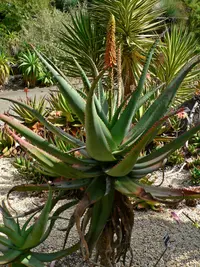
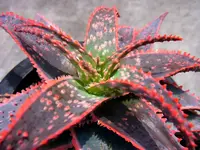
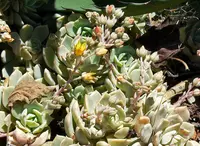
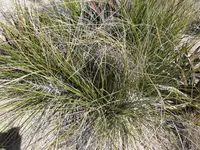
Aloe amudatensis is a small succulent aloe forming compact rosettes of thick, fleshy leaves armed with firm marginal teeth. The leaves are usually green to bluish-green and may show subtle markings, giving the plant a rugged, architectural look.

This species is native to arid regions of East Africa, where it grows in rocky, well-drained habitats with strong sunlight. Its drought tolerance and slow, compact growth make it suitable for containers and small outdoor plantings in warm climates.

It prefers bright light, infrequent watering, and gritty, fast-draining soil, which simplifies basic care for Aloe amudatensis for most succulent growers.

Main Plant Requirements

Care Difficulty

Moderate Care

Light Preference

Full Sun

Water Requirements

Low Water

Temperature Preference

Tropical / Frost Sensitive

Hardiness Zone

Unknown

Soil Texture

Sandy, Loamy, Rocky

Soil pH

Slightly acidic (6.5–7.0), Neutral (7.0)

Soil Drainage

Well-drained

Fertilization

Minimal (feed rarely)

Get Personalized Care Plan

Scan your plant to receive care tips personalized for your specific plant

Available on iOS and Android

How to Care for the Aloe amudatensis

This species prefers strong, dry light similar to its native rocky habitats.

  • Provide 6–8 hours of direct sun daily, ideally with morning sun and light afternoon shade to prevent scorching in very hot, arid climates.
  • In cooler or coastal areas, full sun all day is usually tolerated, but watch for bleaching or brown patches as signs of excess exposure.
  • Aloe amudatensis can cope with bright, open partial shade, though prolonged low light causes lanky growth and reduced leaf color.

Watering should mimic infrequent desert rainfall with fast drying between soakings.

  • Allow the top 3–5 cm of soil to dry completely before watering; in hot, dry weather this may mean deep watering every 10–21 days, less often in cool seasons.
  • Use sharply draining, gritty soil so water runs through in seconds; standing water or heavy clay leads to root rot and mushy, collapsing leaves.
  • Signs of overwatering include yellowing, translucent, or soft leaves, while severe wrinkling or leaf curling signals underwatering; adjust frequency, not volume.

Temperature needs reflect a warm, arid-climate succulent with poor frost tolerance.

  • Aim for 70–90°F (21–32°C) during active growth, with low humidity and excellent air movement to reduce fungal problems.
  • Protect from cold below 40°F (4°C); short dips to 32°F (0°C) may be survived if completely dry, but repeated frosts damage tissues.
  • In heat waves above 95°F (35°C), provide some afternoon shade and avoid watering during the hottest part of the day to limit stress.

This species handles typical indoor humidity well and rarely needs special adjustment.

  • Target 30–50% humidity, similar to most heated or air-conditioned homes.
  • Dry air is tolerated, but combine low humidity with bright light and infrequent watering to prevent leaf shrivel.
  • If leaf tips brown or wrinkle despite correct watering, move the plant away from heating vents or use a small pebble tray nearby to slightly raise local humidity.

Provide very fast-draining, mineral-rich soil to prevent root and stem rot in Aloe amudatensis.

  • Use a gritty mix of roughly 50–70% inorganic material such as pumice, coarse sand, or perlite with 30–50% cactus potting mix.
  • Aim for a slightly acidic to neutral pH around 6.0–7.0, avoiding strongly alkaline or salty substrates.
  • Ensure the texture stays loose and airy; mix in extra pumice or coarse perlite if water takes more than a few seconds to drain through.
  • Avoid dense, peat-heavy or clay soils that stay wet or compact, as these quickly suffocate the roots and promote fungal problems.

This aloe is well suited to container growing for both indoor and outdoor displays.

  • Choose a pot only 2–4 cm wider than the root ball to limit excess wet substrate and reduce rot risk.
  • Select unglazed terracotta when possible, since its porous walls allow faster evaporation and help keep the mix drier.
  • Use a deeper, weighty pot or add a top layer of gravel to improve stability if the rosette becomes tall and top-heavy.

This drought-adapted species needs only light feeding in containers; in the ground, Aloe amudatensis often grows well with minimal added nutrients.

  • Use a low-strength balanced liquid fertilizer (around 10-10-10 NPK) at 1/4–1/2 label dose for potted plants.
  • Feed every 4–6 weeks in spring and summer when growth is active, skipping any stressed or newly potted plants.
  • Stop feeding in fall and winter to match the plant’s slower growth and avoid soft, weak tissue.
  • Avoid rich compost or heavy slow-release pellets that can hold excess moisture and increase root rot risk.

Pruning is mainly hygienic, keeping this aloe tidy and reducing disease risk.

  • Best time is late winter to early spring before strong new growth starts.
  • Remove dead, shriveled, or damaged leaves at the base with clean, sharp scissors or pruners.
  • Cut away crossing, crowded offsets only when needed to maintain airflow and a compact rosette shape.
  • Disinfect tools before and after use to limit the spread of fungal or bacterial problems.

Container-grown plants need only infrequent repotting, while established clumps outdoors are best left largely undisturbed.

  • Repot every 3–4 years or when roots circle the pot, growth slows, or soil dries almost instantly.
  • Choose late spring for repotting or transplanting so roots recover in warm, bright conditions.
  • Use a coarse, gritty cactus mix, handling roots gently and trimming only rotten or broken sections.
  • Let roots dry 1–2 days after repotting, then water lightly to reduce transplant shock and rot risk.

This species is usually propagated by removing offsets, with seed used mainly by specialist growers.

  • Detach well-formed offsets in late spring or early summer using a clean, sharp knife.
  • Allow cut surfaces to dry and callus for 2–5 days in a shaded, airy place before planting.
  • Set offsets in a fast-draining cactus mix and keep slightly dry until new roots and growth appear.
  • For seeds, provide warm temperatures (70–80°F), bright light, and very free-draining medium for germination.

In mild, dry climates this aloe needs modest winter care, but it is sensitive to hard frost.

  • Keep plants above about 30°F; in colder regions, use containers rather than planting in open ground.
  • Move potted plants indoors or into a cold greenhouse before nights reach freezing.
  • Provide bright, cool, dry conditions indoors and water sparingly to avoid root and crown rot.
  • For in-ground plants in marginal climates, add a light, dry gravel mulch around the crown to improve drainage.

Care Tips

Deep pot selection

Use a heavy, deep pot with ample drainage holes so the tall flowering stalks do not tip the plant over in windy or exposed positions.

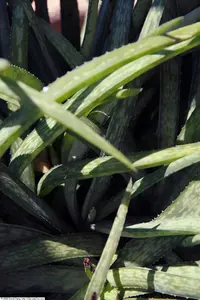
Wind-hardening outdoors

Before placing the plant in a permanently exposed site, gradually increase its time in breezy conditions over 10–14 days to help strengthen leaves and prevent mechanical damage.

Basal offset management

Every 2–3 years, remove and root only the strongest offsets and discard weak, etiolated pups so the main rosette keeps a stable, compact form.

Rock mulch surface

Top-dress the soil with a 1–2 cm layer of coarse grit or small lava rock to keep the leaf bases dry, reduce soil splash, and stabilize the root zone.

Cool-season monitoring

In cooler months, periodically check the crown and leaf axils for trapped moisture and debris, then gently clear it out to reduce the risk of rot when growing Aloe amudatensis in marginal climates.

Common Pests and Diseases

Aloe mite

This pest causes tight, tumor-like galls and distorted growth on leaves and at the crown, often with rough or warty surfaces. Symptoms include abnormal clumps of tissue that do not look like normal leaf pups or offsets.

Solution

Remove and discard all affected leaves or rosettes well below the damaged tissue and isolate the plant from other aloes. Disinfect cutting tools with alcohol between cuts, avoid overhead watering that keeps the crown wet, and if distortion continues, destroy the plant to protect nearby Aloe amudatensis and related species.

Aloe rust

This disease produces small yellow spots that turn into sunken orange to dark brown pustules on the leaf surface. Symptoms include patchy spotting that may merge into larger irregular lesions, especially on older or shaded leaves.

Solution

Remove and dispose of affected leaves and improve air circulation around the plant by spacing pots and avoiding crowded conditions. Keep leaves dry, water at the soil level, and in humid or rainy climates consider sheltering plants and using a sulfur or copper-based fungicide labeled for ornamental succulents if the problem persists.

Aloe snout weevil

This pest is a type of beetle whose larvae tunnel inside the stem and crown, causing collapse of the central rosette and yellowing or wilting from the center outward. Symptoms include foul-smelling, mushy tissue inside the crown and sometimes visible notches on outer leaves from adult feeding.

Solution

At early stages, remove and destroy infested rosettes and check the crown for larvae, discarding any plants with extensive internal damage. Quarantine new Aloe plants, keep the growing area clean of plant debris, and in outdoor collections in warm regions use physical barriers, hand-picking of adults at dusk, and targeted soil-level insect treatments where this pest is known to occur.

Aloe scale

These insects appear as small, hard, brown to gray bumps on leaves and sometimes along the leaf bases, often clustered near the lower, older parts of the rosette. This pest sucks sap, leading to yellowing patches, reduced vigor, and sticky honeydew that can attract sooty mold.

Solution

Gently scrape off individual scales with a cotton swab dipped in isopropyl alcohol or use a soft brush and a mild insecticidal soap solution, keeping soap off the roots. Repeat treatments every 7–10 days until no new scale appears, isolate affected plants, and avoid high nitrogen fertilization that encourages soft, vulnerable growth while focusing on stable, bright light typical for Aloe amudatensis care instructions.

Interesting Facts

Endemic to northern Kenya

This species is naturally restricted to a small area around Amudat and nearby regions along the Kenya–Uganda border, where it grows on rocky slopes and outcrops in semi-arid conditions.

Distinctly spotted leaves

Mature plants form rosettes of narrow, upright leaves marked with irregular pale spots and short, firm marginal teeth, giving it a textured appearance compared with smoother-leaved relatives.

Cluster-forming growth habit

Instead of remaining solitary, this aloe gradually produces offsets at the base, forming tight clumps that help stabilize it on shallow, stony soils.

FAQs about Aloe amudatensis

Growth is generally slow to moderate. Young plants may add only a few leaves per year, forming a small clump over several seasons. In good conditions it can reach near-mature size in roughly 4–6 years.

Grow Healthy Plants with Botan Care

Keep your plants happy and healthy with plant identification, disease detection, and easy care guidance.

Botan plant care app — identify plants on mobile

Explore More Plants