Small-flowered Mexican Bear Grass Care (Nolina parviflora)

Also known as: Mexican Grass Tree
Small-flowered Mexican Bear Grass

About Small-flowered Mexican Bear Grass

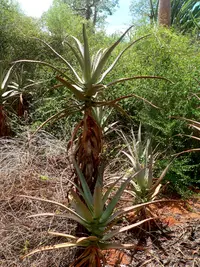
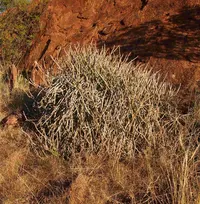
Small-flowered Mexican bear grass (Nolina parviflora) is a desert-adapted shrub-like plant with long, narrow, arching leaves that form a dense, fountain-shaped clump. Mature plants may develop a woody stem, giving them a small, trunked, yucca-like appearance.

This species is native to arid and semi-arid regions of Mexico, where it grows in rocky, well-drained soils and full sun. Its natural tolerance of heat, drought, and poor soils makes it relatively forgiving for gardeners who want to learn how to care for Small-flowered Mexican Bear Grass.

It prefers bright light, infrequent watering, and sharply draining soil, which helps prevent root problems in cultivation.

Main Plant Requirements

Care Difficulty

Easy Care

Light Preference

Full Sun

Water Requirements

Low Water

Temperature Preference

Warm Climate

Hardiness Zone

8–11

Soil Texture

Sandy, Loamy, Rocky

Soil pH

Slightly acidic (6.5–7.0), Slightly alkaline (7.0–7.5)

Soil Drainage

Well-drained

Fertilization

Minimal (feed rarely)

Get Personalized Care Plan

Scan your plant to receive care tips personalized for your specific plant

Available on iOS and Android

How to Care for the Small-flowered Mexican Bear Grass

This sun-loving desert shrub thrives with strong light but benefits from some protection in extreme heat.

  • Provide 6–8 hours of direct sun daily; morning sun with light afternoon shade suits most climates.
  • In very hot regions, give filtered light or high bright shade from 1–4 p.m. to prevent leaf scorching on Small-flowered Mexican Bear Grass.
  • In cooler or coastal areas, full sun all day is suitable; plants in too much shade become sparse, with weak, floppy leaves and reduced flowering.

This drought-tolerant species prefers infrequent, deep watering and fast-draining soil.

  • Outdoors in the ground, water only when the top 5–8 cm of soil is completely dry; in arid heat this may be every 10–21 days.
  • Use sharply draining, gravelly soil so water runs through quickly; standing water around the crown greatly increases rot risk for Nolina parviflora.
  • Signs of overwatering include yellowing, soft leaf bases and a collapsing crown, while severely underwatered plants show dry, browning leaf tips and slow growth.

This species is adapted to warm, dry climates but tolerates a moderate range of outdoor temperatures.

  • Ideal growing temperatures are 65–85°F (18–29°C), with good air movement and low to moderate humidity.
  • Established plants usually survive brief drops to about 15–20°F (-9 to -6°C) if soil is dry, but repeated hard frosts can damage foliage.
  • Nolina parviflora handles hot spells up to 100–110°F (38–43°C) if roots are established, soil drains freely, and watering is not increased excessively during heat waves.

Humidity is rarely a limiting factor for Nolina parviflora, which thrives in typical dry indoor air.

  • Target 30–50% humidity; this xeric species is adapted to arid and semi-arid conditions.
  • It tolerates very dry air, but prolonged exposure above heating vents can desiccate leaf tips.
  • Humidity stress shows as browning, crisp leaf ends; move the plant away from hot drafts and group it with other plants if this appears.
  • If air is extremely dry, place the pot on a pebble tray with water below the pot base to slightly increase local humidity.

Nolina parviflora prefers a lean, mineral, fast-draining substrate similar to desert soils.

  • Use a gritty mix such as 50–60% cactus mix blended with coarse sand or fine gravel to keep the root zone dry between waterings.
  • Aim for slightly acidic to neutral pH, around 6.0–7.0, which most commercial cactus or succulent substrates already provide.
  • Improve aeration by adding 20–30% perlite or pumice so water drains quickly and fine roots receive enough oxygen.
  • Avoid dense, peat-heavy or clayey soils that stay wet for more than 1–2 days, as this greatly increases the risk of root rot.

This species is well suited to container growing when the pot supports its fibrous roots and dry-soil preference.

  • Choose a deep, heavy pot so the tall, grass-like tuft remains stable and does not tip in wind or with accidental bumps.
  • Use a container material with moderate porosity, such as unglazed clay, to help excess moisture evaporate from the root zone.
  • Ensure a thick, coarse drainage layer is avoided inside the pot and instead rely on multiple large drainage holes to prevent perched water at the base.

Nolina parviflora is adapted to low-nutrient soils and needs only light, infrequent feeding in cultivation.

  • Use a balanced, dilute liquid fertilizer (for example 10-10-10 at 1/4 strength) or a light top-dressing of compost in spring.
  • Feed once at the start of active growth, and again mid-summer if growth appears weak or foliage pale.
  • Choose slow-release granules for outdoor plants in lean, sandy soil rather than rich potting mixes.
  • Do not fertilize in winter or when growth is dormant, as excess nutrients can stress roots.

Nolina parviflora needs only minimal pruning to maintain a clean, tidy appearance.

  • Best time for pruning is late winter to early spring, before strong new growth starts.
  • Remove dead, dry, or damaged leaves by cutting them close to the base with clean, sharp pruners.
  • Thin out badly crowded or crossing leaves to slightly open the crown without changing the natural form.
  • Avoid cutting the central growing point, since this controls the plant’s overall structure and future growth.

This species grows slowly and dislikes frequent disturbance, so repot or transplant only when clearly necessary.

  • Look for roots circling the pot, pushing through drainage holes, or noticeably slowed growth as signs to move it.
  • Plan repotting or transplanting in late spring, when temperatures are stable and recovery is faster.
  • For containers, shift to a pot only 1–2 in wider, using gritty, fast-draining soil to limit root disturbance.
  • Water thoroughly after moving, then keep soil just slightly moist and shaded for 1–2 weeks to reduce transplant shock.

Propagation of Nolina parviflora is possible but slow, mainly done from seed rather than routine division.

  • Sow fresh seeds in late spring in a very well-drained, sandy mix kept around 70–80°F.
  • Lightly cover seeds, maintain even but not wet moisture, and provide bright, indirect light for germination.
  • Expect slow and uneven germination; keep seedlings in the same tray or pot until roots are well developed.
  • Offsets, if present at the base, can be divided carefully in warm weather, then rooted in a gritty mix.

This plant is moderately cold hardy but benefits from some winter attention in colder regions.

  • Established plants in the ground often tolerate light frosts; extended freezes below about 15–20°F can cause damage.
  • In colder zones, apply a 5–8 cm layer of dry mulch around the root zone, keeping it off the stem base.
  • For potted plants or Small-flowered Mexican Bear Grass indoors, move containers to a bright, frost-free spot for winter.

Care Tips

Root flare spacing

When planting, keep the stem base slightly above the soil line and avoid piling gravel or mulch against the neck to prevent rot in this trunk-forming species.

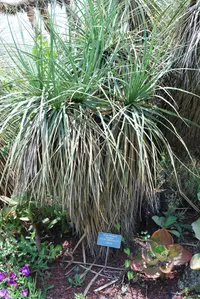
Controlled clump shaping

Trim only the completely dead, brown leaves close to the stem and leave a short dry skirt if the site is windy, as this can help protect the trunk from sunscald and minor mechanical damage.

Wind exposure training

If moving a container plant outdoors, gradually increase its exposure to wind over 1–2 weeks so the flexible leaves and developing trunk adapt without tearing or toppling.

Long-term container sizing

For potted plants, select a deep, heavy container that is only 5–10 cm wider than the current root ball to support the tall rosette and reduce the risk of the plant becoming top-heavy and falling.

Rock mulch technique

Use a thin, open layer of coarse gravel or small rocks around the base instead of organic mulch to mimic its native rocky habitat, improving drainage and stability when growing Small-flowered Mexican Bear Grass.

Common Pests and Diseases

Scale insects

This pest attaches to leaves and stems, sucking sap and causing yellowing, slowed growth, and sticky honeydew on the foliage. Symptoms include small, dome-shaped or flat bumps that do not brush off easily.

Solution

Remove heavily infested leaves if practical, then wipe remaining foliage and stems with a cotton pad dipped in diluted alcohol or insecticidal soap. For outdoor plants, a firm spray of water can dislodge some insects; repeat targeted treatments every 7–10 days until new growth appears clean and consider improving light and air movement to reduce stress.

Mealybugs

These insects appear as white, cottony clusters in leaf bases and along the rosette, feeding on sap and weakening the plant. Symptoms include distorted new growth, sticky honeydew, and sometimes sooty mold developing on affected areas.

Solution

Isolate the plant, then dab visible mealybugs with a cotton swab dipped in alcohol and follow with a thorough spray of insecticidal soap, paying special attention to leaf bases and crevices. Repeat treatments weekly until no new insects appear and avoid overfertilizing, which can encourage soft, vulnerable growth.

Leaf spot

This disease causes scattered brown or tan spots on the narrow leaves, sometimes with a yellow halo or dry, papery centers. Symptoms include gradual cosmetic damage rather than rapid collapse, but severe cases can thin the foliage over time.

Solution

Prune and discard affected leaves, keeping cuts clean and dry, then improve air circulation around the plant by spacing it from neighbors and avoiding overhead watering. Allow water to reach the soil only, let the foliage dry quickly, and if spots continue to spread, apply a labeled copper or biological fungicide according to directions.

Spider mites

These insects are tiny sap feeders that thrive in hot, dry conditions, causing fine speckling, dulling, and eventual bronzing of the stiff leaves. Symptoms include very fine webbing in leaf axils and dusty-looking, weakened foliage.

Solution

Rinse the entire plant thoroughly with a strong but controlled stream of water, especially the undersides and bases of leaves, then follow with insecticidal soap or a horticultural oil spray. Increase humidity slightly for indoor plants, keep the plant well lit, and repeat treatments every 5–7 days until no webbing or new damage is visible.

Interesting Facts

Desert grass mimic

Despite looking like a clumping desert grass, this species is actually a woody monocot related to ponytail palm (Beaucarnea) and gradually develops a thickened stem base with age.

High-elevation specialist

It is native to rocky slopes and open pine-oak forests of central and northeastern Mexico, often growing at relatively high elevations where it tolerates strong sun, wide temperature swings, and seasonal drought.

Long-lived rosette clumps

Individual plants can slowly form large, dense rosettes of narrow leaves up to several feet long, creating fountain-like clumps that may persist in the same site for many decades under stable conditions.

Botan icon

Did you know?

This species is considered one of the more cold-tolerant nolinas and, in suitable dry conditions, has survived short freezes well below 20°F, which is unusual for a plant often associated with arid, warm habitats.

FAQs about Small-flowered Mexican Bear Grass

Yes, this species adapts well to containers if drainage is excellent and the pot is heavy enough to prevent tipping. Use a gritty, mineral-rich mix and repot only when clearly rootbound, as it prefers to stay slightly tight.

Grow Healthy Plants with Botan Care

Keep your plants happy and healthy with plant identification, disease detection, and easy care guidance.

Botan plant care app — identify plants on mobile

Explore More Plants