Offset management
Lift and replant crowded offsets every 2–3 years, spacing them 3–5 cm apart, to maintain good air circulation and reduce rot in the center of older rosettes.

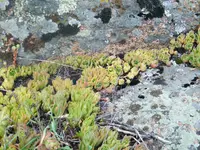
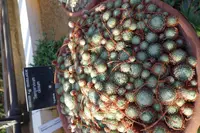
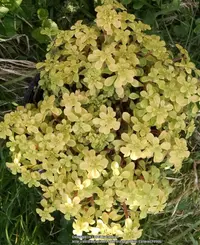
Russian houseleek (Sempervivum ruthenicum) is a cold-hardy, rosette-forming succulent from rocky slopes and steppe regions of Eastern Europe. It forms tight clusters of fleshy, pointed leaves that can show green, reddish, or bronze tones depending on light and temperature.
Plants spread slowly by offsets, creating dense mats that suit rock gardens, troughs, and shallow containers. The rosettes are monocarpic, meaning each one flowers once on a tall stalk and then dies, leaving offsets to replace it.
This species prefers bright light, gritty, fast-draining soil, and relatively dry conditions, which makes it suitable for beginners who want to learn how to care for Russian houseleek.

Care Difficulty
Easy Care

Light Preference
Full Sun

Water Requirements
Low Water

Temperature Preference
Cold Hardy

Hardiness Zone
4–9

Soil Texture
Sandy, Loamy, Rocky

Soil pH
Slightly acidic (6.5–7.0), Neutral (7.0)

Soil Drainage
Well-drained

Fertilization
Minimal (feed rarely)
Scan your plant to receive care tips personalized for your specific plant
Available on iOS and Android
This hardy alpine succulent prefers bright, open conditions that mimic its natural rocky habitats.
This drought-tolerant succulent needs infrequent, careful watering to avoid root rot.
This cold-hardy species tolerates a wide temperature range, especially in outdoor rock gardens.
This species tolerates low household humidity and rarely needs special humidity management.
This alpine succulent needs very free-draining, mineral-rich soil to avoid root and crown rot.
This species is very suitable for container growing outdoors.
This species needs only minimal feeding, similar to many rock-garden succulents such as Russian houseleek.
Pruning Sempervivum ruthenicum is limited to hygiene and light thinning rather than shaping.
This hardy sempervivum is usually transplanted in rock gardens or shallow dishes rather than frequently repotted.
Sempervivum ruthenicum is most commonly propagated by offsets rather than seed.
This species is generally cold hardy and often needs little dedicated winter care in the ground.

Plant Health Check
Not sure what's wrong with your plant? Check your plant's health inside the app.
This species is naturally associated with dry, rocky steppe habitats in Eastern Europe, particularly in areas of present-day Ukraine and neighboring regions, reflecting its adaptation to continental climates with cold winters and hot, dry summers.
It tends to form low, tight carpets of small rosettes connected by stolons, allowing it to gradually colonize shallow soils in crevices and on stony slopes without being displaced by larger, faster-growing plants.
Despite having fleshy, water-storing leaves typical of succulents, it tolerates substantial frost, which makes Sempervivum ruthenicum plant care in outdoor rock gardens feasible in regions with cold winters.
This species slowly spreads by producing offsets around the mother rosette, forming tight, low mats rather than running far. It is not considered aggressive and is easy to control by lifting or cutting unwanted rosettes.
Keep your plants happy and healthy with plant identification, disease detection, and easy care guidance.