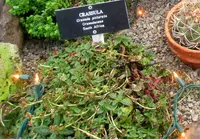
Teneriffe houseleek Care (Sempervivum ciliosum)

Teneriffe houseleek

About Teneriffe houseleek

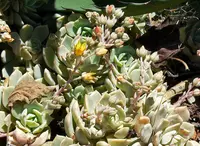
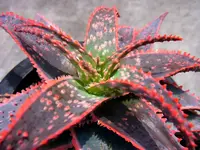
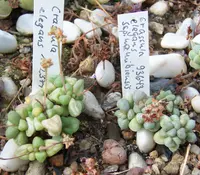
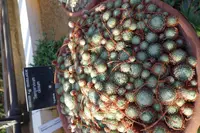
Teneriffe houseleek (Sempervivum ciliosum) is a hardy, rosette-forming succulent in the stonecrop family. It stores water in thick, compact leaves arranged in tight clusters. The rosettes are edged with fine hairs, giving them a slightly fuzzy look, and older plants produce short flower stalks with star-shaped blooms. This species is native to mountainous regions of the Balkans, where it grows in rocky, well-drained sites with strong sun and limited moisture. Its drought tolerance and cold hardiness make it relatively easy to grow in containers, rock gardens, and troughs. Gardeners who want to learn how to care for Teneriffe houseleek usually focus on providing sharp drainage and avoiding prolonged wet conditions.

Main Plant Requirements

Care Difficulty

Easy Care

Light Preference

Full Sun

Water Requirements

Low Water

Temperature Preference

Cold Hardy

Hardiness Zone

4–9

Soil Texture

Sandy, Loamy, Rocky

Soil pH

Slightly acidic (6.5–7.0), Neutral (7.0)

Soil Drainage

Well-drained

Fertilization

Minimal (feed rarely)

Get Personalized Care Plan

Scan your plant to receive care tips personalized for your specific plant

Available on iOS and Android

How to Care for the Teneriffe houseleek

Sempervivum ciliosum thrives in bright outdoor conditions with several hours of direct sun daily.

  • Provide 6–8 hours of direct sun, ideally strong morning sun with lighter afternoon exposure to limit leaf scorch in hot summers.
  • Teneriffe houseleek tolerates light partial shade, but too much shade leads to stretched rosettes, loose leaf spacing, and duller color.
  • In cooler seasons it safely takes full sun all day, while in midsummer heat waves consider very light afternoon shade, especially in reflective or south-facing sites.

Sempervivum ciliosum is a drought-tolerant succulent that prefers infrequent, deep watering.

  • Allow the soil to dry out fully between waterings; in the ground, only water when weather has been dry for many days and rosettes begin to look slightly deflated.
  • Ensure very sharp drainage using gritty, sandy soil so excess water runs off quickly and roots do not sit in soggy conditions.
  • Watch for overwatering signs such as yellowing, translucent leaves or a mushy crown, and underwatering signs like persistent shriveling despite cool weather.

This hardy succulent tolerates a wide temperature range but performs best in moderate conditions.

  • Optimal growth occurs around 60–75°F (16–24°C), especially in spring and early summer when nights are cooler and soil does not stay wet and cold.
  • Mature plants are cold-hardy and can survive down to about 0°F (−18°C) if soil drains well and crowns are not buried in ice for long periods.
  • In hot summers above 90°F (32°C), provide some afternoon shade and avoid overhead watering during peak heat to reduce heat stress and rot risk.

This species prefers dry to moderately dry air and rarely needs extra humidity.

  • Aim for 30–50% humidity, similar to most heated indoor homes, for stable growth.
  • Teneriffe houseleek tolerates very dry air; problems usually come from excess moisture at the roots, not low humidity.
  • If leaf bases turn mushy or show rot, reduce nearby misting, improve air movement, and keep foliage dry.

Sempervivum ciliosum needs very fast-draining, mineral-rich soil to prevent root and crown rot.

  • Use a gritty mix such as 50–70% coarse sand, pumice, or perlite blended with 30–50% lean potting soil or loam.
  • Aim for slightly acidic to neutral pH around 6.0–7.0, avoiding strongly acidic or alkaline mixes that can limit nutrient uptake.
  • Increase aeration by adding larger particles (3–6 mm gravel or pumice) so water drains within seconds rather than pooling.
  • Avoid fine, peat-heavy, or clay-based soils that stay wet, compact easily, and suffocate the shallow fibrous root system.

This species is very suitable for container growing, especially in shallow, well-drained pots.

  • Choose a broad, shallow container that matches the shallow root system and leaves horizontal space for offsets to spread.
  • Use unglazed terracotta if outdoor conditions are wet, since it allows faster evaporation and keeps the root zone drier.
  • Raise the pot slightly on feet or stones so drainage holes stay clear and water cannot pool under the container after rain or watering.

Sempervivum ciliosum grows well in lean soil and needs only minimal feeding for healthy rosettes.

  • Use a very light application of balanced NPK succulent fertilizer, diluted to 25–50% strength.
  • Feed once in late spring, and at most again in midsummer, during active growth.
  • Skip feeding in fall and winter, when the plant is semi-dormant.
  • For caring for Teneriffe houseleek outdoors, avoid rich compost that can cause weak, stretched growth.

Sempervivum ciliosum benefits from light, periodic clean-up rather than structural pruning.

  • Best time for pruning is late spring to early summer, after winter damage is visible.
  • Remove dead, shriveled, or moldy rosettes and old flower stalks at the base.
  • Thin out crowded offsets only if airflow is poor or rot appears, to maintain a compact mat.
  • Use clean fingers or small scissors, cutting close to the crown without injuring firm green tissue.

This species is usually transplanted or divided rather than frequently repotted.

  • Look for tightly packed rosettes, slow growth, or roots circling drainage holes as signs to move it.
  • Transplant or repot every 3–4 years in spring, when new growth begins and stress is lower.
  • Lift clumps gently, keep roots as intact as possible, and replant at the same soil depth.
  • Water lightly after transplanting, then allow soil to dry between waterings to limit root rot.

New Sempervivum ciliosum plants are most commonly produced from offsets rather than seed.

  • Best season is spring to early summer, when offsets root quickly in warming soil.
  • Gently detach rooted or nearly rooted offsets from the mother rosette by hand or with a clean knife.
  • Set offsets on gritty, fast-draining mix, just covering the roots, and keep slightly moist until established.
  • Seed propagation is possible in trays of sandy mix kept cool and bright, but germination is slower and less uniform.

This hardy succulent tolerates freezing conditions and usually needs little winter care in the ground.

  • Most established plants handle snow and frost well if soil drains freely.
  • In very wet winters, use a gravel mulch around rosettes to keep crowns drier and reduce rot.
  • For containers in regions colder than about 0°F, move pots to a cold, bright, sheltered spot such as an unheated garage.

Care Tips

Offset management

Gently twist and remove crowded offsets with a bit of attached stem in late spring, then replant them slightly above the soil line to maintain good air circulation and prevent rot in the mother rosette.

Winter wet protection

In regions with cold, wet winters, place a simple rain shield or cold frame over the plant to keep excess moisture off the rosettes while still allowing strong light and airflow.

Grit top-dressing

Apply a 0.5–1 cm layer of coarse grit or small gravel around the rosettes to keep leaf bases dry, reduce soil splash, and discourage mealybugs and fungal issues.

Container depth control

Use shallow, wide containers rather than deep pots so the shallow root system fills the pot evenly, which improves drainage and reduces the chance of the center rosette rotting.

Bloom stalk handling

After a rosette flowers and begins to decline, cut the spent flower stalk at the base and remove the dying rosette so surrounding offsets have space and better airflow for healthy growth when caring for Teneriffe houseleek.

Common Pests and Diseases

Mealybugs

This pest appears as small white cottony clusters tucked between rosettes and along the base of leaves, feeding on plant sap and weakening growth. Symptoms include distorted new leaves and sticky honeydew on the foliage or nearby surfaces.

Solution

Isolate the affected plant, then remove visible insects with a cotton swab dipped in 70% isopropyl alcohol, paying special attention to tight leaf crevices. Improve air movement, avoid overfertilizing, and repeat spot treatments weekly until no new insects appear; for larger outbreaks, use a labeled insecticidal soap sprayed in the cool part of the day and keep foliage dry afterward.

Vine weevils

These insects cause irregular notches along leaf edges, while the soil-dwelling larvae chew on roots and can cause whole rosettes to collapse. Symptoms include sudden wilting of previously healthy rosettes despite adequate moisture.

Solution

Inspect at night and hand-pick adult beetles from leaves, then target larvae by replacing infested substrate and discarding old soil in the trash, not the garden. For persistent problems, use beneficial nematodes labeled for vine weevil control in moist but not waterlogged soil and maintain coarse, free-draining grit in the planting medium to reduce larval success when growing Teneriffe houseleek in pots or troughs.

Aphids

These insects sometimes cluster on young central leaves and flower stalks, extracting sap and causing stunted growth or distorted rosettes. Symptoms include sticky honeydew, sooty mold on nearby surfaces, and a general decline in vigor during the growing season.

Solution

Spray the rosettes with a firm stream of water to dislodge colonies, avoiding prolonged leaf wetness in cool weather. If populations persist, use insecticidal soap or a horticultural oil labeled for succulents, applied in the early morning and repeated every 5–7 days until no aphids remain, and reduce excess nitrogen fertilization that encourages soft, susceptible growth.

Rust

This disease occasionally appears as orange to brown pustules on older leaves, especially in damp, crowded plantings. Symptoms include discolored spots that may cause affected leaves to yellow, dry, and die prematurely.

Solution

Remove and discard infected leaves, then improve spacing and airflow around rosettes so foliage can dry quickly after rain or watering. Avoid overhead watering, keep the crown free of wet debris, and if the problem recurs, move container plants to a sunnier, breezier position and replace very compacted or water-retentive soil with a grittier mix.

Crown and leaf rot

This disease develops in cool, wet conditions where moisture lingers in the rosette center, leading to mushy, discolored inner leaves and eventual collapse of the whole rosette. Symptoms include a foul smell and leaves that detach easily with a slimy base.

Solution

Promptly remove and discard any affected rosettes, including the base, and check nearby offsets for early signs of softness. Reduce watering frequency, switch to a sharply draining mineral-rich mix, increase sun exposure and airflow, and water at the soil level only, allowing the rosette center to remain dry, especially in cool seasons.

Interesting Facts

Ciliate leaf margins

This species has tiny eyelash-like hairs along the edges of its leaves, which is why it is called ciliosum, meaning fringed with fine hairs in Latin. These hairs can trap dew and fine dust, slightly reducing water loss from the leaf surface.

Mountain habitat specialist

It is native to rocky slopes and alpine meadows in the Balkans, often growing in very shallow, gritty soils with high light and strong temperature fluctuations. This origin explains its compact rosette form and high tolerance of cold, provided drainage is excellent.

Clumping rosette colonies

The rosettes of this species spread by short stolons, forming tight, cushion-like mats of many small offsets over time. These clumps help stabilize thin mountain soils and reduce erosion on exposed rock faces.

Botan icon

Did you know?

In its native range, Sempervivum ciliosum often roots into crevices of limestone rocks, where slightly alkaline conditions and extreme drainage give it a competitive advantage over less specialized plants that cannot tolerate such nutrient-poor, fast-drying niches.

FAQs about Teneriffe houseleek

This species performs best outdoors in rock gardens, troughs, or containers with excellent drainage and good airflow. Indoors it often stretches and weakens, so Teneriffe houseleek indoor care is usually more challenging and less reliable long term.

Grow Healthy Plants with Botan Care

Keep your plants happy and healthy with plant identification, disease detection, and easy care guidance.


Botan plant care app — identify plants on mobile

Explore More Plants