Crassula exilis Care

Crassula exilis

About Crassula exilis

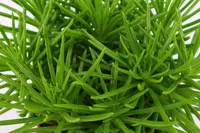
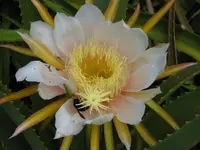
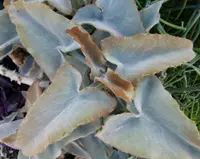
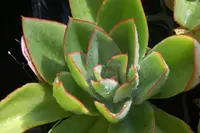
Crassula exilis is a small, clumping succulent from arid regions of southern Africa. It forms low rosettes of narrow, often slightly rough leaves, sometimes with red or purple tones. Short flower stalks appear above the foliage with clusters of small, star-shaped blooms.

This species stays compact and works well in small pots, rock gardens, or mixed succulent dishes. It is naturally adapted to strong light, fast-draining mineral soils, and periods of drought.

These traits make it relatively forgiving for growers who tend to underwater, but sensitive to poor drainage and excess moisture. Understanding how to care for Crassula exilis mainly involves preventing waterlogged conditions and providing enough light.

Main Plant Requirements

Care Difficulty

Easy Care

Light Preference

Full Sun

Water Requirements

Low Water

Temperature Preference

Tropical / Frost Sensitive

Hardiness Zone

10–11

Soil Texture

Sandy, Loamy, Rocky

Soil pH

Slightly acidic (6.5–7.0), Neutral (7.0)

Soil Drainage

Well-drained

Fertilization

Minimal (feed rarely)

Get Personalized Care Plan

Scan your plant to receive care tips personalized for your specific plant

Available on iOS and Android

How to Care for the Crassula exilis

This compact succulent prefers bright, indirect light with some direct sun for best color and growth.

  • Provide 4–6 hours of morning sun or late-afternoon sun, plus bright, indirect light for the rest of the day to prevent leaf scorch.
  • Tolerates light partial shade, but stems of Crassula exilis may stretch and foliage may pale if kept in low light for many weeks.
  • In summer, protect from harsh midday sun with light shade or filtered light; in winter, move to the brightest possible spot to compensate for shorter days.

Watering should imitate brief desert rain followed by a thorough dry period.

  • Allow the top 3–5 cm of soil to dry completely before watering, then water deeply so it drains quickly through the root zone.
  • In spring and summer, expect to water more often during active growth; in cooler months reduce frequency, sometimes to only occasional watering.
  • Watch for firm, plump leaves as a sign of good hydration; soft, wrinkling leaves indicate underwatering, while yellowing, mushy leaves suggest overwatering and poor drainage for Crassula exilis.

This species prefers warm, dry conditions with good protection from frost and extremes.

  • Aim for an active growth range of 65–80°F (18–27°C), where metabolism and root activity remain stable.
  • Protect from temperatures below 40°F (4°C); brief dips to 32°F (0°C) may damage foliage, and hard frost can kill the plant.
  • In hot spells above 90°F (32°C), provide light shade, good airflow, and avoid reflected heat from walls or paving to limit stress.

This species handles typical indoor humidity well and rarely needs special adjustments.

  • Aim for 30–50% humidity, as very damp air combined with low light can encourage fungal spots on leaves.
  • Dry indoor air is usually tolerated; wrinkling leaves typically indicate underwatering rather than low humidity.
  • If air is extremely dry and hot, increase local humidity slightly by grouping succulents together, not by misting.

This succulent needs very fast-draining, mineral-rich soil to prevent root rot.

  • Use a gritty mix such as 50–70% inorganic material (pumice, coarse sand, or perlite) blended with 30–50% cactus potting mix.
  • Choose a loose, open texture that lets water run through in seconds and leaves air pockets around the roots.
  • Aim for slightly acidic to neutral pH, roughly 6.0–7.0, which typical commercial cactus mixes provide.
  • Avoid dense, peat-heavy or clay soils; amend with extra pumice or coarse sand to keep Crassula exilis roots dry between waterings.

This compact species is well suited to container growing, including small pots and dish gardens.

  • Select a shallow, wide pot so the spreading rosettes can fill the surface while the relatively shallow roots remain evenly aerated.
  • Choose unglazed terracotta if extra evaporation is needed, as it dries faster than plastic and helps prevent waterlogged roots.
  • Elevate the pot or use pot feet so drainage holes stay clear and excess water can leave the container quickly after watering.

This small succulent has modest nutrient needs, so light, infrequent feeding is sufficient for Crassula exilis.

  • Use a balanced liquid fertilizer (around 10-10-10 or 20-20-20) diluted to 1/4–1/2 strength for container plants.
  • Feed once every 4–6 weeks during spring–summer active growth, only on moist soil.
  • Avoid compost-heavy mixes; use a low-organic, gritty succulent substrate to prevent salt buildup.
  • Stop feeding in fall–winter, when growth slows, to avoid weak, stretched tissue.

Pruning focuses on removing damaged tissue and keeping Crassula exilis compact and healthy.

  • Best time is late spring to early summer, after strong new growth starts.
  • Use clean, sharp scissors or small pruning snips to remove dead, damaged, or shriveled leaves and stems.
  • Pinch or cut back leggy stems just above a leaf node to encourage branching and a denser cushion shape.
  • Remove crowded or overlapping rosettes only if airflow is poor or rot has appeared.

This shallow-rooted succulent prefers tight quarters and only occasional repotting.

  • Repot every 2–3 years or when roots circle the pot, growth slows, or soil no longer drains well.
  • Choose late spring as the main time to move Crassula exilis, when active growth improves recovery.
  • Use a wide, shallow container with a gritty, fast-draining cactus mix to limit root rot risk.
  • After repotting, keep roots barely moist for 7–10 days, then resume normal watering once new growth appears.

New plants are most reliably produced from offsets and short stem cuttings.

  • Separate offsets in late spring–summer, when plants are actively growing and easier to handle.
  • Take small rosettes or stem tips, then allow cut surfaces to dry and callus for 2–3 days.
  • Set pieces on or in a gritty, barely moist succulent mix with bright, indirect light and good airflow.
  • Maintain light moisture, not saturation, until roots form, then transition to normal Crassula exilis care.

Cold sensitivity means winter care mainly involves temperature control and dry conditions for this species.

  • Crassula exilis is frost tender; keep it above 40°F, ideally 45–55°F in winter.
  • Move containers indoors or into an unheated but frost-free greenhouse before the first freeze.
  • Water very sparingly, letting the mix dry almost completely to reduce rot risk in cool conditions.
  • Ensure bright light near a south- or west-facing window to prevent winter stretching and leaf drop.

Care Tips

Strategic offset division

Lift and divide crowded rosettes every 2–3 years by gently teasing apart offsets and replanting only the firm, plump ones to maintain a compact, vigorous clump.

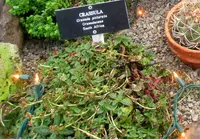
Rock-mulch topdressing

Add a thin layer of fine gravel or small decorative stones on the soil surface to keep the crown dry, reduce algae and moss, and stabilize the shallow root system.

Proactive mealybug control

Inspect closely between leaves and along stems every few weeks and spot-treat early mealybug clusters with a cotton swab dipped in 70% isopropyl alcohol before infestations spread.

Controlled outdoor hardening

If moving the plant outdoors for summer, increase light and wind exposure gradually over 7–10 days to avoid sun scorch and mechanical stress to the brittle stems.

Winter rest adjustment

During the cooler, low-light months, reduce disturbance by avoiding repotting and propagation so the plant can stay in a semi-resting state, which supports long-term Crassula exilis care.

Common Pests and Diseases

Mealybugs

This pest feeds on sap and hides in leaf axils and between stacked leaves, leaving white, cotton-like clusters and sticky honeydew on the plant. Symptoms include slowed growth, puckered leaves, and sooty mold growing on the honeydew.

Solution

Isolate the plant, then dab visible insects with cotton swabs dipped in 70% isopropyl alcohol and gently wipe leaf crevices and stems. Repeat weekly until no new pests appear, and reduce excess fertilizer to avoid soft, pest‑prone growth as part of consistent Crassula exilis care instructions.

Aphids

These insects cluster on tender new growth and flower stalks, sucking sap and causing distortion, curling, and sticky residue. Ants may appear, attracted by the sweet honeydew the aphids produce.

Solution

Rinse the plant under a gentle stream of lukewarm water to dislodge colonies, then treat remaining insects with an insecticidal soap spray directed at shoot tips and flower stems. Repeat every 5–7 days until new growth emerges clean and monitor nearby plants to prevent re‑infestation.

Spider mites

This pest prefers dry, warm conditions and can appear on stressed plants as fine webbing between leaves, with tiny specks and a dull, stippled look to the foliage. Symptoms include pale, sand‑blasted patches on the fleshy leaves and gradual leaf drop if the infestation is heavy.

Solution

Increase local humidity slightly around the plant without wetting the soil surface, then rinse both sides of the leaves under a gentle spray to remove mites and webs. Follow with a targeted application of horticultural oil, ensuring good coverage on leaf undersides, and repeat at 7–10 day intervals as needed.

Edema

This disorder occurs when roots absorb water faster than the leaves can release it, causing blisters or corky, rough patches on the succulent leaves. Symptoms include raised, brownish or translucent spots mostly on the undersides of leaves, often after sudden changes in moisture or temperature.

Solution

Allow the soil to dry more thoroughly between waterings and avoid sudden heavy soaking after a dry spell. Improve light levels and airflow, keep temperatures stable, and remove only severely damaged leaves; new growth should emerge normal once watering habits are corrected.

Fungal leaf spots

This disease develops when moisture remains on the leaves or air circulation is poor, leading to small dark spots that may enlarge or merge on the fleshy foliage. Symptoms include discolored patches that can sink slightly and, in advanced cases, cause leaf drop from the lower parts of the plant.

Solution

Remove and discard affected leaves, then adjust watering so the foliage stays dry and the plant is not crowded by neighboring pots. Improve airflow, provide brighter light, and if spotting continues, apply a sulfur or copper‑based fungicide labeled for succulents, following the product directions carefully.

Interesting Facts

Natural cliff specialist

This species is naturally restricted to rocky slopes and cliff faces in South Africa, where it anchors in shallow crevices and survives with very little accumulated soil.

Mat-forming rosettes

It grows as dense clusters of small, star-like rosettes that gradually form mats, an adaptation that helps shade its own roots and reduce water loss in harsh, exposed sites.

Seasonal star flowers

In suitable conditions it produces small, star-shaped white to pinkish flowers on short stems, usually in the warmer months following a period of good light and moderate moisture.

Botan icon

Did you know?

Crassula exilis belongs to a complex of closely related, morphologically variable forms, and has several recognized subspecies that differ in leaf texture, size, and coloration depending on their very localized South African habitats.

FAQs about Crassula exilis

Brown tips usually indicate underwatering, low humidity, or heat stress, while brown mushy bases point to rot from excess moisture. Check roots, improve drainage, remove damaged leaves, and adjust watering so the soil dries between waterings.

Grow Healthy Plants with Botan Care

Keep your plants happy and healthy with plant identification, disease detection, and easy care guidance.

Botan plant care app — identify plants on mobile

Explore More Plants