Cactus Grape Care (Cissus cactiformis)

Also known as: Cactus Vine
Cactus Grape

About Cactus Grape

Cactus grape, Cissus cactiformis, is a succulent vine from arid regions of southern Africa. It develops thick, segmented, cactus-like stems that store water and give it a sculptural look. Growth is usually slow and compact in containers, which makes it suitable for sunny windowsills and small indoor collections.

This species prefers bright light, low to moderate watering, and a very well-drained, gritty soil mix. Its drought tolerance and minimal foliage make it relatively easy for attentive growers. Learning how to care for Cactus Grape mostly involves avoiding overwatering and protecting it from prolonged cold and excess humidity.

Main Plant Requirements

Care Difficulty

Moderate Care

Light Preference

Bright Indirect Light

Water Requirements

Low Water

Temperature Preference

Tropical / Frost Sensitive

Hardiness Zone

10–11

Soil Texture

Sandy, Loamy, Rocky

Soil pH

Slightly acidic (6.5–7.0), Neutral (7.0)

Soil Drainage

Well-drained

Fertilization

Minimal (feed rarely)

Get Personalized Care Plan

Scan your plant to receive care tips personalized for your specific plant

Available on iOS and Android

How to Care for the Cactus Grape

This drought-adapted succulent vine prefers strong light but benefits from some protection from intense midday sun.

  • Provide 6–8 hours of bright light daily, ideally with morning sun and light afternoon shade, especially in hot, dry climates.
  • Outdoors, full sun is tolerated if introduced gradually; indoors, place near a south- or west-facing window with sheer curtain–filtered light for Cactus Grape.
  • Watch for pale, stretched stems as a sign of insufficient light, and for scorched, brown patches as an indicator of excessive direct sun, especially in summer.

This species stores water in its thick stems and needs a careful, drought-style watering approach.

  • Allow the top 3–5 cm of soil to dry fully before watering; in very porous soil, this often means long intervals between waterings, guided by touch rather than a fixed schedule.
  • During active growth in warmer months, water thoroughly so excess drains away, then let the root zone dry; cut back sharply in winter when Cissus cactiformis is resting.
  • Monitor for shriveled stems and dull, wrinkled skin as signs of underwatering, and for mushy, yellowing bases or a sour soil smell as signs of overwatering and poor drainage.

This succulent vine thrives in warm, dry conditions and dislikes cold, damp environments.

  • Aim for 70–85°F (21–29°C) during active growth, with good airflow and low to moderate humidity to reduce the risk of rot.
  • Protect the plant from temperatures below 40°F (4°C); brief dips to 35–40°F (2–4°C) may be survived but can cause tissue damage, especially in wet soil.
  • In hot weather above 95°F (35°C), provide light shade and avoid confined, airless spots, and in cooler seasons move plants away from cold drafts and unheated, frost-prone areas.

This drought-adapted succulent vine tolerates low household humidity and rarely needs special moisture in the air.

  • Aim for 30–50% humidity; the plant copes well even at the drier end of this range.
  • Cactus Grape shows humidity stress mainly as shriveling stems combined with underwatering rather than from dry air alone.
  • If air is extremely dry and hot, place the pot away from heating vents and group with other plants to slightly raise local humidity.

This species needs a very fast-draining, mineral-based mix that mimics arid, rocky habitats.

  • Use a gritty blend such as 50% cactus mix with 30% pumice or coarse perlite and 20% coarse sand for strong aeration.
  • Keep drainage sharp; water must run through freely, with no pooling on the surface or in the saucer.
  • Target slightly acidic to neutral pH around 6.0–7.0, which suits most commercial cactus and succulent substrates.
  • Avoid heavy, peat-dense or clay soils that stay wet, as these quickly cause root and stem rot in Cissus cactiformis.

This compact, succulent vine is very suitable for container growing.

  • Choose a wide, shallow container to accommodate its spreading, shallow root system and keep the plant visually balanced.
  • Select unglazed terracotta if extra evaporation is needed to offset a very water-retentive mix or heavy watering habits.
  • Use a pot with large, unobstructed drainage holes so the gritty mix cannot clog and water exits the container within seconds.

This drought-adapted succulent vine needs modest feeding to support steady growth in containers.

  • Use a balanced liquid fertilizer (for example 10-10-10) at 1/4–1/2 strength during active growth in spring and summer.
  • Apply every 4–6 weeks when light is strong and the plant is producing new stems or segments.
  • Skip feeding in fall and winter when Cissus cactiformis growth slows or stops.
  • Avoid rich compost or heavy slow-release products that keep soil wet and cause root problems for Cactus Grape.

Thoughtful pruning helps maintain a compact, branched form and removes weak growth in Cissus cactiformis.

  • Carry out main pruning in late winter or early spring before strong new growth starts.
  • Remove dead, shriveled, or damaged stems first, then thin crowded or crossing segments to open the plant.
  • Shorten overly long shoots to control size and encourage branching from lower nodes.
  • Use clean, sharp scissors or pruning snips and make cuts just above a node to reduce stress and infection risk.

This species prefers a stable, snug container and does not need frequent repotting.

  • Check for roots circling the pot, pushing through drainage holes, or very slow growth despite good light and care.
  • Plan to repot every 2–3 years in late winter or early spring, just before new growth begins.
  • Move to a pot only 2–5 cm wider, using a very free-draining cactus or succulent mix to limit moisture stress.
  • Water lightly after repotting, keep in bright but indirect light for 7–10 days, and avoid heavy feeding until new growth appears.

New plants are most reliably produced from stem cuttings rather than from seed.

  • Take 7–10 cm succulent stem cuttings in late spring or early summer, choosing firm, unshriveled segments.
  • Allow cut ends to callus for 2–3 days in dry air to reduce rot risk before planting.
  • Insert cuttings into a gritty, barely moist cactus mix and keep at 70–80°F with bright, indirect light.
  • Maintain slight dryness and good air movement; rooting often occurs within several weeks when stems stay plump and firm.

This succulent vine is frost tender and needs protection in regions with cold winters.

  • Keep outdoor containers in temperatures above 40°F; move them indoors or into a heated greenhouse before frost is forecast.
  • Provide the brightest possible indoor light in winter, such as a south-facing window or supplemental grow light.
  • Reduce watering significantly in cool, low-light months so the soil stays almost dry between light waterings.
  • Avoid cold drafts on window sills; place pots slightly away from glass to prevent chilling of stems and roots.

Care Tips

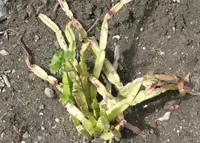
Segment Propagation Timing

Take stem cuttings from firm, fully green segments in late spring, allow the cut ends to callus for 2–3 days, then root them in a barely moist, very gritty mix to expand your collection with minimal rot risk.

Prevent Stem Splitting

If stems start to swell rapidly after a watering increase, reduce water volume slightly and add a thin top-dressing of coarse grit to slow moisture uptake and help prevent the succulent stems from cracking.

Controlled Structural Support

Use low, unobtrusive rocks or a shallow wire ring to gently support heavy, jointed stems while still allowing a sprawling habit, which reduces mechanical breakage at the narrow joints.

Dormancy Light Adjustment

In winter, keep the plant in the brightest spot available and avoid rotating the pot frequently so the segments maintain their orientation and do not drop from light stress during semi-dormant periods.

Pest Check Between Joints

Inspect the narrow stem joints and older, corkier sections every few weeks for mealybugs or scale, and if found, dab the pests directly with cotton swabs dipped in isopropyl alcohol before populations build up when growing Cactus Grape.

Common Pests and Diseases

Mealybugs

This pest feeds on sap in stem joints and along the ribbed succulent segments, often appearing as white cottony clusters. Symptoms include stunted growth, honeydew, and black sooty mold on surfaces below the plant.

Solution

Isolate the plant, then dab visible insects with cotton swabs dipped in 70% isopropyl alcohol and repeat weekly until no new pests appear. For heavier infestations, rinse stems under a gentle stream of lukewarm water and apply a labeled insecticidal soap or neem oil to all stem surfaces, allowing the potting mix to dry well afterward to avoid excess moisture stress.

Spider mites

These insects thrive on Cissus cactiformis in warm, very dry air and can cause fine webbing between segments, pale spotting, and a dull, dusty look to stems. Symptoms include gradual yellowing and reduced vigor, especially under indoor low-humidity conditions.

Solution

Increase humidity around the plant slightly and thoroughly rinse the stems with lukewarm water, focusing on crevices where mites hide. Follow with repeated applications of insecticidal soap or a horticultural oil at 5–7 day intervals, ensuring good coverage on all sides of the stems and improving air movement to reduce reinfestation.

Scale insects

This pest appears as small, hard, brown or gray bumps along stems, often aligned on ridges, where it removes sap and weakens growth. Symptoms include sticky honeydew, yellowing segments, and slow decline of affected stems.

Solution

Manually remove larger scale insects with a soft brush or cloth moistened with 70% isopropyl alcohol, taking care not to damage the succulent tissue. After mechanical removal, treat the plant with insecticidal soap or neem oil every 7–10 days for several cycles, and keep the plant somewhat drier and in brighter light to support recovery without overwatering.

Stem rot (fungal)

This disease develops when thick, water-storing stems stay wet and cool for extended periods, often in poorly draining soil. Symptoms include dark, soft, sunken areas on stems that may collapse and spread quickly along a segment.

Solution

Immediately cut away and discard all affected stem sections with a sterile blade, trimming back into firm, healthy tissue and allowing cut surfaces to dry and callus for 1–2 days. Repot into a fresh, very fast-draining succulent mix, water only when the mix is fully dry, improve light and airflow, and avoid letting water sit on stems for long to support long-term Cissus cactiformis care.

Botrytis blight

This disease tends to appear in cool, humid, low-light conditions and affects damaged or overwatered stems. Symptoms include gray fuzzy mold on wounded areas, soft spots, and rapid tissue collapse on shaded inner segments.

Solution

Remove all affected tissue and any fallen plant debris, then improve ventilation and provide brighter indirect light to dry the plant more quickly after watering. Allow the potting mix to dry more thoroughly between waterings, avoid overhead watering, and in persistent cases use a labeled fungicide on remaining healthy stems, focusing on areas previously shaded or crowded.

Interesting Facts

Unusual stem anatomy

This species forms thick, angular, leafless stems with a cactus-like appearance, but anatomically it is a true woody vine in the grape family and not a succulent cactus. The stems store some water yet still show visible nodes and fine tendrils typical of Vitaceae.

Tendril-bearing “cactus”

Despite its strongly succulent look, the plant produces slender tendrils that can grip nearby supports, reflecting its origin from climbing or scrambling vine ancestors. This combination of cactus-like stems and grape-family tendrils makes it morphologically distinctive among caudiciform houseplants.

Caudex-forming habit

Older plants gradually develop a swollen basal stem or caudex that serves as a long-term storage organ for water and nutrients. This growth form allows the plant to survive periodic drought in cultivation when grown in a very fast-draining mineral substrate, which is a key aspect of Cissus cactiformis plant care.

FAQs about Cactus Grape

Weak, floppy stems usually result from low light, excess watering, or overly rich soil. Give this plant brighter exposure, let the mix dry more between waterings, and use a very gritty, mineral-heavy substrate to maintain compact, firm growth.

Grow Healthy Plants with Botan Care

Keep your plants happy and healthy with plant identification, disease detection, and easy care guidance.

Botan plant care app — identify plants on mobile

Explore More Plants