Ivy geranium Care (Pelargonium peltatum)

Also known as: ivy leaved geranium, hanging geranium, Peltated Geranium, ivyleaf geranium, ivy storksbill, ivyleaf storksbill, ivy-leaved pelargonium, ivy pelargonium, cascading pelargonium
Ivy geranium

About Ivy geranium

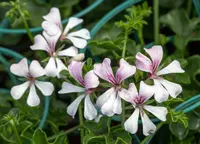
Ivy geranium (Pelargonium peltatum) is a trailing perennial commonly grown as a seasonal bedding or container plant in cooler climates. It forms long, cascading stems with fleshy, glossy, ivy-like leaves. Clusters of bright flowers in shades of pink, red, purple, or white appear over a long season, giving strong color in hanging baskets and window boxes. Native to South Africa, it is adapted to bright, dry conditions and tolerates short periods of drought once established. This plant suits gardeners looking to care for Ivy geranium with relatively low effort, as it handles heat and moderate neglect better than many flowering balcony plants.

Main Plant Requirements

Care Difficulty

Moderate Care

Light Preference

Full Sun

Water Requirements

Moderate Water

Temperature Preference

Tropical / Frost Sensitive

Hardiness Zone

10–11

Soil Texture

Sandy, Loamy, Organic-rich

Soil pH

Acidic (5.5–6.5), Slightly acidic (6.5–7.0)

Soil Drainage

Well-drained

Fertilization

Moderate (every 2–4 weeks)

Get Personalized Care Plan

Scan your plant to receive care tips personalized for your specific plant

Available on iOS and Android

How to Care for the Ivy geranium

Pelargonium peltatum benefits from bright light with some protection from harsh midday sun.

  • Provide 4–6 hours of direct morning sun, then bright shade or filtered light in the afternoon, especially in hot climates.
  • Tolerates light partial shade, but Ivy geranium flowers reduce and stems stretch if grown with fewer than 3–4 hours of direct sun.
  • In summer, shield from intense afternoon sun to prevent leaf scorch; in winter, move containers or choose sites with maximum sun exposure.

Pelargonium peltatum prefers thorough watering followed by a partial drying period.

  • Water when the top 2–4 cm of soil feels dry; avoid letting the soil stay constantly saturated to reduce root rot risk.
  • Use sharply drained soil and containers or beds with unobstructed drainage so excess water can flow out quickly after each watering.
  • In cool or low-light seasons, water less often and watch for yellow, mushy leaves from overwatering or crisp, drooping leaves from underwatering.

This species grows best in mild, frost-free conditions with moderate summer heat.

  • Aim for active growth temperatures around 65–75°F (18–24°C), which support steady foliage and flower production.
  • Protect from cold below 40°F (4°C); brief dips to 32°F (0°C) may damage foliage, and hard frost can kill the plant.
  • In hot weather above 85–90°F (29–32°C), provide light afternoon shade and avoid heat-reflecting walls to limit stress and leaf scorch.

This species prefers relatively dry air and usually thrives in 30–50% humidity.

  • Tolerates typical indoor and outdoor dry air well, so extra misting is unnecessary for Ivy geranium.
  • Watch for limp growth, pale new leaves, or fungal spots as signs of excess humidity rather than dryness.
  • Increase air movement with a small fan or open window to reduce prolonged dampness around foliage in humid climates.

This plant performs best in a light, well-aerated mix that drains quickly yet holds modest moisture.

  • Use a loose, slightly sandy mix such as 2 parts peat- or coir-based potting mix, 1 part perlite, and 1 part coarse sand.
  • Aim for slightly acidic to neutral pH around 6.0–7.0, avoiding strongly acidic or alkaline conditions that reduce nutrient uptake.
  • Ensure sharp drainage by using containers with large holes and avoiding saucers that keep the base of the pot constantly wet.
  • Improve aeration by adding extra perlite or fine bark if a commercial mix feels heavy or compacts after watering, which can promote root rot in Pelargonium peltatum.

This trailing species is highly suitable for containers and hanging baskets.

  • Choose a wide, shallow container so roots can spread while stems can trail freely over the sides without becoming crowded at the center.
  • Prefer rigid plastic or glazed ceramic pots in windy sites to provide weight and stability for the long, trailing growth.
  • Elevate the pot slightly on risers so drainage holes stay clear and water exits quickly after rain or irrigation, preventing waterlogging at the base.

Pelargonium peltatum responds well to moderate feeding during active growth for sustained flowering.

  • Use a balanced water-soluble fertilizer (around 10-10-10 or 15-15-15) at 1/2 strength for Ivy geranium in containers.
  • Feed every 2–3 weeks from spring through late summer when plants are actively growing.
  • Stop or reduce feeding to once every 4–6 weeks at very low strength in fall and winter.
  • For long-season planters, combine a slow-release fertilizer in the potting mix with light liquid feeds.

Pelargonium peltatum benefits from periodic pruning to maintain a compact, flowering form.

  • Best timing is late winter or early spring before strong new growth begins.
  • Remove dead, diseased, leggy, or crowded stems back to healthy tissue with clean, sharp scissors or pruners.
  • Pinch or tip back new shoots to encourage branching and more flower clusters.
  • After heavy flowering flushes, lightly trim spent stems to refresh the plant and reduce tangling.

This trailing geranium prefers slightly snug containers and only occasional repotting.

  • Repot every 2–3 years or when roots circle the pot, drainage slows, or growth and flowering decline.
  • Aim for early spring repotting so roots can re-establish before peak summer growth.
  • Move into a pot just 2–5 cm wider, using fresh, well-drained potting mix with added perlite.
  • Water thoroughly after shifting, then keep in bright, indirect light for several days to limit transplant stress.

Pelargonium peltatum is commonly propagated from stem cuttings for uniform plants.

  • Take 7–10 cm non-flowering tip cuttings in late spring or summer from healthy shoots.
  • Remove lower leaves, let cut ends dry for 15–30 minutes, then insert into a well-drained, slightly moist mix.
  • Maintain bright, indirect light, 65–75°F temperatures, and good air circulation for rooting.
  • Optional rooting hormone can improve success; transplant rooted cuttings once new growth appears.

This species is frost-tender and needs specific winter care in cold climates.

  • Before first frost, move container plants indoors to a cool, bright room (50–60°F).
  • Reduce watering so the soil stays barely moist, not wet, to limit root rot in low light.
  • In mild climates, mulch around outdoor plants to insulate roots from brief cold snaps.
  • Remove any frost-damaged stems promptly to prevent decay and encourage healthy regrowth in spring.

Care Tips

Trailing shoot training

Pinch or lightly tie young stems along the edge of baskets or railings so they trail evenly and create a dense cascade instead of a few long, bare vines.

Seasonal refresh cutback

At the end of winter, cut back leggy stems by 1/3 and remove thin, weak growth to stimulate compact, flowering shoots for the new season.

Deadhead with stem

When removing spent flower heads, snap or cut off the whole flower stalk back to a leaf node rather than just the petals to reduce rot risk and encourage faster reblooming.

Ventilation for foliage

Space plants so air can move between hanging baskets or window boxes, which helps leaves dry quickly after rain and reduces botrytis and bacterial leaf spot problems when caring for Ivy geranium.

Container rotation practice

Rotate outdoor containers 1/4 turn every 1–2 weeks so all sides receive similar light, keeping growth balanced and preventing one-sided, weak stems that are more prone to snapping in wind.

Common Pests and Diseases

Geranium rust

This disease causes small, round yellow spots on the upper leaf surface and corresponding brown pustules under the leaf. Symptoms include early leaf yellowing, leaf drop, and reduced flowering.

Solution

Remove and discard all affected leaves, avoiding overhead watering and splashing between plants, and increase spacing for better airflow. In severe cases, apply a labeled fungicide containing myclobutanil, tebuconazole, or chlorothalonil, and keep foliage as dry as possible to prevent new infections.

Botrytis blight

This disease produces soft, brown, water-soaked areas on leaves, stems, and flower clusters, often covered with gray fuzzy mold. Symptoms include flower bud drop and collapse of tender growth in cool, humid conditions.

Solution

Remove all faded flowers, dead leaves, and mushy tissue, and improve ventilation by thinning dense growth and avoiding overcrowding. Keep plants dry at night, water at the base in the morning, and use a labeled botrytis fungicide when conditions stay cool and damp for several days.

Pelargonium bacterial blight

This disease causes wedge-shaped leaf yellowing, black or brown V-shaped lesions from the leaf edge, and sometimes black streaks on stems. Symptoms include sudden wilting, stunting, and rapid decline of entire branches or plants.

Solution

Immediately remove and discard any suspect plants and nearby highly symptomatic material, and avoid taking cuttings from affected stock. Disinfect pruning tools between cuts, avoid overhead watering and splashing, and source new plants from certified clean suppliers since chemical control is usually ineffective for home growers.

Aphids

These insects cluster on new shoots, buds, and the undersides of leaves, sucking sap and causing curling, distortion, and sticky honeydew. This pest can also encourage sooty mold growth on foliage and reduce flower quality.

Solution

Wash colonies off with a strong but controlled stream of water, repeating every few days, and pinch off heavily infested tips. If needed, use insecticidal soap or a ready-to-use neem oil spray, making sure to coat the undersides of leaves and applying in the cool part of the day to avoid leaf burn while caring for Ivy geranium.

Whiteflies

These insects are tiny white, moth-like pests that flutter up when plants are disturbed and feed on the underside of leaves. This pest weakens plants, causes leaf yellowing and sticky honeydew, and can lead to poor flowering.

Solution

Hang yellow sticky traps near the plant to monitor and reduce adult numbers, and regularly check and crush or rinse off clusters of immature stages on leaf undersides. For ongoing infestations, apply insecticidal soap or horticultural oil every 5–7 days for several cycles, ensuring thorough coverage and avoiding use in full sun or during high heat.

Interesting Facts

Natural rock creeper

In its native South African habitat, this species often grows trailing over rocks and cliffs, using its long, flexible stems to cascade down vertical surfaces in full sun exposure.

Succulent-like foliage

The leaves have slightly succulent tissue that stores water, which helps the plant tolerate short dry periods and intense light better than many other ornamental balcony plants.

Zygomorphic flower design

Its flowers are zygomorphic, meaning they have a single plane of symmetry, with the upper petals usually larger and more patterned than the lower ones, an arrangement that helps guide pollinators to the nectar.

Botan icon

Did you know?

This species was one of the early South African Pelargonium introductions to Europe in the 17th–18th centuries and played a key role in breeding the modern cascading balcony geranium cultivars widely used in window boxes across temperate cities today.

FAQs about Ivy geranium

Lack of blooms often comes from insufficient light, too much nitrogen fertilizer, or old, woody stems. Regular deadheading and light trimming, plus a balanced fertilizer, usually restore flowering when overall growing conditions are adequate.

Grow Healthy Plants with Botan Care

Keep your plants happy and healthy with plant identification, disease detection, and easy care guidance.

Botan plant care app — identify plants on mobile

Explore More Plants