Tillandsia leiboldiana Care

Tillandsia leiboldiana

About Tillandsia leiboldiana

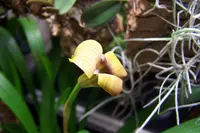
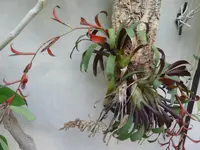
Tillandsia leiboldiana is an epiphytic air plant from humid forests of Central and South America, where it grows attached to trees rather than in soil. It forms arching rosettes of narrow green leaves and produces tall, colorful bracts with tubular flowers that give it strong ornamental value. This species prefers bright, filtered light, good air movement, and regular moisture on its leaves rather than constant root-zone wetness. Its need for humidity and consistent misting means it is slightly more demanding than some other air plants, so understanding how to care for Tillandsia leiboldiana helps keep it healthy indoors.

Main Plant Requirements

Care Difficulty

Moderate Care

Light Preference

Bright Indirect Light

Water Requirements

Moderate Water

Temperature Preference

Tropical / Frost Sensitive

Hardiness Zone

11–12

Soil Texture

Sandy, Rocky, Organic-rich

Soil pH

Acidic (5.5–6.5)

Soil Drainage

Well-drained

Fertilization

Light (every 4–6 weeks)

Get Personalized Care Plan

Scan your plant to receive care tips personalized for your specific plant

Available on iOS and Android

How to Care for the Tillandsia leiboldiana

This epiphytic species prefers bright, indirect light with some protection from intense midday sun.

  • Provide 4–6 hours of bright, filtered light daily, such as dappled shade under taller plants or behind sheer curtains indoors.
  • Allow gentle early morning or late afternoon sun, but avoid strong midday sun that causes leaf bleaching or crispy brown tips.
  • In winter, move Tillandsia leiboldiana to the brightest sheltered spot available, watching for stretched, pale leaves that signal insufficient light.

Watering should balance frequent moisture exposure with fast drying to prevent rot.

  • Mist or soak the plant thoroughly until all leaf surfaces are wet, then allow it to dry completely within 2–3 hours before the next watering.
  • Increase watering frequency in warm, dry weather when leaf edges curl or feel very crisp, and reduce when humidity is high or drying takes longer than 4 hours.
  • Avoid standing water in leaf bases, which leads to soft, dark spots; healthy leaves stay firm, with no sour smell around the crown.

This species prefers consistently warm, frost-free conditions.

  • Aim for 65–80°F (18–27°C) for active growth, with stable temperatures and modest airflow around the foliage.
  • Protect from cold; growth slows below 60°F (16°C), and damage occurs if exposed to near-freezing temperatures, especially with moisture on the leaves.
  • Avoid extreme heat above 90°F (32°C) by providing shade and extra airflow, as prolonged high heat with strong sun can scorch foliage and stress the plant.

This species benefits from consistently high humidity for stable growth.

  • Aim for 60–80% humidity, mimicking the moist forest habitats where Tillandsia leiboldiana naturally occurs.
  • In drier rooms, leaf tips may brown and curl, and color can dull, indicating humidity stress rather than drought.
  • Increase humidity with daily misting, a nearby humidifier, or grouping plants closely, but allow leaves to dry within a few hours to prevent rot.

As an epiphytic bromeliad, this species does not grow in typical potting soil and needs a very airy support medium.

  • Use a loose mix of medium orchid bark, chunky perlite, and a small amount of sphagnum moss to hold the plant rather than burying it.
  • Ensure extremely rapid drainage so water flows through in seconds and the mix dries quickly between waterings.
  • Keep the medium slightly acidic to neutral, around pH 5.5–7.0, which supports nutrient uptake without salt buildup.
  • Avoid dense, peat-heavy, or standard houseplant mixes that retain water around the base, as this encourages rot in Tillandsia leiboldiana.

This species can be grown in containers if mounted or loosely set in a very open support medium rather than traditional potting soil.

  • Choose a shallow, wide container or basket that allows air to circulate freely around the base and leaves.
  • Secure the plant with wire, fishing line, or coarse bark pieces so it stays stable without packing material tightly around it.
  • Select breathable materials like slatted wood or mesh inserts to prevent water from pooling at the base after watering or misting.

Light feeding supports healthy growth in Tillandsia leiboldiana but excessive nutrients can damage the roots.

  • Use a balanced liquid fertilizer (around 10-10-10 or 20-20-20) diluted to 25–50% strength for container-grown plants.
  • Feed every 4–6 weeks during the active growing season, once new growth is clearly visible.
  • Apply fertilizer to moist soil, never dry, to reduce root burn and salt buildup.
  • In late fall and winter, reduce feeding to 1 light application or pause completely if growth is minimal.

Pruning is mainly used to keep Tillandsia leiboldiana tidy and to remove unhealthy growth.

  • Best timing is late winter to early spring, before strong new growth begins.
  • Use clean, sharp scissors or hand pruners to cut out dead, diseased, or damaged leaves and stems.
  • Thin crowded shoots slightly to improve light penetration and airflow, which can support better flowering.
  • Avoid heavy structural cuts; maintain the plant’s natural form while only refining its outline.

Transplanting focuses on giving Tillandsia leiboldiana fresh space and stable moisture rather than frequent container upgrades.

  • Look for signs such as roots circling the container, water running off quickly, or noticeably slowed growth.
  • Plan repotting or transplanting for early spring so the plant can recover during the full growing season.
  • Most plants only need new containers or planting spots every 2–3 years if growth and drainage remain good.
  • Handle roots gently, keep the original root ball mostly intact, and water thoroughly afterward to settle soil and limit stress.

Propagation of Tillandsia leiboldiana is typically done on a small scale for replacement plants or light clump expansion.

  • Division is the most practical method; separate offsets from the parent once each has several healthy shoots and roots.
  • Carry out division in spring or early summer when temperatures are warm and growth is active.
  • Replant divisions into a well-drained medium, then keep evenly moist and in bright, indirect light for establishment.
  • Seed propagation is possible but slow; it requires consistently warm conditions and lightly moist, fine-textured medium.

Winter care focuses on avoiding freezing damage and maintaining moderate moisture levels.

  • This species is frost sensitive and should be kept above 40–45°F whenever possible.
  • In cold regions, grow in containers and move plants indoors to a bright, cool room before first frost.
  • Outdoors in mild climates, add a light mulch around the base to buffer short cold snaps and moisture swings.
  • Reduce watering in winter, keeping the root zone just slightly moist, never saturated.

Care Tips

Mounting strategy

Mount plants on inert, rot-resistant materials like cork bark or hardwood using nylon fishing line or plant-safe wire so the base stays secure but air can circulate freely around the roots and foliage.

Drain-and-dry routine

After soaking or heavy misting, always turn the plant upside down and gently shake off excess water from the central rosette to prevent rot in the leaf bases.

Air circulation boost

Place the plant where it receives light, steady air movement or use a small fan on a low setting for a few hours daily to keep leaves dry and reduce fungal and bacterial issues.

Seasonal light shifts

Move the plant slightly farther from windows or use a sheer curtain in summer, then closer to bright windows in winter, to balance strong seasonal light changes without causing leaf scorch.

Inspection and grooming

Inspect leaf bases and the inner rosette every 1–2 weeks, removing any trapped debris or dead leaves with tweezers to reduce pest hiding spots and support healthier growth when caring for Tillandsia leiboldiana.

Common Pests and Diseases

Mealybugs

This pest often hides in leaf bases and between bracts, sucking sap and causing yellowing and stunted growth. Symptoms include sticky honeydew deposits and cottony white tufts in the rosette and along the inflorescence.

Solution

Physically remove visible insects with a cotton swab dipped in 70% isopropyl alcohol, then rinse the plant thoroughly with lukewarm water and allow it to dry quickly with strong airflow. For persistent infestations, repeat alcohol spot-treatments weekly and isolate the plant from others while monitoring for reappearance to support proper Tillandsia leiboldiana care instructions.

Scale insects

These insects attach firmly along leaf sheaths and flower stalks, appearing as small, hard bumps that cause localized yellow or brown spots. Honeydew and sooty mold can develop on affected areas in humid conditions.

Solution

Gently scrape off individual scales with a fingernail or soft brush, then wipe affected areas with diluted alcohol and rinse the plant well. Improve air movement, keep the plant drier between misting or dunking sessions, and repeat inspections weekly until no new scales appear.

Fungal leaf spot

This disease causes small water-soaked spots on the leaves that turn brown or purplish and may merge into larger patches, especially in plants kept too wet and with poor airflow. Symptoms include slow deterioration of affected leaf sections, starting from areas where water collects.

Solution

Trim and discard the worst-affected leaves or sections, then adjust watering by shortening soaking times and always allowing the plant to dry within 3–4 hours. Increase airflow, avoid leaving water trapped in leaf bases, and if the problem persists, apply a light copper-based fungicide spray and dry the foliage promptly afterward.

Soft rot (bacterial)

This disease develops when water remains trapped in the central rosette in warm, stagnant air, leading to soft, mushy, foul-smelling tissue at the base of the leaves. Symptoms include rapid collapse of the central growth while outer leaves may still appear green initially.

Solution

Remove and discard any obviously rotting tissue and isolate the plant from others; if rot is extensive, the plant is usually not salvageable. Prevent recurrence by mounting or tilting the plant so water drains freely after soaking or misting, ensuring strong air circulation and avoiding prolonged wetness in the center.

Interesting Facts

Color-shifting bracts

The inflorescence of this species develops large, flattened bracts that often shift from green to red or purple tones as they mature, creating a layered, paddle-like structure distinct from the narrow spikes of many other air plants.

Epiphyte of cloud forests

This species naturally grows as an epiphyte on trees in humid montane and cloud forests of Central America, where it absorbs water and nutrients primarily through specialized leaf scales called trichomes rather than from soil.

Nocturnal moth pollination

Its tubular, pendant flowers are adapted for pollination by nocturnal moths, with nectar and floral structure positioned to dust the visiting insects with pollen as they hover or crawl along the hanging bloom.

Botan icon

Did you know?

In parts of its native range, this species tends to form loose, hanging colonies on the same host tree over many years, creating conspicuous living curtains that can host small invertebrates and contribute to the microhabitat complexity of the forest canopy.

FAQs about Tillandsia leiboldiana

This species usually needs to reach maturity and experience a slight seasonal drop in night temperatures to set a bloom spike. Stable, warm indoor conditions and insufficient air movement often delay flowering, even under otherwise good care.

Grow Healthy Plants with Botan Care

Keep your plants happy and healthy with plant identification, disease detection, and easy care guidance.

Botan plant care app — identify plants on mobile

Explore More Plants