Tillandsia erubescens Care

Tillandsia erubescens

About Tillandsia erubescens

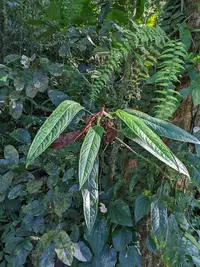
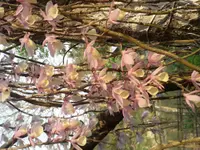
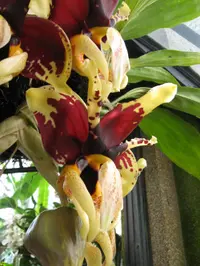
Tillandsia erubescens is a small epiphytic air plant from the mountains of Mexico, where it grows attached to rocks or trees rather than in soil. It forms narrow, arching leaves that often show a reddish or pink flush, especially in bright light, and produces a colorful flower spike when mature.

This species is adapted to good air movement and brief wetting periods, taking up most moisture through its leaves. Its compact size and ability to grow without potting mix make it suitable for displays on wood, stone, or mounted arrangements.

Once its basic needs are understood, it is relatively straightforward to care for Tillandsia erubescens in a bright, warm indoor setting.

Main Plant Requirements

Care Difficulty

Moderate Care

Light Preference

Partial Sun

Water Requirements

Moderate Water

Temperature Preference

Tropical / Frost Sensitive

Hardiness Zone

10–12

Soil Texture

Rocky, Sandy, Organic-rich

Soil pH

Acidic (5.5–6.5)

Soil Drainage

Well-drained

Fertilization

Light (every 4–6 weeks)

Get Personalized Care Plan

Scan your plant to receive care tips personalized for your specific plant

Available on iOS and Android

How to Care for the Tillandsia erubescens

This epiphytic air plant prefers bright, indirect light with some gentle sun exposure.

  • Provide 4–6 hours of bright, filtered light daily, such as under 30–50% shade cloth or bright dappled shade outdoors.
  • Allow only soft morning sun or late-afternoon sun; avoid strong midday sun that can scorch leaves and cause bleaching or crispy tips.
  • In winter, move Tillandsia erubescens to the brightest spot available, and rotate plants so all sides receive similar light over time.

This air plant absorbs water through its leaves rather than roots, so focus on thorough wetting and quick drying.

  • Soak or heavily mist 2–3 times per week in warm seasons, then let plants dry fully within 3–4 hours, including the leaf bases.
  • In cooler or very humid weather, reduce to once or twice weekly and ensure strong air movement to prevent rot at the center rosette.
  • Signs of underwatering include curling, stiff, or brittle leaves; soft, browning bases or a sour smell indicate overwatering and poor drying.

This species prefers warm, frost-free conditions with good air movement year-round.

  • Aim for 65–80°F (18–27°C) for steady growth, with slightly cooler nights improving stress tolerance and coloration.
  • Protect from temperatures below 45°F (7°C); brief dips to 40°F (4°C) may be tolerated if leaves are dry, but freezing causes tissue damage.
  • In hot periods above 90°F (32°C), increase air circulation, shade from intense afternoon sun, and water slightly more often to prevent heat stress.

This epiphytic air plant prefers moderately humid air but adapts to many homes if watered correctly.

  • Aim for 50–70% humidity, with extra moisture in heated or air-conditioned rooms.
  • Dry air stress shows as curling, brittle, or browning leaf tips despite regular watering.
  • Increase humidity by grouping plants, placing near a humidifier, or suspending above (not in) a shallow water tray.

As an epiphyte, this species does not need traditional soil and should never be planted in dense potting mixes.

  • Mount Tillandsia erubescens on cork, hardwood, or inert rock, using a small amount of waterproof, plant-safe adhesive or wire that does not pinch the base.
  • If a loose medium is desired, use a very airy orchid-style mix of large bark, chunky perlite, and a little charcoal, with no fine peat or compost.
  • Ensure complete drainage and rapid air flow around the base so no water collects in crevices for more than a few hours.
  • Avoid compact, water-holding substrates and any mix that stays wet, which encourages rot at the plant’s base.

This species can be displayed in containers as long as the vessel never traps water around the plant.

  • Use shallow, open containers such as bowls or mesh cups, keeping the plant resting above any decorative stones or substrate so water can drain or evaporate quickly.
  • Choose heavier or wide-based containers if the clump becomes top-heavy, to prevent tipping when misting or moving.
  • Avoid closed terrariums or containers with narrow necks that restrict air movement, which increases the risk of prolonged surface moisture and rot.

This epiphytic air plant needs only light feeding to support healthy foliage and flowering.

  • Use a low-dose, water-soluble balanced NPK orchid or bromeliad fertilizer, clearly labeled for epiphytes.
  • Apply at 1⁄4–1⁄2 strength every 4–6 weeks in spring–summer while caring for Tillandsia erubescens.
  • Mist or soak plants in the diluted solution, then ensure excess drains and leaves dry within a few hours.
  • Reduce feeding to 1 light application or none in fall–winter, when growth slows.

Tillandsia erubescens needs minimal pruning, mainly to maintain hygiene and appearance.

  • Best timing is after flowering or during active growth in spring–summer.
  • Remove dead or brown leaves and spent flower stalks with clean, sharp scissors or small snips.
  • Trim only dry, damaged, or crowded leaf tips to keep a compact, tidy rosette without stressing the plant.
  • Discard any rotting tissue promptly to improve air circulation and reduce fungal or bacterial problems.

This air plant is usually mounted rather than potted, so transplanting focuses on remounting rather than root disturbance.

  • Remount when the clump outgrows its support, becomes unstable, or dries out too quickly between waterings.
  • Ideal timing is spring–early summer to align with peak growth and faster recovery.
  • Every 2–4 years, gently detach the plant, keeping basal roots and offsets intact, then secure to fresh cork, bark, or wire mesh.
  • Minimize stress by handling foliage carefully, avoiding tight ties, and keeping humidity moderate for 1–2 weeks after remounting.

Propagation of Tillandsia erubescens is most reliable through offsets rather than seed.

  • Allow offsets (pups) to reach at least 1⁄3–1⁄2 the size of the parent before separation.
  • Best season for division is spring–summer, when warmth and light support faster establishment.
  • Gently twist or cut pups away at the base with sterile scissors, preserving their small root pads.
  • Mount each pup on its own support, then provide bright, indirect light and moderate humidity for stable attachment.

This species is frost sensitive and needs protection in regions with cold winters.

  • Move outdoor plants indoors before temperatures fall near 40°F, keeping them in bright, indirect light.
  • Avoid exposure to frost, freezing drafts, or contact with cold window glass, which damages foliage.
  • Maintain indoor temperatures around 60–75°F and ensure good air movement to prevent rot in cooler months.
  • Reduce watering frequency in winter, allowing plants to dry completely within a few hours after misting or soaking.

Care Tips

Optimal mounting materials

Use inert, non-decaying mounts such as cork bark, hardwood, or plastic-coated wire and avoid soft woods or moss pads that stay wet, which can trap moisture against the base and increase rot risk.

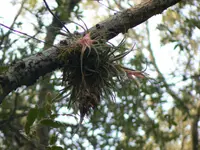
Airflow positioning

Place plants where they receive consistent gentle air movement from a ceiling or oscillating fan rather than stagnant corners, which helps them dry quickly after misting or soaking and lowers fungal problems.

Seasonal light shifts

In summer, move plants slightly farther from hot south- or west-facing windows, then shift them closer again in fall and winter so the rosettes maintain compact growth and good color without leaf scorch.

Salt and chemical management

If tap water is hard or heavily chlorinated, periodically flush plants with distilled or rainwater to prevent salt buildup on leaf surfaces, which can block trichomes and interfere with nutrient uptake when caring for Tillandsia erubescens.

Secure but flexible mounting

Fix plants to their mounts with soft-coated wire, fishing line, or elastic that is snug but not cutting into the base, and recheck every 6–12 months to loosen or adjust as the plant grows and offsets form.

Common Pests and Diseases

Scale insects

These insects form small brown or whitish bumps on leaves and flower spikes and feed on plant sap, causing yellowing and weak growth. This pest thrives on stressed air plants kept in stagnant air or with excess fertilizer residue.

Solution

Isolate the plant, then gently remove visible scale with a cotton swab dipped in isopropyl alcohol, taking care not to soak the whole plant. Rinse the plant thoroughly with room‑temperature water, improve air circulation, reduce fertilizer frequency, and repeat spot treatments weekly until no new insects appear.

Mealybugs

This pest appears as white, cotton-like masses in leaf bases where they suck sap and excrete sticky honeydew that can attract sooty mold. Infestations often start in tight leaf crevices that stay moist for long periods after misting or soaking.

Solution

Physically remove mealybugs with a cotton swab dipped in isopropyl alcohol, focusing on leaf axils and hidden folds. After cleaning, rinse the plant well, shake off excess water, allow it to dry quickly in bright, airy conditions, and inspect weekly, repeating treatments until all signs are gone.

Spider mites

These insects are tiny and often hard to see, but symptoms include dull, silvery stippling on leaves and very fine webbing between leaf blades under dry, warm indoor conditions. This pest is more common when humidity is low and airflow is poor around mounted or hanging plants.

Solution

Rinse the plant thoroughly under a gentle stream of lukewarm water, paying special attention to both sides of the leaves, then let it dry quickly in bright, indirect light. Increase humidity to moderate levels, improve airflow, and repeat thorough rinsing every few days for 2–3 weeks to disrupt the mite life cycle, which supports effective Tillandsia erubescens care.

Bacterial leaf spot

This disease causes water-soaked, translucent or dark spots that may expand along the leaf, often starting where water sits trapped in the rosette for long periods. Symptoms include soft tissues with an unpleasant smell in advanced stages.

Solution

Remove and discard severely affected leaves with clean scissors, then allow the plant to dry completely after each watering and avoid soaking the plant for extended times. Improve airflow, water early in the day so foliage dries by night, and keep the plant in bright conditions to help it recover and limit spread to neighboring air plants.

Fungal leaf blight

This disease develops in plants kept too wet with limited drying time, leading to brown or black lesions that spread from leaf tips or bases and may cause whole leaves to collapse. Symptoms include rapid tissue browning following prolonged high humidity and poor ventilation indoors or in greenhouses.

Solution

Trim off all affected areas with sterile scissors and discard the debris, then reduce watering frequency and shorten soak duration so the plant dries within a few hours. Provide strong but indirect light, ensure constant air movement, and if several plants are affected, separate them to prevent further spread while monitoring closely for new lesions.

Interesting Facts

High-elevation specialist

This species is native to highland regions of Mexico, where it often grows on rocks and shrubs at relatively cool, breezy elevations compared with many lowland air plants.

Noticeably blushing foliage

The narrow, arching leaves can take on a distinct reddish or rose tint when exposed to higher light, which is reflected in the name erubescens, meaning reddening or blushing.

Hummingbird-pollinated flowers

In its native range, the tubular flowers are visited and pollinated by hummingbirds, which are attracted to the contrasting bracts and nectar produced by the inflorescences.

Botan icon

Did you know?

This species is often considered part of the Tillandsia xerographica alliance by specialists, reflecting its adaptation to relatively bright, drier environments and its close evolutionary relationship with several other highland Mexican Tillandsia species.

FAQs about Tillandsia erubescens

Lack of blooming usually relates to insufficient light, temperature swings, or maturity. Plants often need several years to flower. Stable warm conditions, bright filtered light, and regular but not excessive watering support normal flowering cycles.

Grow Healthy Plants with Botan Care

Keep your plants happy and healthy with plant identification, disease detection, and easy care guidance.

Botan plant care app — identify plants on mobile

Explore More Plants