Philippine dillenia Care (Dillenia philippinensis)

Also known as: katmon, elephant apple
Philippine dillenia

About Philippine dillenia

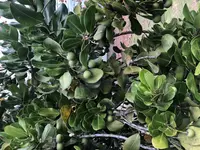
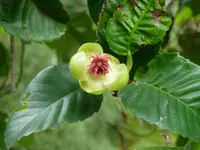
Philippine dillenia (Dillenia philippinensis) is a small to medium evergreen tree valued for its glossy foliage and large, white, fragrant flowers. It often develops a rounded, dense crown and can be used as an ornamental or shade tree in warm, frost-free climates.

In the wild, it is native to lowland forests in the Philippines, where it grows in humid, tropical conditions. The plant prefers bright light, regular moisture, and well-drained soil, which helps explain how to care for Philippine dillenia in home gardens or landscapes.

Its relatively fast growth, tolerance of heat, and attractive form make it appealing, but it is not suited to cold or very dry environments, which limits its ease of cultivation in temperate regions.

Main Plant Requirements

Care Difficulty

Moderate Care

Light Preference

Full Sun

Water Requirements

Regular Water

Temperature Preference

Tropical / Frost Sensitive

Hardiness Zone

11–12

Soil Texture

Loamy, Sandy, Organic-rich

Soil pH

Acidic (5.5–6.5), Slightly acidic (6.5–7.0)

Soil Drainage

Moist but well-drained

Fertilization

Minimal (feed rarely)

Get Personalized Care Plan

Scan your plant to receive care tips personalized for your specific plant

Available on iOS and Android

How to Care for the Philippine dillenia

This tropical tree prefers bright, warm conditions with protection from harsh midday sun.

  • Provide 4–6 hours of direct morning sun with light shade or filtered light in the afternoon for Philippine dillenia.
  • In hotter regions, use dappled or filtered light from about 11 a.m. to 3 p.m. to prevent leaf scorch and dry, brown edges.
  • If growth becomes sparse or leaves pale, increase light exposure slightly; in winter, avoid heavy shade from nearby structures or trees.

This species prefers consistently moist but not waterlogged soil.

  • Water when the top 3–5 cm of soil feels slightly dry, aiming for deep soaking rather than frequent light sprinkling around Dillenia philippinensis roots.
  • Ensure soil drains freely; standing water for more than a few hours increases risk of root rot and yellowing, dropping leaves.
  • In cooler or rainy seasons, reduce watering and rely more on natural rainfall, watching for wilting or crispy leaf edges as signs of underwatering.

This tropical tree thrives in warm, frost-free climates.

  • Ideal growth occurs around 70–86°F (21–30°C), with steady warmth supporting strong foliage and flowering.
  • Avoid temperatures below 50°F (10°C); brief dips near this range can slow growth, while frost can kill young shoots and severely damage mature wood.
  • The plant tolerates short heat waves up to about 95°F (35°C) if soil moisture is stable, but prolonged extreme heat with dry soil can cause leaf scorch and drop.

This species benefits from consistently warm, moist air and reacts quickly to very dry conditions.

  • Aim for 60–80% humidity, as Philippine dillenia is adapted to humid tropical forests.
  • Expect crisping leaf edges, folding leaves, and stalled growth when air stays below about 40–45% humidity.
  • Increase humidity with a nearby humidifier, grouped plants, and a wide pebble tray that allows evaporation without letting the pot sit in water.

This species prefers deep, moisture-retentive but freely draining soil that does not stay waterlogged.

  • Use a loamy mix with high organic matter, such as 50% composted bark or leaf mold, 30% coarse sand, and 20% perlite.
  • Ensure rapid drainage while keeping moisture by combining coarse particles (sand, perlite) with humus-rich components that hold water in pores.
  • Keep pH slightly acidic to neutral, around 6.0–7.0, avoiding strongly alkaline sites that limit nutrient availability for Dillenia philippinensis.
  • Avoid heavy, compacted clay or mixes with a high peat fraction that collapse and suffocate roots; incorporate coarse material to improve aeration.

This tree can be grown in containers when young or kept small, provided the pot is chosen to support its strong root system and canopy weight.

  • Select a deep, heavy container that resists tipping as the woody trunk and canopy become top-heavy.
  • Leave several centimeters between the root ball and pot wall to allow lateral root spread without crowding too quickly.
  • Choose thick-walled clay or concrete pots outdoors to moderate root temperature swings and reduce sudden drying of the mix.

This tropical tree benefits from light, consistent feeding during warm active growth but does not need heavy fertilization.

  • Use a balanced NPK fertilizer or well-rotted compost at the start of the growing season for Philippine dillenia in nutrient-poor soils.
  • Apply a dilute liquid or slow-release fertilizer every 6–8 weeks in spring and summer at half the label strength.
  • Skip or greatly reduce feeding in fall and winter when growth slows, especially in cooler conditions.
  • Water before and after applying fertilizer to limit root burn and help nutrients move into the root zone.

Dillenia philippinensis responds well to modest structural pruning that maintains a strong framework and safe size.

  • Carry out main pruning in late dry season or early spring before vigorous new growth begins.
  • Remove dead, diseased, crossing, or storm-damaged branches using clean, sharp bypass pruners or a handsaw.
  • Thin crowded interior shoots to improve airflow and light penetration, reducing fungal issues.
  • Shorten or selectively remove long, awkward branches to shape the canopy while preserving natural form and flowering wood.

This species is usually grown in the ground, so management focuses on careful transplanting of young trees.

  • Transplant when roots hold the soil ball together yet are not tightly circling the container, typically every 1–2 years for young plants.
  • Choose late spring or early summer, once weather is settled and soil is warm, to reduce shock.
  • Move with as much intact root ball as possible, keeping roots shaded and moist throughout the process.
  • Plant at the same depth, firm soil gently, water thoroughly, then maintain steady moisture and light shade for 1–2 weeks to reduce stress.

Propagation of Dillenia philippinensis is most reliable from fresh seed, though germination can be slow and uneven.

  • Collect ripe fruits, clean the seeds, and sow them in a well-drained, slightly acidic seed mix in warm conditions around 75–85°F.
  • Provide bright, indirect light and consistently moist, not waterlogged, substrate until germination.
  • Use a humidity dome or plastic cover with ventilation holes to maintain high humidity while limiting fungal growth.
  • Transplant seedlings into individual pots once they develop several true leaves and a firm root system.

This tropical tree is frost-tender and needs significant winter protection outside true frost-free climates.

  • Avoid exposure below about 50°F; it is not suitable for unprotected outdoor planting where frost occurs.
  • In marginal climates, grow Dillenia philippinensis in large containers that can be moved indoors or to a heated greenhouse for winter.
  • Indoors, provide bright light, slightly reduced watering, and no or minimal fertilization until temperatures rise again.

Care Tips

Formative framework pruning

In the first 3–5 years, select 3–5 strong scaffold branches and remove steep, crossing, or crowded shoots yearly to build a stable tree structure that can support the heavy flowers and fruits without splitting.

Wind and stake management

In exposed sites, use 2–3 low, flexible stakes tied with soft, wide ties below the canopy to stabilize the trunk for the first 1–2 years, then remove them gradually to encourage a strong root system.

Mulch for root protection

Apply a 5–8 cm ring of coarse organic mulch around, but not touching, the trunk to keep surface roots cool, reduce soil compaction from tropical rains, and limit weed competition.

Flower and fruit hygiene

During warm, wet periods, collect and dispose of fallen flowers and fruits at least weekly to reduce fungal disease pressure and discourage ants, fruit flies, and rodents around the tree.

Container transition planning

If growing Philippine dillenia in a container, step up only 1–2 pot sizes at a time and plan an eventual in-ground planting, since long-term pot culture leads to circling roots and a weak, top-heavy plant.

Common Pests and Diseases

Leaf spot

This disease causes small water-soaked lesions on leaves that expand into brown or dark blotches, sometimes with yellow halos. Symptoms include premature leaf drop in warm, humid weather.

Solution

Prune and dispose of heavily spotted leaves, avoid overhead watering, and thin inner branches slightly on landscape trees to improve airflow. If the problem persists in very wet climates, apply a copper-based fungicide to new foliage at the start of the rainy season, following label directions for broadleaf ornamentals.

Anthracnose

This disease leads to irregular brown patches along leaf veins, distorted young leaves, and sometimes blighting of tender shoots in persistently wet conditions. Symptoms include a scorched or tattered look on the canopy even though soil moisture is adequate.

Solution

Remove and destroy affected leaves and twigs, especially those that fall around the base of the tree, to reduce fungal spores. Improve light and airflow around the canopy and, in high-value specimens, use a systemic fungicide labeled for anthracnose on broadleaf trees at bud break and repeat as directed if wet weather continues.

Scale insects

These insects appear as small, immobile bumps on stems, leaf midribs, and undersides of leaves, often accompanied by sticky honeydew and sooty mold. This pest weakens trees by sucking sap, leading to yellowing leaves and reduced flowering.

Solution

Wipe or gently scrub infested stems with a cloth or soft brush dipped in a dilute solution of mild soap and water, then rinse foliage. For larger trees or heavy infestations, apply a horticultural oil or neem oil thoroughly to coat the insects, and consider a systemic insecticide labeled for ornamental trees in severe cases.

Mealybugs

These insects form white, cottony masses in leaf axils, on young shoots, and sometimes on flower buds, producing honeydew that encourages black sooty mold. This pest can stunt new growth and cause leaf yellowing or drop if populations are high.

Solution

Physically remove visible clusters with a cotton swab dipped in isopropyl alcohol and prune any heavily infested small shoots. Follow up with regular applications of insecticidal soap or neem oil to the undersides of leaves and sheltered crevices until no new insects appear, which supports long-term Dillenia philippinensis plant care.

Interesting Facts

Edible sour fruits

The tree produces green, star-shaped fruits with firm, sour flesh that are commonly used in the Philippines as a souring agent in soups and stews, especially in traditional sinigang dishes.

Showy nocturnal flowers

Its large, white, fragrant flowers usually open in the evening or at night and last only a short time, attracting nocturnal pollinators such as moths and certain beetles.

Philippine lowland endemic

This species is naturally restricted to the Philippines and typically occurs in lowland forests, secondary growth, and sometimes along forest edges near villages.

Botan icon

Did you know?

The species is the floral emblem of the city of San Pablo in Laguna province, where its large white flowers and distinctive ribbed fruits are featured in local identity and occasionally in community planting programs.

FAQs about Philippine dillenia

This species performs best outdoors in warm, frost-free climates, where it can reach full size and flower well. Philippine dillenia indoor care is possible only in very bright, spacious sunrooms or greenhouses with high humidity and stable warmth.

Grow Healthy Plants with Botan Care

Keep your plants happy and healthy with plant identification, disease detection, and easy care guidance.

Botan plant care app — identify plants on mobile

Explore More Plants