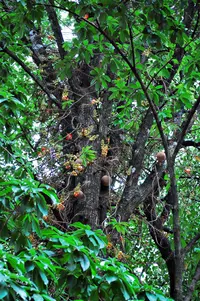
Dwarf Tamarillo Care (Solanum abutiloides)

Dwarf Tamarillo

About Dwarf Tamarillo

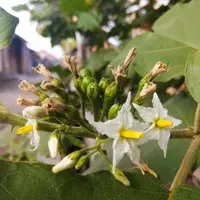
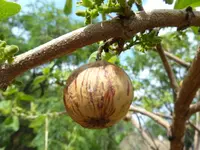
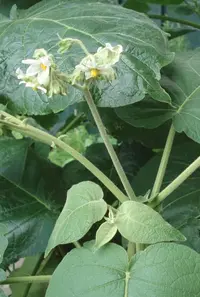
Dwarf tamarillo (Solanum abutiloides) is a small, fast-growing shrub in the nightshade family, valued for its decorative foliage and clusters of small orange fruits. It forms a bushy plant with soft, slightly sticky leaves and a somewhat open, sprawling habit that can be pruned to keep it compact.

This species is native to parts of South America, where it grows in mild, frost-free areas, which helps explain its preference for warmth and protection from cold. It responds well to bright light, regular moisture, and well-drained soil.

Many gardeners find it fairly easy once basic needs are met, though its quick growth and size require space and occasional pruning. Learning how to care for Dwarf Tamarillo helps keep it healthy and productive over several seasons.

Main Plant Requirements

Care Difficulty

Moderate Care

Light Preference

Partial Sun

Water Requirements

Moderate Water

Temperature Preference

Warm Climate

Hardiness Zone

9–11

Soil Texture

Sandy, Loamy, Organic-rich

Soil pH

Acidic (5.5–6.5), Slightly acidic (6.5–7.0)

Soil Drainage

Moist but well-drained

Fertilization

Light (every 4–6 weeks)

Get Personalized Care Plan

Scan your plant to receive care tips personalized for your specific plant

Available on iOS and Android

How to Care for the Dwarf Tamarillo

Solanum abutiloides prefers bright conditions that balance strong light with protection from harsh extremes.

  • Provide 6–8 hours of sun daily, with morning sun and light afternoon shade; eastern or southeastern exposure suits Dwarf Tamarillo well outdoors.
  • Tolerates light partial shade, but flowering and fruiting decrease if it receives less than 4–5 hours of direct sun.
  • In hot summers, protect from intense afternoon sun to reduce leaf scorch; in late autumn and winter, maximize exposure by avoiding shade from buildings or trees.

This species prefers evenly moist, well-drained soil that never stays waterlogged for long.

  • Water when the top 3–5 cm of soil feels dry, using enough volume so moisture reaches the deeper root zone, then let excess drain away.
  • During warm, active growth, expect more frequent watering and monitor leaves; slight midday wilt that recovers by evening often signals the next irrigation is due.
  • In cool seasons, reduce watering as growth slows; yellowing, soft leaves suggest overwatering, while dull, crisping foliage indicates prolonged dryness for Solanum abutiloides.

This plant grows best in mild, frost-free climates with moderate warmth most of the year.

  • Aim for 65–80°F (18–27°C) for strongest growth and flowering, avoiding large, sudden day–night swings when possible.
  • Protect from frost; growth stops below about 45°F (7°C), and hard damage or death occurs with freezes near or below 32°F (0°C).
  • Tolerates short heat waves up to 90–95°F (32–35°C) if soil moisture is stable and roots are mulched; above this range, provide shade and careful watering to limit stress.

This species prefers moderate to slightly humid air but usually tolerates typical indoor conditions.

  • Aim for 40–60% humidity, similar to many homes, for steady leaf and flower development in Dwarf Tamarillo.
  • Brown, crispy leaf edges or persistent flower drop indicate air that is too dry and benefit from slightly higher humidity.
  • Increase humidity locally with a nearby open tray of water and pebbles or by grouping plants, rather than misting leaves directly.

Solanum abutiloides grows best in loose, airy, sharply drained soil that still holds some moisture.

  • Use a loamy mix with 40–60% peat- or coir-based potting soil, 20–30% compost, and 20–30% perlite or pumice for drainage.
  • Target a slightly acidic to neutral pH of about 6.0–7.0 to keep nutrients available and reduce micronutrient lockout.
  • Ensure the structure stays crumbly, not compacted, by avoiding heavy foot traffic or pressing the soil down around the roots.
  • Avoid heavy clay, waterlogged spots, or pure sand, which either suffocate roots or dry out too fast and limit nutrient uptake.

This species adapts well to container growing when given enough root space and stable support.

  • Choose a deep, heavy pot that prevents tipping, as the plant can become tall and top-heavy in windy spots.
  • Select a container slightly wider than the root ball to allow lateral root spread without leaving a large ring of unused wet mix.
  • Use a pot material that matches your climate: porous terracotta for humid, wet regions and less porous plastic in hot, dry conditions to slow moisture loss.

Solanum abutiloides responds well to moderate feeding, especially when grown in containers or as Dwarf Tamarillo indoors.

  • Use a balanced liquid fertilizer (such as 10-10-10) at half strength every 2–3 weeks during the main growing season.
  • Alternatively, apply a slow-release balanced fertilizer or a thin layer of mature compost in spring.
  • Stop or reduce feeding to once every 6–8 weeks in fall and winter as growth slows.
  • Water before applying fertilizer to limit root burn and salt buildup in the potting mix.

Pruning Solanum abutiloides helps manage its size, improve structure, and support flowering.

  • Carry out main pruning in late winter or very early spring before strong new growth starts.
  • Remove dead, diseased, crossing, or badly damaged stems using clean, sharp bypass pruners.
  • Shorten overly long, leggy shoots to encourage branching and a denser canopy.
  • Light thinning during the season improves light penetration and air movement through the plant.

Container-grown Solanum abutiloides benefits from periodic repotting to maintain strong growth.

  • Check for roots circling the pot, pushing from drainage holes, or slowed growth as signals to move up 1 pot size.
  • Plan repotting or outdoor transplanting for early spring, just before vigorous new growth begins.
  • Repot every 1–2 years in a well-draining mix, keeping the root ball at the same soil level as before.
  • Water thoroughly after shifting to the new container, then keep evenly moist and shaded for a few days to reduce transplant shock.

Solanum abutiloides is commonly propagated from both seeds and softwood cuttings.

  • Sow fresh seeds in late winter–spring in a sterile, well-draining seed mix at 70–75°F with gentle bottom heat if possible.
  • Press seeds lightly into the surface and keep evenly moist; provide bright, indirect light for germination.
  • Take 8–10 cm softwood cuttings in late spring–summer, removing lower leaves and any flowers.
  • Insert cuttings into moist, airy mix, maintain high humidity, and provide bottom warmth to encourage rooting.

Solanum abutiloides is frost sensitive and needs clear winter management in cooler climates.

  • In regions below about 30°F, grow in containers so plants can be moved indoors before the first frost.
  • Provide a bright, cool indoor spot (50–60°F) and reduce watering while growth is slow.
  • For in-ground plants in mild climates, mulch the root zone with 5–8 cm of organic material in late fall.
  • Remove or cut back frost-damaged shoots in late winter once the risk of hard frost has passed.

Care Tips

Sturdy Structural Support

Install a solid stake or tomato-style cage early and tie stems loosely with soft ties, as this species grows fast and can snap under the weight of its own branches and fruit clusters.

Systematic Suckering

Inspect the base regularly and remove any weak, crowded, or low side shoots while still soft to maintain 1–3 main stems, which improves air circulation and makes harvest and inspection easier.

Preventive Pest Scouting

Check the undersides of leaves and new growth weekly for spider mites, whiteflies, and aphids, and at the first sign of pests use a targeted treatment like insecticidal soap rather than waiting for visible damage.

Seasonal Container Rotation

If grown in a pot, rotate the container 90° every 1–2 weeks during bright months to keep the plant evenly balanced and reduce leaning or breakage on the sunward side.

Fruit Load Management

Thin out some immature fruit clusters on heavily set branches so the remaining fruit sizes up better and the branches are less likely to bend or split under excessive weight when growing Dwarf Tamarillo.

Common Pests and Diseases

Whiteflies

These insects feed on the undersides of leaves, sucking sap and causing yellowing, curling, and sticky honeydew that can lead to sooty mold. This pest is especially common on Solanum species grown in warm, sheltered, or indoor conditions.

Solution

Reduce numbers by regularly shaking or tapping branches to dislodge adults, then use yellow sticky traps near the plant to monitor and capture them. For ongoing Solanum abutiloides plant care, thoroughly rinse leaf undersides with a strong but gentle stream of water and, if needed, apply insecticidal soap or horticultural oil every 7–10 days, ensuring good ventilation around the plant.

Spider mites

These pests thrive on Solanum foliage in hot, dry conditions, causing fine stippling, dulling of leaves, and fine webbing between stems and leaves. Symptoms include gradual leaf bronzing and premature leaf drop if infestations are heavy.

Solution

Increase humidity around the plant and hose down all leaf surfaces, focusing on the undersides, to physically remove mites. Follow up with repeated treatments of insecticidal soap or a light horticultural oil spray every 5–7 days, and isolate heavily infested plants to limit spread.

Aphids

These insects cluster on young shoots, flower stems, and leaf undersides, sucking sap and distorting new growth. Sticky honeydew often appears on leaves and nearby surfaces, sometimes followed by black sooty mold.

Solution

Remove heavily infested shoot tips and rinse remaining foliage with a firm stream of water to knock aphids off. For persistent problems, apply insecticidal soap to all green tissue in the early morning or evening and encourage natural predators outdoors by avoiding broad-spectrum insecticides.

Early blight

This disease, caused by Alternaria fungi, produces brown leaf spots with concentric rings that often start on older leaves and expand in warm, humid conditions. Symptoms include progressive yellowing, leaf drop from the bottom up, and reduced vigor, especially on dense or poorly ventilated plants.

Solution

Promptly remove and discard affected leaves, avoid overhead watering, and water at the base to keep foliage dry. Improve spacing and airflow around the plant, and in areas with recurring problems, rotate planting locations and use a preventative copper-based fungicide at the first sign of spotting.

Bacterial leaf spot

This disease causes small, dark, water-soaked spots on leaves that can enlarge, turn brown, and sometimes develop a yellow halo, particularly in warm, wet conditions. Symptoms include tattered foliage as spotted tissue dries and falls out, leaving shot holes.

Solution

Immediately remove and dispose of infected leaves and avoid working with plants when foliage is wet to reduce spread. Water at soil level, increase airflow, and if the plant is in the ground, avoid overhead irrigation; in severe cases, discard heavily infected plants and avoid replanting Solanum species in the same spot the following season.

Interesting Facts

Tomato relative shrub

This species is a woody nightshade from Argentina and Bolivia that forms a fast-growing shrub or small tree, more robust and tree-like than most commonly grown tomato relatives.

Sticky aromatic foliage

Its leaves and young stems are covered with short glandular hairs that feel sticky and release a noticeable resinous scent when touched, likely helping deter herbivores and small insects.

Orange berry display

The plant produces many small, bright orange berries held in large clusters, which are attractive to birds even though the fruits are not commonly used as food by people.

Botan icon

Did you know?

Genetic and morphological studies place this species in a small, specialized group of South American Solanum shrubs adapted to disturbed habitats, where rapid growth and heavy seeding allow it to colonize landslides, roadsides, and cleared ground very quickly.

FAQs about Dwarf Tamarillo

Lack of flowers usually comes from insufficient light, nutrient imbalance, or stress from irregular watering and temperature swings. Ensure strong, stable conditions, avoid excessive nitrogen fertilizer, and allow the plant to reach maturity before expecting regular flowering.

Grow Healthy Plants with Botan Care

Keep your plants happy and healthy with plant identification, disease detection, and easy care guidance.

Botan plant care app — identify plants on mobile

Explore More Plants