turkey berry Care (Solanum torvum)

Also known as: Pea Eggplant, Devil's Fig, Wild Tomato, Wild Eggplant
turkey berry

About turkey berry

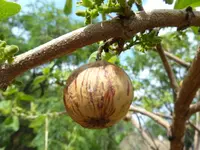
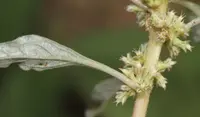
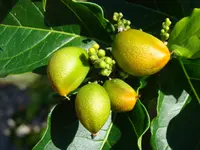
Turkey berry, Solanum torvum, is a perennial shrub in the nightshade family grown for its small green berry clusters and sturdy, woody stems. It often forms a dense, bushy shape with thorny branches and broad, dull-green leaves.

This species is native to Central and South America but is now widely naturalized in tropical and subtropical regions, where it can spread quickly and become weedy. It adapts well to poor soils and dry periods, which makes it resilient but sometimes invasive.

Gardeners who want to care for turkey berry should know it prefers warm conditions, sun to light shade, and well-drained soil with moderate moisture.

Main Plant Requirements

Care Difficulty

Easy Care

Light Preference

Full Sun

Water Requirements

Moderate Water

Temperature Preference

Tropical / Frost Sensitive

Hardiness Zone

9–11

Soil Texture

Sandy, Loamy, Organic-rich

Soil pH

Acidic (5.5–6.5), Slightly acidic (6.5–7.0)

Soil Drainage

Well-drained

Fertilization

Minimal (feed rarely)

Get Personalized Care Plan

Scan your plant to receive care tips personalized for your specific plant

Available on iOS and Android

How to Care for the turkey berry

Solanum torvum grows best in strong light with some protection from intense afternoon sun.

  • Provide 6–8 hours of direct sun, ideally with morning sun and light afternoon shade, especially in hot climates.
  • Plant turkey berry in an open site; it tolerates light partial shade but dense shade causes leggy growth and fewer fruits.
  • In summer, monitor for leaf scorch from very harsh afternoon sun; in cooler seasons, prioritize maximum direct light to maintain vigorous growth.

Solanum torvum prefers steadily moist, well-drained soil rather than constant saturation.

  • Water when the top 3–5 cm of soil feels dry, applying a deep soak so moisture reaches the root zone rather than frequent light sprinkling.
  • Use soil with good drainage; standing water or heavy clay promotes root rot and yellowing, while cracked, pulling-away soil indicates underwatering.
  • In hot, dry weather increase frequency as leaves may wilt by late afternoon, while in cool or rainy seasons reduce watering to avoid soggy soil.

This species thrives in consistently warm, frost-free conditions.

  • Aim for 70–85°F (21–29°C) for strong growth; growth slows noticeably below 65°F (18°C).
  • Protect Solanum torvum from temperatures below 50°F (10°C), as light frost around 32°F (0°C) can kill young plants and damage mature ones.
  • It tolerates short heat waves up to about 95°F (35°C) if soil moisture is maintained, but prolonged extreme heat combined with drought can stress and stunt plants.

This species grows well in moderate ambient humidity and does not usually need extra moisture in the air.

  • Aim for 40–60% humidity; typical indoor and outdoor conditions in many homes and gardens are adequate.
  • Plants tolerate short spells of drier air, but prolonged very dry conditions can cause leaf edge browning and slight wilting in turkey berry.
  • If air is extremely dry, group plants together or place near a tray of water and stones to create a mild local humidity boost.

Solanum torvum prefers slightly moist, well-structured mineral soil that drains freely but does not dry out instantly.

  • Use a mix of 50–60% loam or sandy loam, 20–30% compost, and 10–20% coarse material such as perlite or sharp sand for structure.
  • Aim for pH 6.0–7.0, which supports nutrient availability and reduces the risk of micronutrient lockout.
  • Ensure water drains through quickly; avoid compacted, heavy clay or constantly waterlogged substrates that promote root rot.
  • Improve aeration by incorporating coarse organic matter like fine bark or coco coir chips, breaking up dense native soil before planting.

This species can be grown in containers if the pot is large, stable, and drains efficiently.

  • Choose a container at least 35–45 cm deep to allow the strong taproot and lateral roots to anchor and reduce wind rock.
  • Use a heavy, wide-based pot or add weight (such as stones at the bottom, above drainage holes protected by mesh) to prevent tipping as stems become woody and top-heavy.
  • Select slightly porous materials like unglazed clay if overwatering is a risk, since they allow some moisture loss and help keep the root zone aerated.

Solanum torvum benefits from modest, targeted feeding but tolerates lean soil once established.

  • Apply a balanced granular or slow-release fertilizer (around 10-10-10) at half label rate at the start of the warm growing season.
  • Supplement with a light side-dressing of compost mid-season if growth or fruiting declines, especially in poor soils.
  • Avoid high-nitrogen products that drive soft, leafy growth at the expense of fruit and increase pest issues on turkey berry.
  • Stop feeding in late summer so new growth hardens before cool weather; do not fertilize during winter dormancy or very slow growth.

Pruning Solanum torvum helps manage size, encourage branching, and maintain plant health.

  • Carry out main pruning in late winter or early spring before vigorous new growth begins.
  • Remove dead, diseased, or storm-damaged branches first, then thin congested interior stems for better light and airflow.
  • Shorten overly long shoots to shape the canopy and keep fruit within reach, cutting just above an outward-facing bud.
  • Use sharp, clean bypass pruners and disinfect blades between plants to limit spread of fungal and bacterial diseases.

This species is usually grown in ground, so focus on careful transplanting and only occasional container upsizing.

  • Transplant or up-pot in spring once frost risk has passed, when plants are actively growing and recover faster.
  • Look for roots circling the pot, water running straight through, or slowed growth as signs a container plant needs more space.
  • Move up 1 pot size, gently loosen circling roots, and set at the same soil depth into a free-draining, fertile mix.
  • Water deeply after transplanting, shade for a few days if sun is intense, and keep soil evenly moist to reduce root stress.

Solanum torvum is most often propagated from seed, with warm conditions needed for good germination.

  • Sow fresh, cleaned seeds in late winter or early spring in a sterile, well-drained seed-starting mix.
  • Maintain 70–80°F soil temperature, consistent light moisture, and bright light to support even germination and sturdy seedlings.
  • Cover seeds lightly, about 2–3 mm deep, and improve air circulation to limit damping-off, a fungal seedling disease.
  • Root semi-ripe stem cuttings in warm, humid conditions using a well-aerated medium and optional rooting hormone for better success.

In frost-free or very mild climates this tropical shrub needs minimal winter care, but it is frost-sensitive.

  • In regions below about 30–32°F, grow in containers and move plants indoors or into a heated greenhouse for winter.
  • In marginal climates, mulch the root zone with 5–8 cm of organic material to moderate soil temperature and moisture.
  • Where light frosts occur, use frost cloths or similar covers on cold nights to reduce damage to young shoots and fruit.

Care Tips

Sturdy stake support

Install strong stakes or a trellis early and tie main stems loosely with soft ties, as the heavy berry clusters can snap brittle branches in wind or under crop weight.

Cluster thinning

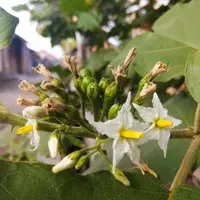
Remove some of the youngest flower clusters on overloaded branches so the remaining fruits size up better and the plant does not exhaust itself, especially on first-year plants.

Root-zone mulching

Apply a 5–8 cm layer of coarse organic mulch around the root zone, keeping it a few cm from the stem, to reduce weed pressure and keep soil moisture and temperature more stable.

Hygienic pruning

Regularly cut out dead, crossing, or pest-damaged shoots with disinfected tools and remove dropped leaves and mummified fruits from the soil surface to lower pest and disease carryover.

Nematode trap cropping

In nematode-prone soils, use plants as a trap crop by planting them ahead of more sensitive vegetables, then remove and destroy the entire root system after one season to reduce nematode populations before planting the main crop.

Common Pests and Diseases

Fruit and shoot borer

This pest is the larval stage of a moth that tunnels into young shoots and developing berries. Symptoms include wilted tender shoots, bored holes, and fruit filled with frass (sawdust-like droppings).

Solution

Prune and destroy infested shoots and fruits as soon as boring damage is seen to break the life cycle. Use fine netting over small plants, hand-pick and crush larvae where visible, and, if infestation is heavy outdoors, apply a targeted Bacillus thuringiensis (Bt) or neem-based spray in the evening, directing it to young shoots and flower clusters.

Spider mites

These insects are tiny sap-feeders that thrive in hot, dry weather on turkey berry foliage. Symptoms include fine webbing, pale stippling on leaves, and gradual yellowing or bronzing, often starting on the undersides of leaves.

Solution

Rinse foliage thoroughly with a firm stream of water, focusing on leaf undersides, and repeat every few days to knock down populations. Increase humidity around the plant, remove heavily damaged leaves, and use insecticidal soap or horticultural oil, applied in the early morning or late afternoon to avoid leaf burn.

Leaf spot complex

This disease group, often caused by Cercospora or related fungi, produces small brown, gray, or purplish spots that may merge and cause partial defoliation. Symptoms include scattered lesions on older leaves first, sometimes with pale centers and darker margins.

Solution

Remove and destroy heavily spotted leaves and any fallen foliage to reduce spore sources. Improve spacing and airflow, water at soil level instead of overhead, and use a copper or chlorothalonil-based fungicide labeled for edible solanaceous crops if new spots continue to appear in warm, humid weather.

Bacterial wilt

This disease, often caused by Ralstonia species, blocks the water-conducting vessels and leads to rapid wilting of otherwise green plants. Symptoms include sudden daytime wilt, brown staining in cut stems, and eventual plant collapse, especially in warm, wet soils.

Solution

Remove and discard entire affected plants, including roots, and do not replant any solanaceous crops in the same spot for several years. Improve drainage, avoid excess irrigation, disinfect cutting tools with a 10% bleach solution, and rotate with non-host crops such as grasses or legumes to lower bacterial levels in the soil.

Root-knot nematodes

These pests are microscopic roundworms that feed on roots and cause characteristic galls or knots. Symptoms include stunted growth, poor flowering and fruiting, and plants that wilt quickly in heat despite moist soil.

Solution

Uproot and dispose of severely affected plants and examine roots for galls to confirm the problem. Use resistant rootstocks where available, solarize the soil in hot climates by covering moist soil with clear plastic for 4–6 weeks, and rotate with non-host or nematode-suppressive cover crops such as marigold or certain sorghum-sudangrass hybrids to reduce nematode populations over time.

Interesting Facts

Wild rootstock workhorse

This species is widely used as a grafting rootstock for eggplant because it tolerates soil-borne diseases and nematodes better than most cultivated eggplant varieties, improving overall crop resilience.

Aggressive pioneer shrub

Solanum torvum establishes quickly in disturbed sites and along roadsides in many tropical regions, where birds spread its seeds after eating the ripe berries, which contributes to its reputation as an invasive species outside its native range.

Host and trap plant

The shrub can host several insect pests of solanaceous crops, but in some integrated pest management systems it is deliberately planted as a trap plant to attract and concentrate insects away from the main crop.

Botan icon

Did you know?

The small green fruits are used as a bitter vegetable in traditional cuisines across parts of South and Southeast Asia, West Africa, and the Caribbean, where they are added to curries, soups, and stews for their firm texture and distinctive bitterness.

FAQs about turkey berry

This species can spread aggressively in warm climates through both seeds and root suckers. In some regions it is listed as invasive. Check local regulations before planting and remove unwanted seedlings promptly to prevent uncontrolled spread.

Grow Healthy Plants with Botan Care

Keep your plants happy and healthy with plant identification, disease detection, and easy care guidance.

Botan plant care app — identify plants on mobile

Explore More Plants