smooth rose Care (Rosa blanda)

Also known as: meadow rose
smooth rose

About smooth rose

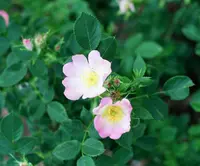
Smooth rose, Rosa blanda, is a hardy wild rose species native to northern North America, often found in open woods, prairies, and rocky slopes. It forms upright, thicket-forming shrubs with relatively smooth, sparsely thorned stems, pink single flowers, and bright red hips.

This species is valued for its cold tolerance, durability, and ability to grow in poor or gravelly soils. It suits naturalistic gardens, hedgerows, and habitat plantings where low-maintenance shrubs are needed.

Smooth rose prefers full sun, moderately moist, well-drained soil, and benefits from occasional pruning, which keeps plants dense and flowering. These traits generally make it straightforward to care for smooth rose in suitable climates.

Main Plant Requirements

Care Difficulty

Easy Care

Light Preference

Full Sun

Water Requirements

Moderate Water

Temperature Preference

Cold Hardy

Hardiness Zone

2–7

Soil Texture

Sandy, Loamy, Rocky

Soil pH

Acidic (5.5–6.5), Slightly acidic (6.5–7.0)

Soil Drainage

Well-drained

Fertilization

Minimal (feed rarely)

Get Personalized Care Plan

Scan your plant to receive care tips personalized for your specific plant

Available on iOS and Android

How to Care for the smooth rose

Rosa blanda grows best in bright, direct sun but tolerates some light shade in hotter regions.

  • Provide 6–8 hours of direct sun daily, with at least 4 hours of morning sun to support strong flowering and compact growth.
  • Allow light afternoon shade in hot climates to reduce leaf scorching and flower fade, especially during heatwaves above 90°F (32°C).
  • In partial shade (3–4 hours sun), expect fewer blooms; avoid deep shade, which leads to weak, elongated shoots and sparse flowering.

Rosa blanda prefers evenly moist, well-drained soil rather than constant wetness or complete drying.

  • Water when the top 3–5 cm of soil feels dry, applying a slow, deep soak so moisture reaches the root zone without pooling around the crown.
  • During hot, dry weather, check soil every 2–3 days; in cool or rainy periods, water only when the soil begins to dry to prevent root rot.
  • Use soil structure as a guide: fast-draining, sandy beds may need more frequent deep watering, while clay soils need less but must never stay soggy.

This cold-hardy shrub rose tolerates a wide temperature range but grows best in moderate conditions.

  • Active growth and flowering are strongest around 60–75°F (16–24°C), with cool nights helping maintain sturdy stems and good bud set.
  • Dormant plants survive winter lows down to about -30°F (-34°C) under typical garden conditions with snow cover or mulch protection.
  • Heat above 90°F (32°C) can reduce flowering and stress foliage, so provide mulch and consistent soil moisture to limit temperature swings at the root zone.

Rosa blanda prefers moderate outdoor humidity and usually copes well with typical garden air.

  • Aim for 40–60% humidity in sheltered plantings, similar to average outdoor levels in many temperate regions.
  • This species tolerates short dry spells, but prolonged very dry air with heat can lead to crisp leaf edges and early leaf drop.
  • In hot, arid climates, increase local humidity by mulching the root zone and using nearby plantings or low windbreaks to reduce drying winds.

Rosa blanda grows best in deep, well-structured mineral soil that drains freely yet holds steady moisture.

  • Use a loamy or sandy-loam base enriched with 20–30% compost to support strong root growth and consistent moisture.
  • Target a slightly acidic to neutral pH of 6.0–7.0; avoid strongly alkaline or saline soils that limit nutrient uptake.
  • Improve drainage and aeration in heavy clay by working in coarse sand and fine gravel through the top 25–30 cm, not just at the surface.
  • Avoid compacted, waterlogged sites; standing water around the crown encourages root rot and weak, disease-prone shoots in Rosa blanda.

This species can be grown in containers if the pot is large, stable, and drains efficiently.

  • Select a tall, heavy pot to anchor the shrub against wind and support its upright, suckering habit without tipping.
  • Provide a gritty, loam-based mix with extra coarse sand or fine bark so water drains quickly yet roots still access moisture.
  • Raise the container slightly on feet or bricks so drainage holes clear easily and excess water does not pool under the base.

Rosa blanda is a tough, low-input shrub that benefits from light feeding in poor soils.

  • Use a balanced slow-release fertilizer (for example 10-10-10) or a thin layer of compost in early spring as new growth begins.
  • Apply at most once per growing season for established plants, focusing on nutrient-poor or very sandy sites when caring for smooth rose.
  • Reduce or skip feeding in late summer and fall so growth hardens before winter dormancy.
  • If using liquid feed, apply at half-strength to moist soil to avoid root burn and salt buildup.

Rosa blanda responds well to thoughtful pruning that maintains health and flowering.

  • Carry out main pruning in late winter or very early spring before buds break.
  • Remove dead, diseased, crossing, or inward-growing stems to open the center and improve air flow.
  • Thin out the oldest, thickest canes at the base to encourage younger, more floriferous shoots.
  • Use clean, sharp bypass pruners, cutting just above outward-facing buds at a slight angle.

This species is usually grown in the ground and only occasionally kept long-term in containers.

  • Transplant Rosa blanda in early spring or early fall when temperatures are mild and soil is workable.
  • Look for signs such as roots circling the pot, slow growth, or frequent wilting to decide if a container plant needs a larger pot.
  • Move up only 1–2 pot sizes, disturbing the root ball as little as possible and trimming only broken or circling roots.
  • Water thoroughly after transplanting, then keep soil evenly moist and shaded from intense sun for 1–2 weeks to limit transplant shock.

Rosa blanda is commonly propagated to expand plantings or rejuvenate old shrubs.

  • Take semi-hardwood stem cuttings in late spring or early summer, using 10–15 cm non-flowering shoots with a few leaves.
  • Dip cut ends in rooting hormone, then place in a well-drained, low-nutrient medium under high humidity and bright, indirect light.
  • Divide or lift root suckers while dormant in late fall or early spring, replanting them at the same depth.
  • Sow stratified seeds outdoors or in pots after a cold period of 60–90 days at 34–41°F to improve germination.

Rosa blanda is very cold hardy and typically needs only basic winter care in most temperate climates.

  • Tolerates severe frost once fully dormant, making it suitable for exposed garden sites.
  • Apply a 5–8 cm layer of organic mulch around the root zone after the ground cools to moderate temperature swings.
  • In very windy or low-snow areas, mound extra mulch or soil over the crown to prevent freeze–thaw damage.
  • For container plants in cold regions, move pots into a sheltered unheated garage or against a protected wall to reduce root freezing.

Care Tips

Basal shoot renewal

Each spring, remove 1–3 of the oldest, thickest canes at ground level to encourage vigorous new basal shoots that keep the shrub dense and floriferous over time.

Windward cane support

In exposed sites, install a low, sturdy ring or 2–3 discreet stakes on the windward side and loosely tie outer canes to reduce rocking of the root system and prevent breakage in storms.

Targeted suckering control

During the growing season, slice off unwanted suckers just below soil level with a sharp spade rather than pulling them, which reduces disturbance to the main root system and nearby shoots.

Bloom-thinning for hips

If decorative hips are a goal, lightly thin crowded flower clusters by removing some buds early, which directs more energy into larger, better-colored hips on the remaining flowers.

Snow and salt management

In cold regions, gently brush off heavy, wet snow from arching branches and use burlap or low barriers to shield plants from road salt spray, which can cause dieback on exposed canes.

Common Pests and Diseases

Rose rust

This disease causes bright orange to rust-brown pustules on the undersides of leaves and may lead to yellowing and early leaf drop. Symptoms include heavier infection in cool, moist spring or early summer conditions.

Solution

Remove and destroy affected leaves as soon as pustules appear and clean up all fallen foliage around the plant each fall. Improve air circulation, avoid overhead watering, and, if rust recurs, apply a sulfur- or myclobutanil-based fungicide labeled for roses at the first sign of lesions, following label directions carefully.

Powdery mildew

This disease produces white, talcum-like patches on young leaves, stems, and flower buds, often causing distortion and reduced growth. Symptoms include increased severity during warm days with cool, humid nights.

Solution

Prune to open the shrub’s center to improve airflow and remove the most heavily infected shoots. Water at soil level in the morning, avoid excess nitrogen fertilizer, and apply a horticultural oil or potassium bicarbonate product labeled for roses at the first sign of powdery growth if cultural steps are not enough.

Black spot

This disease forms round black spots with feathery edges on leaves, followed by yellowing and premature defoliation. Symptoms include progressive spread from lower to upper foliage during warm, wet weather.

Solution

Collect and dispose of fallen leaves, prune out the most affected shoots, and avoid wetting foliage, especially in the evening. Provide good spacing, mulch to reduce splash, and use a preventive fungicide program with chlorothalonil or myclobutanil on susceptible plants during prolonged wet periods if the problem is severe.

Rose sawfly larvae

These insects feed on leaf tissue, creating windowpane-like damage or nearly skeletonized leaves, most often in late spring to early summer. This pest is usually found on leaf undersides and may appear in clusters.

Solution

Inspect foliage regularly and handpick or crush larvae when populations are light, or dislodge them with a strong stream of water. For heavier infestations, treat leaf undersides with an insecticidal soap or spinosad product labeled for sawflies, repeating as needed according to label directions while protecting beneficial insects by treating in early morning or evening.

Rose aphids

These insects cluster on tender shoots, buds, and leaf undersides, sucking plant sap and excreting sticky honeydew that can attract ants and promote sooty mold. This pest may cause distorted new growth and reduced flowering if populations are high.

Solution

Spray affected shoots with a firm stream of water to knock off aphids and repeat every few days as needed, which is often sufficient for Rosa blanda care. If populations remain high, use insecticidal soap or a light horticultural oil directed at colonies, applying in cooler parts of the day and avoiding open flowers to protect pollinators.

Interesting Facts

Nearly Thornless Stems

Unlike many wild roses, this species usually has very few or no prickles on its stems, which is why it is commonly called the smooth rose.

Extreme Cold Hardiness

This wild rose is native to northern North America and tolerates very low winter temperatures, allowing it to thrive in climates too cold for many cultivated roses.

Important Wildlife Resource

Its dense thickets provide nesting cover for small birds, and the hips are eaten by birds and mammals through fall and winter, supporting local food webs.

Botan icon

Did you know?

Genetic studies place this species within a complex group of North American wild roses, and it has been used as a parent in breeding programs to introduce cold hardiness and disease resistance into modern ornamental roses.

FAQs about smooth rose

Poor flowering often relates to low light, heavy nitrogen fertilization, or lack of pruning of old, exhausted canes. Winter damage to young shoots and severe drought stress also reduce buds. Focus on balanced fertilizer, moderate pruning, and steady moisture when growing smooth rose.

Grow Healthy Plants with Botan Care

Keep your plants happy and healthy with plant identification, disease detection, and easy care guidance.

Botan plant care app — identify plants on mobile

Explore More Plants