Tillandsia streptocarpa Care

Tillandsia streptocarpa

About Tillandsia streptocarpa

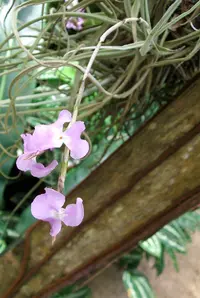
Tillandsia streptocarpa is an epiphytic air plant from dry forests and rocky areas of Bolivia, Brazil, Paraguay, and nearby regions. It anchors to trees or rocks rather than growing in soil. The plant forms loose rosettes of curling, silver-gray leaves covered in fine scales that help capture moisture from the air. Over time it can become a graceful clump with a slightly wild, sculptural look. Flowering spikes produce tubular, often violet to purple blooms with a light fragrance. Its ability to live without soil and tolerate drying between waterings makes it relatively beginner friendly, as long as light and air movement are good. Understanding how to care for Tillandsia streptocarpa focuses mainly on providing bright light, regular misting or soaking, and quick drying afterward.

Main Plant Requirements

Care Difficulty

Moderate Care

Light Preference

Bright Indirect Light

Water Requirements

Moderate Water

Temperature Preference

Tropical / Frost Sensitive

Hardiness Zone

10–12

Soil Texture

Rocky, Sandy, Organic-rich

Soil pH

Acidic (5.5–6.5), Slightly acidic (6.5–7.0)

Soil Drainage

Well-drained

Fertilization

Light (every 4–6 weeks)

Get Personalized Care Plan

Scan your plant to receive care tips personalized for your specific plant

Available on iOS and Android

How to Care for the Tillandsia streptocarpa

This species prefers bright, indirect light that mimics open woodland or bright veranda conditions.

  • Provide 6–8 hours of bright, filtered light daily, such as under shade cloth, dappled tree cover, or near an east-facing window with sheer curtains if grown indoors.
  • Allow gentle morning sun but protect from strong midday and afternoon sun, which can cause leaf scorching, bleaching, or crispy tips on Tillandsia streptocarpa.
  • In winter, move plants closer to bright windows or supplement with a 6500 K grow light placed 20–30 cm away for 8–10 hours if natural light drops.

This air plant absorbs water through its leaves and dries best with strong air movement.

  • Thoroughly soak or mist the foliage until it drips, then let it dry fully within 2–3 hours; in warm, dry weather this is usually needed 2–3 times per week.
  • In cool or humid seasons, reduce to about 1–2 thorough waterings per week and avoid watering late in the evening to limit overnight dampness on the leaves.
  • Watch leaf texture: curling, rigid, or brittle leaves suggest underwatering, while limp, darkening, or foul-smelling bases indicate excess moisture and poor drying.

This species thrives in warm, frost-free conditions with good air movement.

  • Aim for 65–80°F (18–27°C) for active growth, as this range supports healthy hydration and photosynthesis without stressing the leaves.
  • Protect the plant from temperatures below 45°F (7°C); brief dips to 40°F (4°C) may be tolerated if dry, but frost can permanently damage tissue.
  • In hot spells above 90°F (32°C), increase air circulation, provide light shade, and water earlier in the day so the plant dries before night.

This epiphytic air plant prefers moderate to high humidity to keep leaf scales active for moisture uptake.

  • Aim for 50–70% humidity, with extra attention during heated indoor winters when air becomes very dry.
  • Tolerates short dry spells, but curled, rolling leaves and crispy tips indicate humidity stress.
  • Increase humidity with brief daily misting plus strong air movement, or by placing near a humidifier without wetting it constantly.

As an air plant, Tillandsia streptocarpa should not be potted in conventional soil, which suffocates its leaf-based water and nutrient uptake.

  • Mount on inert, non-porous or slightly rough materials such as cork bark, driftwood, or unglazed pottery that allow rapid surface drying.
  • If a display container is used, keep the plant resting loosely above a layer of decorative stones, bark, or lava rock, never buried or packed in mix.
  • Use only a thin layer of coarse, airy material like large bark chips to stabilize the base while keeping all leaves fully exposed to air.
  • Avoid peat-based mixes, compact moss pads, or any medium that stays wet against the leaf bases, as this promotes rot and fungal problems.

This species is suitable for container display as long as the vessel supports airflow and rapid drying after watering.

  • Choose open or slatted containers such as mesh cups or shallow wire baskets that expose most of the plant to moving air.
  • Secure the base with ties or a small wedge of cork so the plant does not shift when soaked and drained.
  • Use lightweight containers or hangers that can be lifted and inverted easily for quick drainage after soaking.

This air plant benefits from light feeding during its active warm-season growth.

  • Use a balanced orchid or air-plant fertilizer (diluted to 1/4–1/2 strength) or a very weak balanced NPK solution.
  • Mist-feed every 3–4 weeks in spring and summer, applying to fully hydrated foliage after soaking or thorough wetting.
  • Avoid fertilizing in late fall and winter, or feed only once at very low strength if growth continues indoors.
  • Do not use compost or slow-release granules, which can burn trichome-covered leaves and encourage rot.

Pruning needs for Tillandsia streptocarpa are minimal and focus on hygiene rather than reshaping.

  • Best timing is after flowering or in late spring, when the plant is actively growing and can heal quickly.
  • Gently twist or snip away dry flower stalks, brown leaf tips, and clearly dead leaves close to the base.
  • Use small, sharp, clean scissors to avoid tearing tissue and to limit the risk of fungal entry.
  • Limit removal to unsightly or damaged parts; heavy cutting does not improve form and may reduce blooming.

This epiphytic species is usually mounted rather than potted, so transplanting focuses on remounting rather than traditional repotting.

  • Remount or reposition when the clump outgrows its support, detaches, or shading from other plants slows growth.
  • Choose late spring to early summer, when temperatures are stable and recovery is fastest.
  • Plan on remounting every 2–3 years or whenever the base becomes crowded or hard to handle for watering.
  • Moisten the plant first, handle only the base, and use soft ties or non-rusting wire to secure without crushing tissues.

Propagation of Tillandsia streptocarpa is most practical through division of offsets rather than from seed.

  • Wait until pups reach about 1/2–2/3 the size of the parent before removing for best survival.
  • Separate offsets in late spring or early summer, when warmth and bright light support new root and leaf growth.
  • Gently twist or cut pups away at the base, keeping their growth point intact.
  • Provide bright, indirect light, good air movement, and regular misting until new growth clearly resumes.

This species is sensitive to prolonged cold and must be kept above freezing in winter.

  • Move outdoor plants indoors before temperatures drop below 40°F, choosing a bright window with good airflow.
  • Avoid any frost; exposure near 32°F can permanently damage leaf tissue and the growing point.
  • Reduce watering but do not let the plant stay wet and cold; allow it to dry quickly after misting.
  • Keep away from cold drafts, single-pane windows at night, and heater vents that cause extreme temperature swings.

Care Tips

Optimize air movement

Place plants where there is gentle but constant air flow, such as near an open interior doorway or a fan set on low, to help leaves dry within 1–2 hours after misting and reduce fungal problems.

Use mounting materials wisely

Mount plants on rot-resistant materials like cork, hardwood, or plastic-coated wire and avoid copper wire, which can be toxic to air plants over time.

Rotate for even growth

Turn mounted plants 90° every 1–2 weeks so all sides receive similar light and air exposure, which encourages symmetrical rosettes and more uniform trichome development.

Seasonal misting adjustment

In dry, heated indoor air during winter, mist more lightly but more frequently and extend drying time by spacing plants out, while in humid summers reduce frequency but increase air movement.

Support during blooming

When a plant sends up a tall flower spike, secure the base gently with soft garden ties or fishing line to its mount so the added weight does not twist or break the rosette while growing Tillandsia streptocarpa.

Common Pests and Diseases

Mealybugs

This pest feeds on the soft leaf bases and protected crown areas, leaving white cottony masses and causing yellowing or stunted growth. Symptoms include sticky honeydew and sooty mold developing on affected surfaces.

Solution

Remove affected plants from close groupings, then blast the foliage with a firm stream of room-temperature water, paying attention to leaf bases. Spot-treat remaining insects with a cotton swab dipped in 70% isopropyl alcohol, ensure strong air movement around the plant, and repeat checks weekly until no new insects appear.

Scale insects

These insects attach to the leaf sheaths and bases as small, hard bumps and slowly drain plant sap, leading to pale, weak foliage. Symptoms include rough or crusty patches that do not rub off easily and possible sticky residue.

Solution

Manually remove visible scale with a soft brush or cloth moistened with 70% isopropyl alcohol, taking care not to damage the trichomes (leaf scales). After cleaning, increase airflow, avoid overfertilizing, and inspect nearby air plants regularly, repeating physical removal at 7–10 day intervals until new crawlers stop appearing.

Spider mites

This pest thrives on dry, stagnant air around the foliage and causes fine stippling, dull color, and in heavier infestations, fine webbing between leaves. Symptoms include a dusty appearance and slow decline rather than sudden collapse.

Solution

Rinse the plant thoroughly under a gentle but steady stream of lukewarm water, including the leaf bases, then improve humidity and air circulation while avoiding prolonged leaf wetness at night. For persistent cases, repeat rinsing every few days and isolate the affected plant from others until new growth appears clean, which aligns with good Tillandsia streptocarpa care instructions.

Fungal leaf spot

This disease develops when moisture lingers in the leaf bases and on the foliage without enough airflow, leading to dark, water-soaked or tan spots that may enlarge over time. Symptoms include localized discoloration rather than whole-plant rot.

Solution

Trim out badly spotted leaves with sterile scissors and discard them, then adjust watering so the plant dries fully within a few hours and never stays wet overnight. Increase air movement, keep the plant in brighter light, and avoid misting directly into the crown to prevent reinfection.

Crown rot

This disease occurs when water sits trapped in the central leaf whorl, especially in cool or low-light conditions, causing the center to turn brown, soft, and eventually collapse. Symptoms include a foul smell and leaves detaching easily from the core.

Solution

At the earliest signs, remove the plant from its display, tilt and shake gently to expel trapped water, and trim away all soft, brown tissue with sterile tools. Allow the remaining healthy parts to dry quickly in bright, indirect light with strong airflow, and adjust future watering to brief soakings or thorough rinses that fully dry within 2–3 hours.

Interesting Facts

Distinctive spiral leaves

This species forms soft, grey-green leaves that twist into loose spirals as they grow, a result of its flexible leaf tissue and the way new leaves push from the rosette center.

Strong trichome coverage

Its leaves are densely covered in trichomes, specialized scale-like structures that give a silvery hue and allow the plant to absorb water and dissolved nutrients directly from the air and rain.

Night-scented flowers

Mature plants produce pale, tubular flowers with a noticeable evening fragrance, which in nature helps attract nocturnal pollinators such as moths.

Botan icon

Did you know?

In parts of its native range in South America, this species often grows on exposed rock outcrops rather than only on tree branches, showing an unusual versatility among air plants in tolerating both epiphytic and lithophytic habitats.

FAQs about Tillandsia streptocarpa

This species usually blooms once mature, often after several years. Inadequate light, insufficient air movement, or nutrient depletion from never being flushed with plain water can delay flowering. After blooming, the main rosette gradually ages and produces pups.

Grow Healthy Plants with Botan Care

Keep your plants happy and healthy with plant identification, disease detection, and easy care guidance.

Botan plant care app — identify plants on mobile

Explore More Plants