


Rotate for symmetry
Turn the pot 90° every 1–2 weeks to keep the foliage balanced and prevent the leaf petioles from permanently leaning toward the main light source.

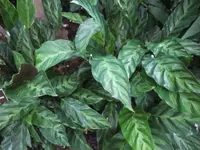
Goeppertia louisae is a tropical, evergreen houseplant from the rainforests of Brazil, grown mainly for its patterned foliage rather than flowers. It forms low clumps of upright, oval leaves with light and dark green banding and often a soft purple tone on the undersides.
In nature it grows on the forest floor in warm, shaded, humid conditions. Indoors it prefers stable warmth, moderate to bright indirect light, and evenly moist but airy soil. The plant can be moderately demanding because it reacts quickly to dry air, cold drafts, or irregular watering, so understanding how to care for Goeppertia louisae helps keep its leaves healthy and colorful.

Care Difficulty
Moderate Care

Light Preference
Bright Indirect Light

Water Requirements
Keep Soil Moist

Temperature Preference
Tropical / Frost Sensitive

Hardiness Zone
11–12

Soil Texture
Loamy, Peaty, Organic-rich

Soil pH
Acidic (5.5–6.5), Slightly acidic (6.5–7.0)

Soil Drainage
Moist but well-drained

Fertilization
Light (every 4–6 weeks)
Scan your plant to receive care tips personalized for your specific plant
Available on iOS and Android
This species prefers bright, filtered conditions that mimic dappled forest light.
Watering should keep the root zone consistently slightly moist but never saturated.
Stable, warm conditions support healthy foliage and steady growth.
This species needs high, stable humidity to keep leaves healthy and avoid edge browning.
This plant prefers a loose, airy, organic-rich potting medium that drains quickly yet holds consistent moisture.
This species is well-suited to container growing when root space and drainage are carefully managed.
This plant responds well to light, consistent feeding during the warm growing months.
Pruning needs are minimal and mainly focused on hygiene and maintaining a neat shape.
Container-grown plants benefit from periodic repotting to maintain healthy roots and stable moisture.
Division is the standard method for producing new plants from a mature clump.
This tropical species is not frost hardy and needs sheltered indoor conditions in cool climates.

Plant Health Check
Not sure what's wrong with your plant? Check your plant's health inside the app.
This species is naturally restricted to the Atlantic Forest region around Rio de Janeiro in Brazil, where it grows on the shaded forest floor in warm, humid understory conditions.
Its leaves show a distinctive zigzag arrangement of dark and light green bands along the midrib, a pattern that remains visible even in relatively low light compared with many other marant relatives.
As a member of the Marantaceae, it has a pulvinus, a flexible joint at the base of the leaf, that allows the foliage to shift position between day and night in response to light levels, a behavior often called prayer-plant movement.

In its native Atlantic Forest habitat, this species often grows in small colonies formed by short creeping rhizomes, slowly creating low, patterned groundcover patches under taller vegetation rather than forming tall clumps like some related species.
Crispy brown edges usually result from low humidity, chronic underwatering, or excess fertilizer salts. Hard tap water and cold drafts can worsen damage. Increase humidity, flush the potting mix occasionally, and adjust watering to keep soil lightly moist, not wet.
Keep your plants happy and healthy with plant identification, disease detection, and easy care guidance.

_G._Don_(12477367715)-200x113.webp)