Echeveria subrigida Care

Echeveria subrigida

About Echeveria subrigida

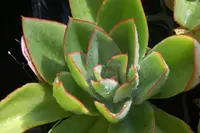
Echeveria subrigida is a rosette-forming succulent from arid regions of Mexico, valued for its architectural shape and powdery, bluish leaves with pink to red edges. The rosettes stay relatively low and compact, making the plant suitable for containers, mixed succulent bowls, and rock gardens in mild climates. In favorable conditions it sends up tall flower stalks with coral to pink blooms that attract pollinators. This species prefers bright light, low to moderate moisture, and very well-draining, gritty soil. Its drought tolerance and slow growth rate generally make it easy to care for indoors and outdoors once basic how to care for Echeveria subrigida principles are understood.

Main Plant Requirements

Care Difficulty

Easy Care

Light Preference

Full Sun

Water Requirements

Low Water

Temperature Preference

Tropical / Frost Sensitive

Hardiness Zone

9–11

Soil Texture

Sandy, Loamy, Rocky

Soil pH

Slightly acidic (6.5–7.0), Neutral (7.0)

Soil Drainage

Well-drained

Fertilization

Minimal (feed rarely)

Get Personalized Care Plan

Scan your plant to receive care tips personalized for your specific plant

Available on iOS and Android

How to Care for the Echeveria subrigida

This succulent thrives in bright, mostly direct light with some protection from harsh extremes.

  • Provide 6–8 hours of sun daily, with strong morning sun and light afternoon shade, especially in hot summers.
  • Echeveria subrigida tolerates light partial shade, but prolonged low light causes stretching, faded color, and weak rosettes.
  • In very hot climates, use filtered light or shade cloth during intense midday sun to prevent leaf scorch and sunburned patches.

This species prefers thorough but infrequent watering that allows the soil to dry between soakings.

  • Water only when the top 3–5 cm of soil feel completely dry, then soak the root zone and let excess drain away.
  • In spring and summer, expect more frequent watering; in fall and winter, reduce sharply as growth slows and evaporation drops.
  • Soft, yellowing leaves and a mushy base indicate overwatering, while wrinkled, thin leaves signal the plant needs water and better draining soil.

This drought-adapted succulent prefers warm, dry air and cool but frost-free nights.

  • Aim for 65–80°F (18–27°C) during active growth, with slightly cooler nights to support compact rosette development.
  • Protect from frost; sustained exposure below 30°F (−1°C) can damage tissues, and hard freezes may kill the plant.
  • In heat above 90°F (32°C), increase airflow and provide light afternoon shade to limit stress and leaf scorch, especially in reflected-heat sites.

This species prefers dry air and usually does best in 30–50% humidity.

  • Tolerates typical indoor dryness well and does not need added humidity.
  • Watch for edema, leaf splitting, or soft, translucent patches as signs of excess humidity or poor air movement.
  • Improve conditions by spacing plants, using a small fan nearby, and avoiding grouping with humidity-loving plants.

This succulent needs a very fast-draining, mineral-based mix to protect its roots from rot.

  • Use a gritty mix such as 50–70% inorganic material (pumice, perlite, coarse sand, small gravel) with 30–50% cactus potting mix.
  • Aim for a slightly acidic to neutral pH of about 6.0–7.0, which suits Echeveria subrigida roots well.
  • Ensure the mix feels loose and crumbly so water runs through in seconds, not minutes, after watering.
  • Avoid heavy garden soil, peat-heavy mixes, or containers without drainage, which trap moisture around the roots.

This species is well suited to container culture, including small outdoor pots and patio planters.

  • Choose a shallow but wide pot so the relatively shallow roots can spread without holding large volumes of wet mix.
  • Use unglazed terracotta if extra evaporation is needed in cool or humid climates, and glazed or plastic in very hot, dry sites.
  • Place the pot where wind or accidental bumps will not tip it, as the rosette can become heavy compared with the root ball.

This succulent needs only light feeding, as Echeveria subrigida is adapted to lean, well-drained soils.

  • Use a diluted balanced liquid fertilizer (around 10-10-10 or 20-20-20) at 1/4–1/2 strength during active growth in spring–summer.
  • Feed every 4–6 weeks at most, ensuring soil is already slightly moist before application.
  • Avoid fertilizing in fall–winter when growth slows, to prevent weak, stretched tissue.
  • Skip compost-heavy mixes that stay wet; use low-organic, fast-draining cactus or succulent soil instead.

Pruning needs are minimal and mainly focused on keeping Echeveria subrigida clean and compact.

  • Best time for light pruning is late spring to early summer, during active growth.
  • Remove dead, dried, or damaged leaves at the base to improve airflow and reduce rot risk.
  • Gently twist or cut away spent flower stalks to tidy the rosette and direct energy back to foliage.
  • Use clean, sharp scissors or snips, disinfected with alcohol, to avoid introducing disease.

Container-grown plants of this species benefit from occasional repotting to refresh soil and manage root health.

  • Check for roots circling the pot, pushing through drainage holes, or noticeably slowed growth as repotting signs.
  • Plan to repot every 2–3 years in late spring, using a gritty cactus or succulent mix and a pot only 2–3 cm wider.
  • Tip the plant out gently, loosen circling roots lightly, and remove old soggy soil without tearing healthy roots.
  • After repotting, keep in bright shade for a few days, water lightly once, then resume normal light and watering.

This species is commonly multiplied by offsets and leaf or stem cuttings rather than seed.

  • Take offsets or healthy leaf cuttings in late spring–summer, when growth and rooting are strongest.
  • Allow cut surfaces to callus for 1–3 days to reduce rot risk before placing on or in substrate.
  • Use a dry, fast-draining succulent mix; mist very lightly until roots form, then water more deeply but infrequently.
  • Provide bright, indirect light and warm conditions around 70–80°F to support rooting and compact rosette formation.

This succulent is not very frost tolerant and benefits from thoughtful winter management, especially in cold climates.

  • Move containers indoors or under cover when temperatures approach 32°F, providing bright, cool light.
  • Keep soil almost dry in winter, watering sparingly to prevent root rot in cold conditions.
  • In mild climates, use a very light gravel mulch around the crown to keep leaves off cold, wet soil.
  • Avoid cold drafts and sudden temperature swings, which can scar leaves and stress the rosette.

Care Tips

Use top-dressing gravel

Apply a 0.5–1 in layer of clean mineral grit or small gravel on the soil surface to keep the lower leaves dry, reduce fungus gnat breeding, and keep rosettes cleaner after watering.

Rotate for even symmetry

Turn the pot 90° every 1–2 weeks during active growth so the rosette develops evenly and does not lean or stretch toward the strongest light source.

Seasonal sun acclimation

When moving the plant from indoors or shade to stronger sun, increase light exposure gradually over 10–14 days to avoid permanent leaf scorch and color loss.

Targeted pest checks

Inspect the tight leaf bases and the underside of lower leaves every 2–3 weeks for mealybugs or scale, using a cotton swab dipped in 70% isopropyl alcohol to remove any pests before they spread.

Old leaf management

Remove dry, shriveled leaves at the base with clean fingers or tweezers every few weeks to improve air movement around the stem and reduce hiding spots for pests when caring for Echeveria subrigida.

Common Pests and Diseases

Mealybugs

This pest feeds on leaf and stem sap and often hides in the tight leaf rosettes, causing distortion and sticky honeydew. Symptoms include white, cottony clusters in leaf axils and stunted new growth.

Solution

Isolate the plant, then use a cotton swab dipped in 70% isopropyl alcohol to dab visible insects, repeating weekly until no new clusters appear. Improve light and airflow, and if the infestation is heavier, use a ready-to-use insecticidal soap or neem oil spray directed into the rosette crevices, keeping the plant dry between treatments.

Aphids

These insects cluster on tender new growth and flower stalks, sucking sap and causing puckered leaves and deformed blooms. Sticky honeydew and sooty mold may appear on and around the plant.

Solution

Rinse off colonies with a firm stream of water, taking care not to damage the rosette. Follow with a light application of insecticidal soap on affected areas every 5–7 days until growth appears clean, and avoid heavy nitrogen fertilization that encourages soft, aphid-prone tissue while caring for Echeveria subrigida.

Soft scale

This pest appears as small, dome-shaped bumps on leaves and stems that do not move when touched. This insect feeds on sap, leading to gradual yellowing and a decline in vigor, often accompanied by sticky residue.

Solution

Gently scrape or wipe off individual scales with a cotton swab or soft cloth dipped in 70% isopropyl alcohol, then dispose of heavily infested leaves if possible. For remaining insects, use repeated applications of horticultural oil or neem oil, ensuring coverage of both upper and lower leaf surfaces and monitoring closely for reinfestation.

Edema

Symptoms include small, corky, raised spots or blisters on leaves where cells burst from taking up more water than they can use, especially in cool, low-light conditions. This physiological disorder is common when soil stays wet for long periods while transpiration is low.

Solution

Allow the soil to dry more thoroughly between waterings, and provide brighter light and good airflow to help the plant use water more efficiently. Damaged spots will not heal, but new growth will be smooth if watering is adjusted, often by switching to less frequent, deep watering and using a fast-draining succulent mix.

Fungal leaf spots

This disease causes small brown, black, or tan spots on leaves that may enlarge or develop a yellow halo, often starting on lower leaves in humid or poorly ventilated conditions. Symptoms include gradual cosmetic damage and occasional leaf drop rather than sudden collapse.

Solution

Remove affected leaves and discard them, then adjust care by increasing airflow, spacing plants, and watering at the soil level rather than over the rosette to keep leaves dry. If spotting continues, apply a sulfur-based or copper-based fungicide labeled for succulents, using it sparingly and only on cool, shaded plants to avoid leaf burn.

Interesting Facts

Chalk-cliff native

This species is naturally found on limestone and gypsum slopes in northeastern Mexico, where it grows in very bright, exposed sites with highly alkaline, mineral-rich soils.

Distinctive leaf armor

Its blue to blue-green leaves have a thick, waxy coating and finely toothed, reddish margins, adaptations that reduce water loss and protect tissues from intense sun and wind.

Showy hummingbird flowers

In late spring to summer it produces tall arching stalks with coral to reddish tubular flowers that are specifically shaped to attract hummingbirds as pollinators in its native habitat.

Botan icon

Did you know?

Botanists consider this species an important parent in hybrid breeding because its strong leaf coloration, red margins, and compact rosette form often pass reliably to its offspring, which has helped shape many modern ornamental echeveria cultivars.

FAQs about Echeveria subrigida

This species usually performs better outdoors in mild, dry climates where it receives strong light and good air movement. Indoors it stays smaller and needs careful positioning near a bright window for successful Echeveria subrigida indoor care.

Grow Healthy Plants with Botan Care

Keep your plants happy and healthy with plant identification, disease detection, and easy care guidance.

Botan plant care app — identify plants on mobile

Explore More Plants