Offset management
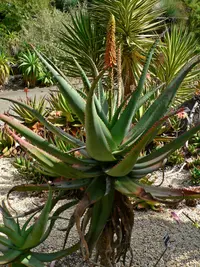
Allow offsets to reach at least 1–1.5 in across before removing, then gently twist them off with some attached roots and replant in a separate, dry, gritty mix to maintain a compact mother plant and create backups.

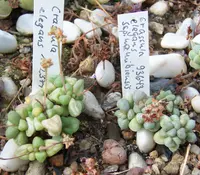
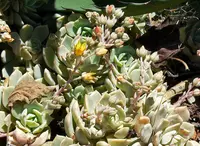
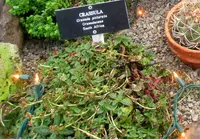
Elegant crassula (Crassula elegans) is a compact, clumping succulent native to arid regions of South Africa. It forms low mats of small, tightly packed leaves that often show red or bronze tones in strong light. This species grows slowly and stays small, which makes it suitable for windowsills, dish gardens, and rock-style container plantings. Its tidy habit and drought tolerance mean it can handle occasional neglect if kept in a bright, dry spot. In cultivation it prefers strong light, very free-draining soil, and careful watering, and these traits largely determine how to care for elegant crassula successfully.

Care Difficulty
Easy Care

Light Preference
Full Sun

Water Requirements
Low Water

Temperature Preference
Tropical / Frost Sensitive

Hardiness Zone
10–11

Soil Texture
Sandy, Loamy, Rocky

Soil pH
Slightly acidic (6.5–7.0), Neutral (7.0)

Soil Drainage
Well-drained

Fertilization
Minimal (feed rarely)
Scan your plant to receive care tips personalized for your specific plant
Available on iOS and Android
This compact succulent needs bright light and some direct sun to stay dense and colorful.
This drought-tolerant succulent prefers thorough but infrequent watering in sharply draining soil.
This species prefers mild, dry conditions and does not tolerate hard freezing.
This succulent tolerates a wide humidity range and rarely needs special humidity care indoors.
Crassula elegans needs a fast-draining, gritty mix that prevents water from sitting around the roots.
This species is well suited to container growing, both indoors and outdoors in mild climates.
Feed Crassula elegans lightly, as a supplement to good light and a fast-draining mineral mix.
Light pruning helps maintain compact, dense growth on Crassula elegans.
Crassula elegans prefers slightly tight pots and infrequent repotting in gritty, fast-draining soil.
New plants of Crassula elegans are most often produced from stem or leaf cuttings under warm, bright conditions.
This succulent is not frost hardy and needs protection from freezing conditions in most climates.

Plant Health Check
Not sure what's wrong with your plant? Check your plant's health inside the app.
This species occurs naturally on rocky slopes and sandstone cliffs in the Western and Eastern Cape of South Africa, often rooting in very shallow crevices where many other succulents cannot persist long term.
Crassula elegans is adapted to the Cape winter-rainfall climate, with active growth mainly in the cooler, wetter months and a semi-dormant phase in the hot, dry summer period.
Mature plants produce dense, rounded clusters of small star-shaped flowers that can turn red to deep pink, a feature used by field botanists to help distinguish it from several closely related Crassula species in the same region.
Lack of flowers often comes from insufficient light, too much nitrogen fertilizer, or no cool, dry rest period. Provide bright conditions, avoid heavy feeding, and allow a short, cooler, slightly drier phase to encourage buds.
Keep your plants happy and healthy with plant identification, disease detection, and easy care guidance.