garden stonecrop Care (Hylotelephium erythrostictum)

Also known as: garden annual stonecrop, showy stonecrop
garden stonecrop

About garden stonecrop

Garden stonecrop (Hylotelephium erythrostictum) is a hardy, clump-forming perennial succulent grown mainly for its fleshy leaves and flat-topped flower clusters. It typically forms upright stems with thick, water-storing foliage and late-season blooms that attract bees and butterflies.

This species is native to East Asia but is widely used in temperate gardens and green roofs. Its tolerance of drought, poor soil, and urban conditions makes it straightforward for beginners who want to learn how to care for garden stonecrop.

It generally prefers full sun, well-drained soil, and low to moderate moisture, which helps prevent rot and keeps the plant compact and healthy.

Main Plant Requirements

Care Difficulty

Easy Care

Light Preference

Full Sun

Water Requirements

Low Water

Temperature Preference

Cold Hardy

Hardiness Zone

3–9

Soil Texture

Sandy, Loamy, Rocky

Soil pH

Acidic (5.5–6.5), Slightly acidic (6.5–7.0)

Soil Drainage

Well-drained

Fertilization

Minimal (feed rarely)

Get Personalized Care Plan

Scan your plant to receive care tips personalized for your specific plant

Available on iOS and Android

How to Care for the garden stonecrop

This sun-loving perennial thrives in open, bright conditions for compact growth and strong flowering.

  • Provide 6–8 hours of direct sun daily; morning sun with light afternoon shade is ideal in hot summer regions.
  • It tolerates light partial shade, but garden stonecrop may stretch and flower less if it receives under 4–5 hours of sun.
  • In cooler climates, full sun all day is suitable, but watch for leaf scorch on thin, dry soils during extreme heat waves.

This succulent perennial prefers infrequent, deep watering and periods of dry soil between soakings.

  • Allow the top 3–5 cm of soil to dry before watering; in typical garden beds this often means waiting until soil feels dry and loose to the touch.
  • Reduce watering in cool seasons and during dormancy, only watering if the soil has been dry for many days and the foliage begins to soften or wrinkle.
  • Use sharply drained soil or raised beds; yellowing, mushy stems or a sour soil smell indicate overwatering and potential root rot in Hylotelephium erythrostictum.

This hardy perennial tolerates a wide temperature range but grows best in moderate warmth.

  • Active growth is strongest around 65–80°F (18–27°C), especially in spring and early summer when soil is warming.
  • Mature plants tolerate winter cold to about -20°F (-29°C) in the ground when soil drains well and crowns are not waterlogged.
  • During heat above 90°F (32°C), growth can slow; provide some afternoon shade and avoid waterlogged soil to limit stress and root damage.

Hylotelephium erythrostictum handles a wide humidity range and rarely needs special adjustment indoors or outdoors.

  • Prefers 30–50% air humidity but tolerates significantly drier conditions if soil is not kept wet.
  • Tolerates heated indoor air without issue; leaf shriveling usually indicates underwatering rather than low humidity.
  • If air is very dry and heat is intense, group pots or use a pebble tray, but only if the soil dries well between waterings.

This succulent perennial needs freely draining, mineral-leaning soil to avoid root rot and floppy growth.

  • Use a sandy or gritty loam with 30–50% mineral material such as coarse sand, fine gravel, or perlite for sharp drainage.
  • Aim for slightly acidic to neutral pH around 6.0–7.0; very acidic or strongly alkaline soils reduce nutrient availability.
  • Blend 1 part compost with 2 parts cactus mix or sandy garden soil to give modest fertility while keeping the mix open and airy.
  • Avoid compacted clay, waterlogged beds, or heavy peat-based mixes, which trap moisture around roots and increase rot risk for Hylotelephium erythrostictum.

This species is well suited to container growing on patios, balconies, and sunny steps.

  • Choose a wide, low pot to balance the top-heavy flower stems and reduce the risk of the container tipping in wind.
  • Use a relatively shallow container, as roots are fibrous and spreading rather than deep-taprooted, which also speeds excess water loss.
  • Select unglazed terracotta if strong sun or frequent rain is expected, as it releases moisture faster and limits root rot.

This succulent perennial needs only light feeding, especially in average or rich garden soil.

  • Use a balanced, slow-release fertilizer (for example 10-10-10) or a thin layer of compost in early spring.
  • Feed outdoor clumps once per year during active growth; container plants can receive light feeding every 6–8 weeks.
  • Dilute liquid fertilizer to 1/2 strength to prevent soft, floppy growth and salt buildup.
  • Stop feeding garden stonecrop in late summer so new growth can harden before winter.

Thoughtful pruning keeps Hylotelephium erythrostictum compact, upright, and flowering well.

  • Cut back old, dry stems at ground level in late winter or very early spring before new shoots emerge.
  • In late spring, lightly shear or pinch taller stems by 1/3 to reduce flopping and create a denser mound.
  • Remove faded flower heads after bloom if a tidier look is desired, or leave for winter interest and wildlife.
  • Use clean, sharp hand pruners and make smooth cuts to limit tissue damage and disease entry points.

This species is usually grown in the ground and only occasionally needs repotting in containers.

  • Transplant outdoor clumps in early spring or early fall when temperatures are mild and soil is workable.
  • Look for signs like roots circling the pot, water running straight through, or noticeably slowed growth in containers.
  • Shift to a container 2–5 cm wider with free-draining, gritty mix to prevent waterlogging and root rot.
  • Water thoroughly after moving, then keep soil lightly moist for 1–2 weeks to reduce root stress and help re-establishment.

New plants are most often produced by division or stem cuttings.

  • Divide mature clumps in early spring or early fall, lifting and separating sections with several shoots and roots each.
  • Take 7–10 cm non-flowering stem cuttings in late spring or summer and insert into well-draining, slightly moist mix.
  • Provide bright, indirect light and good air circulation; roots usually form in 2–4 weeks in warm conditions.
  • Seeds can be sown in trays with sandy mix; maintain light moisture and cool to moderate temperatures for germination.

This cold-hardy perennial generally needs minimal winter care in the ground across most temperate climates.

  • Foliage naturally dies back after frost; leave stems for structure or cut to ground level in late fall or late winter.
  • Apply a thin mulch layer (2–5 cm) around, not on top of, crowns in colder zones to buffer freeze–thaw cycles.
  • In containers, move pots to a sheltered spot and prevent waterlogged soil, which increases risk of root rot.

Care Tips

Spring division timing

Divide mature clumps every 3–4 years in early spring just as new shoots appear, replanting outer, more vigorous sections to maintain compact growth and strong flowering.

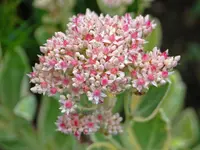
Stems as living cuttings

If tall stems flop or break, trim them cleanly and replant the cut sections in the same bed or a nursery pot, as they root easily and can be used to thicken the planting or start new colonies.

Pinching for sturdier stems

Pinch or lightly shear back soft new growth by 2–3 cm in late spring to encourage shorter, sturdier stems and a denser, less floppy habit without reducing flower display.

Flowerhead grooming

After peak bloom, selectively remove spent or discolored flowerheads while leaving healthy ones in place to reduce disease risk and keep the plant looking tidy, especially in more formal beds.

Winter structure management

In cold climates, leave dry seedheads standing over winter for crown protection and habitat, then cut them down to just above new buds in late winter as part of caring for garden stonecrop.

Common Pests and Diseases

Aphids

This pest often clusters on young stems and flower buds, sucking sap and causing curling, distortion, and sticky honeydew that can attract sooty mold. Infestations are most common on lush, fast-growing shoots in spring and early summer.

Solution

Spray plants with a strong stream of water to dislodge colonies, then treat remaining insects with insecticidal soap or a neem oil spray, coating stems and the undersides of leaves. Encourage natural predators such as lady beetles and avoid high-nitrogen fertilizer that pushes excessively soft growth.

Mealybugs

These insects appear as white, cottony masses in stem joints and on undersides of leaves, weakening shoots by sucking sap and sometimes causing yellowing or stunted growth. Infestations are more likely in crowded or sheltered planting spots and in container-grown plants.

Solution

Remove heavily infested stems and wipe remaining colonies with cotton swabs dipped in 70% isopropyl alcohol. Follow with repeated applications of insecticidal soap or neem oil at 7–10 day intervals until no new insects appear, and thin dense clumps to improve airflow.

Slugs and snails

This pest feeds on tender shoots and lower leaves, leaving irregular holes and ragged edges, especially in moist, shaded beds. Damage is often most noticeable on young plants and during cool, wet periods.

Solution

Hand-pick slugs and snails in the evening, and use iron phosphate bait around the base of plants according to label directions. Reduce hiding places by removing debris and mulch directly against stems, and water in the morning so the soil surface dries before nightfall.

Powdery mildew

This disease causes a white or gray powdery coating on leaves and stems, which can lead to yellowing and premature leaf drop in severe cases. Symptoms include increased severity in warm, dry days combined with cool, humid nights and poor air circulation around clumps.

Solution

Remove and dispose of affected leaves to reduce spore levels, then improve spacing and airflow by thinning crowded stems. If conditions stay favorable for disease, apply a sulfur, potassium bicarbonate, or neem-based fungicide labeled for ornamentals, making sure to cover both leaf surfaces.

Leaf spot

This disease produces small, water-soaked or brown spots on leaves that may merge into larger lesions, sometimes causing early defoliation on stressed plants. Symptoms include more frequent problems in prolonged wet weather or where overhead watering keeps foliage damp for many hours.

Solution

Prune out and discard badly affected leaves and any fallen debris around the plant to reduce inoculum. Switch to drip or soaker hose irrigation, water early in the day, and if needed use a copper- or chlorothalonil-based fungicide at the first sign of spotting, following label rates and intervals as part of broader Hylotelephium erythrostictum care.

Interesting Facts

Japanese garden origin

This upright stonecrop is native to Japan, where it has long been used in traditional rock and temple gardens for its vertical, clump-forming habit and late-season flowers.

Late-season pollinator magnet

Its flat-topped clusters of pale pink to white flowers in late summer to fall provide an important nectar source for bees, hoverflies, and butterflies when many other plants have finished flowering.

Red-speckled foliage pattern

Mature leaves and stems often develop subtle red spotting or striping, a characteristic that inspired the species name erythrostictum, meaning red-spotted.

Botan icon

Did you know?

This species has become so reliable in cultivation that it has been widely used as a parent in breeding modern upright sedums and stonecrops, contributing its strong stems, neat clumping habit, and late flowering to many popular garden hybrids.

FAQs about garden stonecrop

Poor flowering usually comes from too much shade, excess nitrogen fertilizer, or crowded, old stems. Ensure strong sun, avoid high-nitrogen feeds, and divide or renew clumps every few years to restore normal bloom production.

Grow Healthy Plants with Botan Care

Keep your plants happy and healthy with plant identification, disease detection, and easy care guidance.

Botan plant care app — identify plants on mobile

Explore More Plants