Aechmea tillandsioides Care

Aechmea tillandsioides

About Aechmea tillandsioides

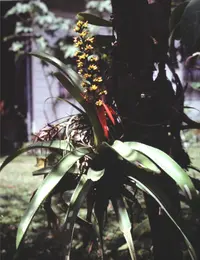
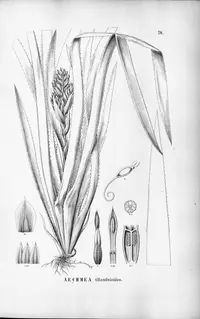
Aechmea tillandsioides is an epiphytic bromeliad, often growing on trees rather than in soil, forming a tight rosette that can hold water in its center. Its narrow, arching leaves and tall flower spikes with colorful bracts give it a striking architectural look.

This species occurs naturally in tropical regions of Central and South America, where it grows in warm, humid forests with bright, filtered light. It is considered moderately easy to grow indoors if given stable warmth, good air circulation, and not kept constantly wet.

Understanding how to care for Aechmea tillandsioides mainly involves recreating those airy, bright, and moderately humid conditions without overwatering the roots or the central cup.

Main Plant Requirements

Care Difficulty

Moderate Care

Light Preference

Partial Shade

Water Requirements

Moderate Water

Temperature Preference

Tropical / Frost Sensitive

Hardiness Zone

10–12

Soil Texture

Sandy, Loamy, Organic-rich

Soil pH

Acidic (5.5–6.5)

Soil Drainage

Well-drained

Fertilization

Light (every 4–6 weeks)

Get Personalized Care Plan

Scan your plant to receive care tips personalized for your specific plant

Available on iOS and Android

How to Care for the Aechmea tillandsioides

This epiphytic bromeliad prefers bright, filtered light that mimics high-canopy forest conditions.

  • Provide 4–6 hours of bright, indirect light daily; gentle morning sun is suitable, but avoid harsh midday or afternoon sun outdoors.
  • Tolerates light partial shade, though very deep shade causes leggy growth, dull foliage, and fewer or no flower spikes in Aechmea tillandsioides.
  • Outdoors, give dappled light under trees; in sunnier spots use shade cloth in summer to prevent leaf scorching and pale, bleached patches.

Watering should focus on both the central cup and well-drained roots without leaving the plant constantly saturated.

  • Keep the central tank 1/2–2/3 full with fresh water, flushing every 1–2 weeks to prevent stagnation and mosquito larvae.
  • Allow the top 2–4 cm of any potting mix or mounting medium to dry before rewetting; roots dislike standing in waterlogged conditions.
  • In warm, active growth, signs of thirst include slightly curling or wrinkling leaves; overwatering shows as limp, browning leaf bases and a sour smell near the crown.

This species grows best in consistently warm, frost-free conditions that resemble lowland tropical climates.

  • Aim for 65–80°F (18–27°C) for active growth; short peaks to 85°F (29°C) are tolerated with higher humidity and good air movement.
  • Protect from cold; growth slows below 60°F (16°C), and damage occurs near 40°F (4°C) with a high risk of tissue collapse.
  • Avoid frost entirely and shield from hot, reflective locations; above 90°F (32°C), increase shade and watering attention to prevent heat stress and leaf scorch.

This epiphytic bromeliad handles typical indoor humidity but grows best with slightly elevated moisture in the air.

  • Aim for 50–70% humidity; it tolerates short dips to 40% if the leaf tank is kept filled with clean water.
  • Crisp leaf tips, curling margins, and stalled growth indicate air that is too dry for Aechmea tillandsioides.
  • Increase humidity with a nearby humidifier, grouping plants together, or placing the pot on a pebble tray that does not submerge the drainage holes.

Use a very free-draining, airy mix that mimics its natural epiphytic conditions.

  • Combine roughly 40% fine orchid bark, 30% peat or coco coir, 20% perlite, and 10% coarse sand to create a light, open structure.
  • Ensure water drains through in seconds, leaving the mix barely moist but never waterlogged, which quickly rots the base.
  • Keep pH slightly acidic to neutral, around 5.5–7.0, which supports nutrient availability without stressing roots.
  • Improve aeration by using chunky components and avoiding dense garden soil or heavy peat-based mixes that compact in containers.

This species grows reliably in containers when the pot and setup prevent waterlogging and support its upright rosette.

  • Choose a relatively shallow but wide pot to stabilize the leaf rosette and reduce the risk of tipping as the tank fills with water.
  • Select a heavier material such as ceramic or clay if the plant becomes top-heavy, especially outdoors where wind can topple light plastic pots.
  • Use a pot with multiple, unobstructed drainage holes so tank overflow and rain can exit quickly instead of soaking the root zone.

Nutrient needs for Aechmea tillandsioides are modest, but light feeding supports healthy foliage and flowering.

  • Use a balanced liquid fertilizer (around 10-10-10) diluted to 1/4–1/2 strength for container plants.
  • Feed every 4–6 weeks in spring and summer, applying to the potting mix, not into the central cup.
  • Skip or greatly reduce feeding in fall and winter when growth slows.
  • Avoid heavy compost or strong slow-release granules that can burn roots in the loose bromeliad mix.

Pruning Aechmea tillandsioides is mainly hygienic, guiding energy to healthy leaves and offsets.

  • Best timing is after flowering finishes or during active growth in spring and early summer.
  • Remove dead or damaged leaves at the base using clean, sharp scissors or pruning shears.
  • Cut spent flower stalks close to the rosette once they fade to redirect resources to pups.
  • Thin out crowded, declining rosettes to maintain shape, airflow, and light around healthy growth.

Container-grown Aechmea tillandsioides benefits from occasional repotting to refresh the loose, airy substrate.

  • Repot every 2–3 years or when roots circle the pot, growth slows, or the mix stays soggy.
  • Choose spring or early summer so the plant can re-establish in warm, bright conditions.
  • Use a slightly larger pot with free-draining bromeliad or orchid-style mix to limit root stress.
  • Handle roots gently, keep the central cup upright, water lightly after repotting, and keep in bright, indirect light for 1–2 weeks.

New Aechmea tillandsioides plants are most reliably produced by dividing offsets, often called pups.

  • Separate pups in spring or early summer when they reach about 1/3–1/2 the size of the mother rosette.
  • Use a clean, sharp knife to detach each offset with some roots or basal tissue attached.
  • Plant pups in a small pot with airy, fast-draining bromeliad mix and keep slightly moist, not wet.
  • Provide bright, filtered light, warm temperatures around 70–80°F, and high humidity to support rooting.

This bromeliad is frost-sensitive and needs protection in regions with cold winters.

  • Move container plants indoors before temperatures drop below 50°F, placing them in bright, indirect light.
  • Maintain indoor temperatures near 65–75°F and avoid cold drafts or unheated window sills.
  • In mild climates, grow in pots so plants can be shifted under cover during rare cold nights.
  • Water less often in winter, keeping the mix just lightly moist and the central cup only partially filled.

Care Tips

Stabilize epiphytic mounts

If grown mounted on wood or bark, secure the base with soft ties or fishing line for the first 3–6 months so the roots can grip firmly and the plant does not shift or topple.

Use rainwater in cups

Periodically flush the central water tanks with collected rainwater or low-mineral filtered water to prevent mineral buildup and decay of trapped debris inside the rosettes.

Rotate for even offsets

Turn the plant a quarter-turn every 2–3 weeks to ensure light reaches all sides of the rosette, which encourages a more symmetrical shape and more evenly distributed pups.

Manage pup spacing

Once offsets reach about 1/3–1/2 the size of the mother, either thin or detach some of them so each rosette has space and air circulation, reducing rot risk and keeping the clump manageable.

Mount height adjustment

When growing Aechmea tillandsioides attached to trees or supports outdoors in frost-free areas, position it high enough for good air movement but low enough that you can easily inspect the leaf axils for pests and remove old debris during routine checks.

Common Pests and Diseases

Scale insects

These insects attach to leaves and leaf axils, sucking sap and causing yellowing, sticky honeydew, and sooty mold growth on the rosette and inflorescence stalks.

Solution

Remove visible scale by gently scraping with a cotton swab dipped in 70% isopropyl alcohol, then rinse the foliage thoroughly; for larger infestations, apply a light horticultural oil or insecticidal soap to all leaf surfaces and leaf bases, repeating every 7–10 days until no new insects appear while keeping the central tank drained and dry for a day after treatment.

Mealybugs

This pest appears as white, cottony clusters in leaf bases, on roots, and around the flower stalk, weakening the plant and distorting new growth.

Solution

Physically remove colonies with cotton swabs or a soft brush dipped in alcohol, then treat the plant with insecticidal soap or a systemic insecticide labeled for bromeliads if the infestation is heavy, keeping the plant isolated and inspecting leaf axils and the water tank regularly until no further mealybugs are seen.

Tank mosquitoes and larvae

These insects use the water held in the rosette tank for breeding, with larvae developing in stagnant water and sometimes causing foul odor or organic buildup around the leaf bases.

Solution

Flush the central tank with fresh water at least weekly, then invert the plant gently to drain; in outdoor conditions, use fine mesh screening, physical removal of larvae with a turkey baster, or Bti mosquito dunks in separate water sources rather than placing chemicals directly in the tank of the plant.

Leaf spot disease

This disease causes small water-soaked or tan to dark-brown spots that can merge into larger patches, often starting where water remains on leaves or in crowded, poorly ventilated conditions.

Solution

Remove and discard heavily spotted leaves, improve air movement and avoid prolonged overhead wetting, then apply a copper-based or other bromeliad-safe fungicide if spots continue to spread, making sure the plant dries quickly after treatments to reduce new infections.

Bacterial tank rot

This disease begins in the central cup or leaf bases as soft, water-soaked tissue with a sour or foul smell, leading to collapse of the rosette if moisture and organic debris stay trapped in warm conditions.

Solution

Drain and thoroughly flush the tank, cut out any soft, rotting tissue with a sterile blade, and dust cuts with a dry sulfur or copper-based product; keep the plant drier and well ventilated, avoid fertilizer sitting in the tank, and start new offsets from healthy, firm tissue if the main rosette is badly affected, which is essential for long-term Aechmea tillandsioides care.

Interesting Facts

Tank-forming epiphyte

This species naturally grows as an epiphyte on tree branches in tropical forests from Mexico to northern South America, forming a water-holding rosette that captures rain, leaf litter, and small invertebrates.

Seasonal color change

Its otherwise green foliage and inflorescence bracts often take on red to pink tones around flowering, a color change thought to increase visibility to pollinators such as hummingbirds.

Berry-like seed fruits

After flowering, it produces fleshy, berry-like fruits that contain seeds dispersed mainly by birds, linking its reproductive cycle closely to local bird communities in its native range.

Botan icon

Did you know?

In some parts of its native range, this bromeliad forms dense epiphytic clumps on single host trees, creating miniature canopy wetlands that support small invertebrates, algae, and microbial life in each leaf tank, effectively increasing local biodiversity high above the forest floor.

FAQs about Aechmea tillandsioides

This species usually blooms only once per rosette when mature, then slowly declines while pups develop. Lack of flowering is often due to immaturity or insufficient light. Stable warmth and consistent care support the natural bloom cycle.

Grow Healthy Plants with Botan Care

Keep your plants happy and healthy with plant identification, disease detection, and easy care guidance.

Botan plant care app — identify plants on mobile

Explore More Plants