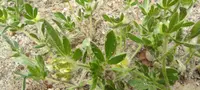
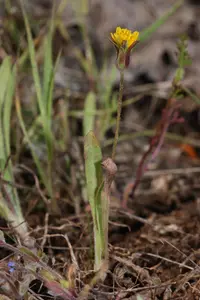
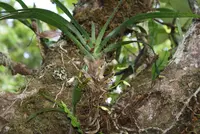
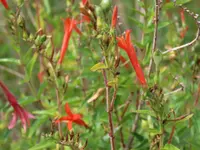
cranichis-like ladies'-tresses Care (Cyclopogon cranichoides)

Also known as: Speckled Ladies' Tresses

About cranichis-like ladies'-tresses

Cyclopogon cranichoides, often called cranichis-like ladies'-tresses, is a small terrestrial orchid from tropical forests of Central and South America. It usually grows on the forest floor among leaf litter and moss.

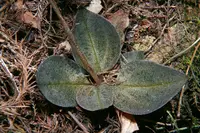
The plant forms a low rosette of patterned leaves and sends up a slender spike of small, delicate flowers. It prefers shaded, humid habitats with consistently moist but well-drained, organic-rich soil.

Because it comes from stable, sheltered forest conditions, it can be sensitive to dry air, strong light, and irregular watering. This makes it more suitable for growers willing to learn how to care for cranichis-like ladies'-tresses in controlled indoor or greenhouse setups.

Main Plant Requirements

Care Difficulty

Hard Care

Light Preference

Partial Shade

Water Requirements

Keep Soil Moist

Temperature Preference

Tropical / Frost Sensitive

Hardiness Zone

Unknown

Soil Texture

Loamy, Peaty, Organic-rich

Soil pH

Acidic (5.5–6.5)

Soil Drainage

Moist but well-drained

Fertilization

Light (every 4–6 weeks)

Get Personalized Care Plan

Scan your plant to receive care tips personalized for your specific plant

Available on iOS and Android

How to Care for the cranichis-like ladies'-tresses

This terrestrial orchid prefers soft, filtered light that mimics a forest understory.

  • Provide bright shade or dappled light, such as under shrubs or open woodland, with at most 1–2 hours of weak morning sun and no direct afternoon sun.
  • Allow 6–8 hours of indirect or filtered light daily; deeply shaded sites cause leggy growth and sparse flowering in cranichis-like ladies'-tresses.
  • Watch leaf color: pale, scorched, or crispy patches indicate too much sun, while dark, stretched leaves suggest insufficient light, especially in summer at lower latitudes.

This orchid needs consistently moist but not waterlogged soil to stay healthy.

  • Water when the top 2–3 cm of soil feel just barely dry, aiming for evenly damp soil rather than cycles of saturation and complete drying.
  • Use loose, humus-rich, sharply drained soil; standing water or compacted clay quickly leads to root rot in Cyclopogon cranichoides.
  • In active growth and flowering, increase watering frequency; in cooler seasons reduce slightly, watching for limp, wrinkled leaves (too dry) or yellowing, soft bases (too wet).

This species prefers mild, frost-free conditions similar to a warm, sheltered woodland floor.

  • Keep daytime temperatures around 65–80°F (18–27°C) for steady growth, with slightly cooler nights around 55–65°F (13–18°C).
  • Avoid frost; growth is damaged below about 40°F (4°C) and plants can be killed by repeated or hard freezes, so provide protection in colder climates.
  • In hot periods above 85°F (29°C), supply extra shade and airflow; avoid reflected heat from walls or pavement, which can overheat roots and foliage.

This terrestrial orchid prefers moderately moist air and reacts quickly to very dry conditions.

  • Aim for 60–80% humidity, as prolonged levels below 40% cause leaf edge browning and slower growth.
  • Tolerates short spells of dry indoor air if soil moisture is stable, but avoid warm drafts and heating vents.
  • Increase humidity with a pebble tray, nearby humidifier, or grouped plants, ensuring leaves of cranichis-like ladies'-tresses stay dry to reduce fungal risk.

This species needs an airy, humus-rich, fast-draining substrate that mimics loose forest floor.

  • Use a mix of fine orchid bark, leaf mold or compost, and perlite in roughly equal parts for Cyclopogon cranichoides.
  • Keep the structure loose and crumbly so roots get constant oxygen and excess water drains within a few seconds.
  • Target slightly acidic to neutral pH around 5.5–7.0, avoiding strongly alkaline or heavy clay-based mixes.
  • Do not use dense garden soil or peat-only mixes, which compact, stay saturated, and promote root rot.

This orchid adapts well to container culture when root conditions stay airy and evenly moist.

  • Select a shallow, wider pot that matches the spreading root system, preventing unused, soggy lower zones.
  • Choose a breathable clay or thin-walled pot if the mix stays wet too long, as it allows faster evaporation from the sides.
  • Raise the pot on feet or a grid so drainage holes stay clear and water does not pool under the container base.

Cyclopogon cranichoides benefits from light, careful feeding that mimics its naturally low-nutrient forest habitat.

  • Use a balanced NPK orchid fertilizer at 1/4–1/2 strength, formulated for epiphytic or terrestrial orchids.
  • Apply every 4–6 weeks during active spring–summer growth for healthy foliage and flower spike development.
  • Reduce feeding to 1 light application in autumn and stop during winter dormancy to avoid root burn.
  • On established clumps, a thin top-dressing of fine orchid bark mixed with leaf mold supports growing cranichis-like ladies'-tresses.

Cyclopogon cranichoides needs only minimal pruning focused on hygiene rather than shaping.

  • In late winter or just after flowering, remove spent flower spikes at the base with clean, sharp scissors.
  • Trim yellow, dead, or diseased leaves promptly to limit fungal spread and improve air flow around the rosette.
  • Avoid cutting healthy green foliage, since each leaf supports energy storage in the underground structures.
  • Disinfect tools with alcohol before and after use to reduce transmission of orchid pests and pathogens.

Container-grown Cyclopogon cranichoides responds best to infrequent, gentle repotting or division.

  • Plan repotting every 2–3 years in early spring when new roots and shoots begin to emerge.
  • Check for roots circling the pot, slow growth, or compacted, sour-smelling medium as signs the plant needs fresh substrate.
  • Shift into a slightly wider container using a loose, fine orchid mix with leaf mold to limit root disturbance.
  • Water lightly after repotting, keep humidity moderate, and shade from strong sun for 1–2 weeks to reduce transplant stress.

Cyclopogon cranichoides is usually propagated by careful division rather than from seed in home conditions.

  • Divide established clumps in early spring as new growth starts, ensuring each division has several healthy roots and at least 1–2 shoots.
  • Use a sterile knife to separate sections, then pot immediately into fine, moisture-retentive orchid mix.
  • Maintain high humidity, gentle air movement, and bright, indirect light to support new root formation.
  • Seed propagation requires very specific fungal partners and sterile techniques, so it is typically limited to specialist labs.

This orchid prefers mild, frost-free conditions and benefits from thoughtful winter management, especially in containers.

  • Keep temperatures above 45–50°F; prolonged freezing can damage roots and underground structures.
  • Move potted plants indoors or into a cool greenhouse before the first hard frost in temperate climates.
  • Use a light mulch of leaf litter over in-ground plants in colder areas to buffer soil temperature and moisture.
  • Reduce watering in winter, keeping the medium barely moist to prevent rot while the plant rests.

Care Tips

Shallow pot choice

Use a wide, shallow pot with generous side space so the creeping rhizomes can spread horizontally and form a denser rosette colony instead of becoming cramped and stressed.

Leaf litter mulching

Top-dress the medium with a thin layer of fine, pest-free leaf litter or orchid bark chips to mimic a forest floor, keeping the root zone cooler and more stable in moisture without suffocating the crown.

Cool-season adjustment

In late fall, shift the plant to a slightly cooler, bright location and reduce disturbance so it can complete its natural cool-season cycle, which supports stronger flowering spikes the following year.

Gentle division timing

Divide clumps only when several rosettes are present and new roots are visible, then separate by hand rather than cutting, keeping 2–3 rosettes per division to minimize setback.

Fungal monitoring routine

Inspect the lower leaf surfaces and crown area weekly for early signs of fungal spots or rot, and promptly improve air movement and remove affected tissue before considering any fungicidal treatment when caring for cranichis-like ladies'-tresses.

Common Pests and Diseases

Spider mites

This pest commonly appears on plants kept too dry or with stagnant air, causing tiny pale speckling on leaves and very fine webbing on the undersides. Symptoms include dull, stippled foliage and slowed growth in this small terrestrial orchid.

Solution

Rinse foliage gently with lukewarm water, including leaf undersides, and increase humidity and air movement without creating drafts. If needed, treat with a horticultural soap or neem oil spray every 5–7 days for several cycles, keeping the plant out of direct sun during treatment.

Scale insects

These insects attach tightly to leaf bases and along the lower stems, appearing as small, brown or off-white bumps that exude sticky honeydew. Symptoms include yellowing leaves, weak growth, and a sticky surface that may attract sooty mold.

Solution

Manually remove visible scale with a cotton swab dipped in isopropyl alcohol, then wash the plant with lukewarm water. Follow up with repeated applications of horticultural oil or insecticidal soap, focusing on leaf bases and stem crevices where young scale often hide.

Snails and slugs

These pests are strongly attracted to the moist leaf litter and loose, humus-rich substrate favored by this species, chewing irregular holes and edges in the leaves. Symptoms include shredded foliage, slime trails on pots or benches, and missing seedlings or new shoots.

Solution

Hand-pick snails and slugs at night or early morning and remove hiding places such as decaying leaves around the pot. Use physical barriers such as copper tape around benches, and place iron phosphate bait away from children and pets to reduce populations without harming the orchid.

Leaf spot fungi

This disease appears in persistently damp, poorly ventilated conditions as small water-soaked lesions that turn brown or black, often starting along the leaf midrib or edges. Symptoms include coalescing spots, premature yellowing, and early leaf drop, especially on crowded plants.

Solution

Remove and discard affected leaves, then improve air circulation and water early in the day so foliage dries quickly. If new spots continue to develop, apply a labeled broad-spectrum fungicide suitable for orchids at the recommended interval, and avoid overhead watering onto the leaves.

Bacterial soft rot

This disease typically develops in warm, stagnant, very wet conditions, starting as small, wet, translucent patches on leaves or the stem base that rapidly become mushy and foul-smelling. Symptoms include sudden collapse of affected tissues and rapid spread through tightly clustered shoots.

Solution

Immediately cut out all affected tissue well into firm, healthy material with a sterile blade and discard all infected parts. Allow the plant to dry slightly, improve drainage and airflow, keep water off the crown and leaf bases, and consider applying a bactericide labeled for orchids to the cut surfaces and surrounding tissue.

Interesting Facts

Winter leaf rosette

This species forms a low rosette of oval, dark green leaves during the cooler season, then sheds most or all foliage after flowering, unlike many orchids that keep leaves year-round.

Subtle ground-hugging flowers

Its small, pale greenish-white flowers are carried on a short spike close to the forest floor, adapted to life in the dim understory of humid tropical and subtropical forests.

Widespread Neotropical range

The species occurs from southern Mexico through Central America into parts of South America, typically in leaf litter of moist forests at low to mid elevations.

FAQs about cranichis-like ladies'-tresses

This terrestrial orchid usually flowers in late summer to fall, depending on climate. The small white to greenish flowers on its spike often last 2–4 weeks, shorter in hot, dry conditions and longer in cool, humid air.

Grow Healthy Plants with Botan Care

Keep your plants happy and healthy with plant identification, disease detection, and easy care guidance.

Botan plant care app — identify plants on mobile

Explore More Plants