


Seed stratification
Cold-stratify seeds in slightly moist, sterile sand at 35–40°F for 4–6 weeks before spring sowing to improve germination and establish a more uniform stand.

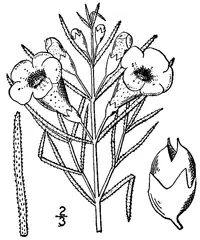
Tall false foxglove (Agalinis aspera) is a North American native wildflower, typically found in dry prairies, open grasslands, and sandy or rocky soils. It is a slender, upright plant with narrow leaves and showy pink to purple, tubular flowers that bloom along the stems late in the growing season.
This species is partially parasitic, tapping into the roots of nearby grasses, which makes it more challenging to cultivate in typical garden beds. Understanding this relationship is important if you want to care for tall false foxglove successfully.
It generally prefers full sun, low to moderate moisture, and well-drained, often nutrient-poor soils, making it better suited to naturalistic or restoration-style plantings than to highly fertilized gardens.

Care Difficulty
Moderate Care

Light Preference
Full Sun

Water Requirements
Moderate Water

Temperature Preference
Cold Hardy

Hardiness Zone
4–8

Soil Texture
Sandy, Loamy, Rocky

Soil pH
Slightly acidic (6.5–7.0), Neutral (7.0)

Soil Drainage
Well-drained

Fertilization
Minimal (feed rarely)
Scan your plant to receive care tips personalized for your specific plant
Available on iOS and Android
This sun-loving prairie annual thrives in open, bright conditions with consistent direct light.
This species prefers dry to moderately dry conditions and is not suited to consistently moist soils.
This prairie annual is adapted to warm summers and cold winters in temperate climates.
This prairie annual handles a wide humidity range and usually needs no special adjustment in typical outdoor conditions.
This species prefers open, sandy to sandy-loam soil with rapid drainage, similar to dry prairie sites.
This plant is only moderately suitable for containers and performs best in deep, sharply drained outdoor pots.
This native wildflower generally thrives in lean soils and usually needs no supplemental fertilizer for healthy growth.
Agalinis aspera needs only minimal pruning to keep plants tidy and support natural reseeding.
Transplanting tall false foxglove is done sparingly, as it dislikes root disturbance and often grows best when direct-sown.
Propagation of Agalinis aspera is typically done by seed, mimicking natural self-sowing in the garden.
This prairie annual is cold tolerant as seed and usually requires no special winter care in typical temperate climates.

Plant Health Check
Not sure what's wrong with your plant? Check your plant's health inside the app.
This species is a hemiparasite, meaning it performs photosynthesis but also attaches to roots of nearby grasses and forbs to extract water and dissolved nutrients through specialized organs called haustoria.
Agalinis aspera typically flowers in late summer to early fall on tall, slender stems, providing tubular, pink to purple flowers for pollinators when many earlier prairie species have finished blooming.
In parts of its range, this species is often restricted to relatively undisturbed dry prairies and savannas, so its presence can indicate remnants of high-quality native grassland habitat.

Some populations of Agalinis aspera are considered regionally rare or of conservation concern because the dry prairie and savanna habitats it depends on have been heavily reduced and fragmented by agriculture and development.
This species behaves as a short-lived annual wildflower. It completes its life cycle in one growing season, then relies on self-sown seed for future stands, so allowing seed set each year is important.
Keep your plants happy and healthy with plant identification, disease detection, and easy care guidance.

Tuberous Hawk's-beard
Aetheorhiza bulbosa
Society garlic
Tulbaghia violacea
fiery spike
Aphelandra aurantiaca
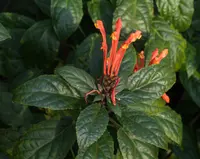
Costa Rican skullcap
Scutellaria costaricana
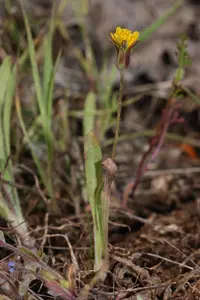
annual agoseris
Agoseris heterophylla
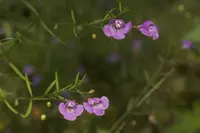
slenderleaf false foxglove
Agalinis tenuifolia
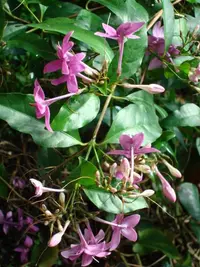
Shooting star
Pseuderanthemum laxiflorum
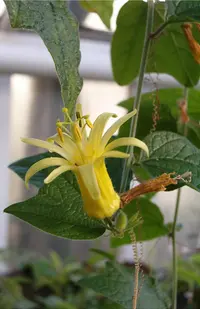
Passiflora citrina
Passiflora citrina