


Rhizome Division Timing
Divide clumps in late summer after flowering, lifting and splitting the rhizomes every 3–4 years to prevent overcrowding and maintain strong bloom production.

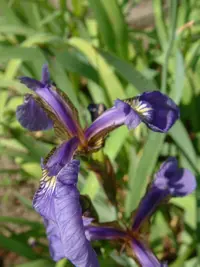
Beachhead iris, Iris setosa, is a hardy, rhizomatous perennial from cool northern regions, including Alaska, northern Canada, and parts of northern Europe and Asia. It typically forms clumps of narrow, upright leaves with slender stems topped by blue to violet flowers. The flowers have a simple, elegant form, usually with fewer and narrower petals than many garden irises. This species naturally grows in moist meadows, marsh edges, and coastal areas, so it prefers consistently damp but not stagnant soil. Its strong cold tolerance and modest nutrient needs make it relatively straightforward for gardeners who want to learn how to care for beachhead iris. In milder climates, it appreciates full sun and cool, moist roots.

Care Difficulty
Moderate Care

Light Preference
Full Sun

Water Requirements
Aquatic

Temperature Preference
Cold Hardy

Hardiness Zone
2–6

Soil Texture
Loamy, Silty, Organic-rich

Soil pH
Acidic (5.5–6.5), Slightly acidic (6.5–7.0)

Soil Drainage
Waterlogged tolerant

Fertilization
Minimal (feed rarely)
Scan your plant to receive care tips personalized for your specific plant
Available on iOS and Android
This cold-hardy iris prefers bright, cool conditions with consistent sun exposure.
This species prefers moist conditions and tolerates wetter soils than many other garden irises.
This hardy iris is adapted to cool, northern climates and withstands substantial winter cold.
This species tolerates a wide humidity range and rarely needs special humidity management indoors or outdoors.
Iris setosa prefers consistently moist, cool substrates that hold water yet remain aerated.
This iris can grow in containers if the pot supports its moisture needs and rhizome spread.
Iris setosa benefits from modest fertilization but adapts well to lean, well-prepared soil.
Iris setosa responds well to light, targeted pruning that keeps clumps healthy and flowering.
Transplanting Iris setosa is mainly done to rejuvenate crowded clumps or adjust spacing in the garden.
Iris setosa is most commonly propagated by division, with seed raising used for breeding or larger projects.
Iris setosa is cold hardy and usually needs minimal winter care in most temperate climates.

Plant Health Check
Not sure what's wrong with your plant? Check your plant's health inside the app.
This species naturally reaches farther north than most irises, with stable wild populations extending into subarctic and Arctic regions of Alaska, Canada, and northeastern Asia.
Beach and coastal populations often grow close to the shore and can tolerate wind-borne salt spray better than many other garden irises, which helps explain its common name beachhead iris.
Its rhizomes grow relatively shallow in cold, wet soils yet survive repeated freezing and thawing, an adaptation that supports Iris setosa care in northern climates with harsh winters.

Genetic and morphological studies show that Iris setosa is closely related to several Japanese and Siberian irises and is considered an important species for understanding the evolution and biogeography of cold-tolerant irises across the Northern Hemisphere.
Lack of blooms often comes from too little sun, overcrowded clumps, or rhizomes planted too deeply. Old, congested plants benefit from division every few years to restore flowering, and balanced fertilization also supports bud formation.
Keep your plants happy and healthy with plant identification, disease detection, and easy care guidance.

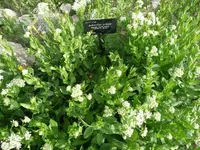
Tuberous Hawk's-beard
Aetheorhiza bulbosa
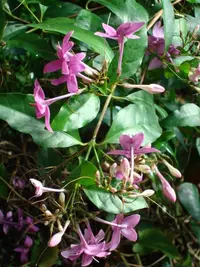
Shooting star
Pseuderanthemum laxiflorum
Anthyllis cornicina
Anthyllis cornicina
annual agoseris
Agoseris heterophylla
Passiflora citrina
Passiflora citrina
Wright's anisacanth
Anisacanthus quadrifidus var. wrightii
Society garlic
Tulbaghia violacea
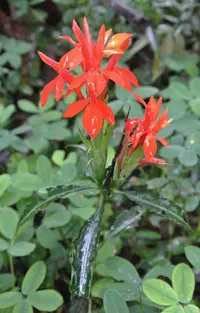
fiery spike
Aphelandra aurantiaca