


Edge-planting strategy
Plant clumps near the north or east edge of a bed or path so larger woodland perennials provide light shade but do not overshadow the foliage, which keeps the plant compact and less prone to lodging.

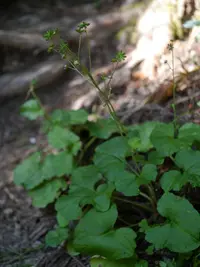
Adenocaulon himalaicum is a shade-loving perennial herb from mountain forests of the Himalayas and parts of East Asia. It forms low clumps with broad, often slightly hairy leaves and unobtrusive, small flower heads. The plant typically grows in cool, moist woodland conditions, spreading slowly by short rhizomes and creating a natural groundcover where competition is not too strong. Its main appeal lies in the foliage texture and its ability to tolerate low light rather than showy blooms. It is moderately easy to grow if given humus-rich, consistently moist soil and protection from hot sun. Gardeners who learn how to care for Adenocaulon himalaicum usually find it reliable in shaded borders and woodland-style plantings.

Care Difficulty
Moderate Care

Light Preference
Partial Shade

Water Requirements
Regular Water

Temperature Preference
Cool Climate

Hardiness Zone
6–9

Soil Texture
Loamy, Silty, Organic-rich

Soil pH
Acidic (5.5–6.5), Slightly acidic (6.5–7.0)

Soil Drainage
Moist but well-drained

Fertilization
Minimal (feed rarely)
Scan your plant to receive care tips personalized for your specific plant
Available on iOS and Android
This woodland perennial prefers soft, filtered light similar to a bright forest edge.
This plant prefers consistently moist, cool soil without becoming waterlogged.
This species is adapted to cool, temperate woodland conditions with moderate seasonal variation.
This woodland perennial prefers moderate, stable humidity to avoid leaf stress in dry homes.
This species thrives in loose, humus-rich, consistently moist soil that mimics a cool woodland floor.
This plant can be grown in containers if they are deep, stable, and hold even moisture outdoors in shade.
This woodland perennial grows on modest soils and needs only light feeding in cultivation.
Pruning needs are minimal and mainly focus on tidiness and plant health.
This species is usually grown in the ground, with transplanting done infrequently and thoughtfully.
Propagation is moderate in difficulty and mainly done by division or seed under cool, moist conditions.
This woodland perennial is generally hardy in temperate climates and needs only modest winter attention.

Plant Health Check
Not sure what's wrong with your plant? Check your plant's health inside the app.
This species produces small burr-like achenes with hooked or sticky surfaces that easily cling to animal fur or clothing, allowing the seeds to hitchhike over long distances through forests.
It is naturally found on cool, moist forest floors from the Himalaya region through East Asia, where it forms low colonies in deep shade under mixed deciduous and coniferous trees.
The plant has soft, triangular to heart-shaped leaves with a pale, often whitish underside and a darker green upper surface, creating a subtle two-tone appearance when the foliage moves in the wind.
This species forms loose colonies by short rhizomes and self-seeding but is not usually aggressive. In suitable woodland conditions it can slowly fill gaps, so allow space and remove unwanted seedlings if it encroaches on neighboring plants.
Keep your plants happy and healthy with plant identification, disease detection, and easy care guidance.


Douglas iris
Iris douglasiana
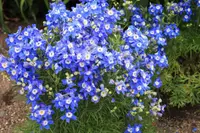
Chinese delphinium
Delphinium grandiflorum
San Felipe dogweed
Adenophyllum porophylloides
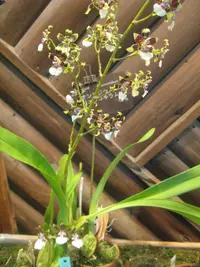
white-lipped oncidium
Oncidium leucochilum

peach-leaved bellflower
Campanula persicifolia
Carmichael's monkshood
Aconitum carmichaelii
New Guinea Impatiens
Impatiens hawkeri
Actinodium
Actinodium cunninghamii