Improve soil drainage
In heavier garden soils, mix in coarse sand and fine gravel in the top 15–20 cm of the bed before planting to reduce the risk of root rot and mimic the plant’s naturally sharp-draining habitat.

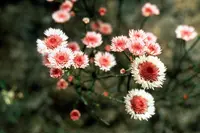
Actinodium, commonly called Albany daisy, is a small woody shrub known for its striking, daisy-like flower heads with white outer florets and a darker central disc. Actinodium cunninghamii is native to nutrient-poor, seasonally wet sands in southwestern Australia, where it grows in low heath and shrubland.
The plant usually forms a compact, rounded mound with fine, divided foliage that contrasts strongly with the bold flower clusters. It can be challenging outside its natural climate, as it dislikes root disturbance and requires excellent drainage with consistent but not heavy moisture.
Gardeners who want to care for Actinodium should provide cool, bright conditions, acidic sandy soil, and protection from extreme heat or prolonged drought.

Care Difficulty
Hard Care

Light Preference
Partial Shade

Water Requirements
Keep Soil Moist

Temperature Preference
Cool Climate

Hardiness Zone
9–10

Soil Texture
Sandy, Loamy, Organic-rich

Soil pH
Strongly acidic (4.5–5.5)

Soil Drainage
Moist but well-drained

Fertilization
Minimal (feed rarely)
Scan your plant to receive care tips personalized for your specific plant
Available on iOS and Android
This shrub prefers cool, bright conditions that mimic open woodland edges.
Moist but freely draining soil is essential for this species to stay healthy.
This plant performs best in mild, maritime-style climates with cool summers.
This species prefers cool, moist air and reacts quickly to drying out.
Actinodium cunninghamii needs sharply drained, low-nutrient soil that never stays waterlogged.
This species is challenging but can be grown in containers under carefully controlled conditions.
This nutrient-sensitive Australian native benefits from light, careful feeding rather than heavy fertilization.
Light structural pruning helps maintain a compact, healthy form without stressing this fine-textured shrub.
This species is usually grown in the ground; transplanting must be done carefully to protect sensitive roots.
Propagation of Actinodium cunninghamii is possible but tends to be slow and best suited to patient growers.
This plant suits mild, frost-free climates and needs some winter attention where hard frosts occur.

Plant Health Check
Not sure what's wrong with your plant? Check your plant's health inside the app.
The so‑called flower heads are actually tight clusters of many tiny florets, with the outer ones large and showy and the inner ones small and dark, giving a striking, almost artificial two‑tone daisy appearance unlike most myrtle family relatives.
This species is naturally confined to moist heath and sedge communities in southwestern Tasmania, often growing in nutrient‑poor, peaty soils that stay cool and wet for much of the year.
Although it resembles members of the daisy family, this plant belongs to the Myrtaceae, sharing ancestry with eucalypts and tea trees but having evolved a very different inflorescence form.
Limited flowering usually comes from insufficient light, depleted nutrients, or old, woody stems. Provide bright conditions, light feeding in spring, and prune lightly after flowering to encourage fresh growth and more flower heads next season.
Keep your plants happy and healthy with plant identification, disease detection, and easy care guidance.