Strategic spring pinching
In late spring, pinch or cut back the top 5–10 cm of each stem once or twice before bud formation to reduce flopping and create a denser, more floriferous clump.

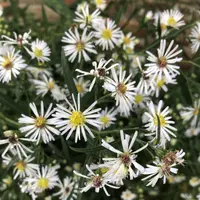
White panicle aster, Symphyotrichum lanceolatum, is a hardy, herbaceous perennial in the daisy family. It forms upright clumps with narrow leaves and many branching stems topped by small white ray flowers with yellow centers.
This species is native to North America and is commonly found in moist meadows, stream banks, and open, disturbed sites. It tends to spread by rhizomes and self-seeding, so it can naturalize and form dense colonies in suitable conditions.
Symphyotrichum lanceolatum is generally easy to grow if given full sun to light shade, moderately moist soil, and reasonable space to expand. Gardeners who want to care for white panicle aster successfully should be prepared to manage its spreading habit to prevent it from becoming invasive in small beds.

Care Difficulty
Easy Care

Light Preference
Full Sun

Water Requirements
Regular Water

Temperature Preference
Cold Hardy

Hardiness Zone
3–8

Soil Texture
Sandy, Loamy, Silty

Soil pH
Acidic (5.5–6.5), Slightly acidic (6.5–7.0)

Soil Drainage
Moist but well-drained

Fertilization
Minimal (feed rarely)
Scan your plant to receive care tips personalized for your specific plant
Available on iOS and Android
Symphyotrichum lanceolatum prefers full sun but tolerates some light shade, especially in hotter climates.
This species prefers evenly moist, well-drained soil and handles brief dry spells once established.
This hardy perennial tolerates a wide temperature range but has clear preferences for strong growth and flowering.
This species handles a wide range of outdoor humidity and usually does not need special humidity management.
This species prefers moderately fertile, well-drained but moisture-retentive soil to support vigorous growth and flowering.
This species can be grown in containers if the pot provides enough depth and stable moisture without waterlogging.
Symphyotrichum lanceolatum benefits from light, targeted feeding in poorer soils but often needs little input in fertile ground.
Pruning Symphyotrichum lanceolatum helps manage height, reduce flopping, and maintain dense, floriferous clumps.
This white panicle aster is usually grown in-ground, with transplanting used to control spread and rejuvenate crowded clumps.
Symphyotrichum lanceolatum is commonly propagated by division, but seeds also contribute to spread.
This species is cold hardy in most temperate climates and typically needs minimal winter care.

Plant Health Check
Not sure what's wrong with your plant? Check your plant's health inside the app.
This species is native to most of North America, where it readily colonizes disturbed habitats such as roadsides, riverbanks, and abandoned fields, helping stabilize soils and support insect communities as landscapes recover.
Its small white flower heads open from late summer into fall and provide nectar and pollen for a wide range of insects, including native bees, hoverflies, and late-migrating monarch butterflies when few other wildflowers are still blooming.
The plant spreads not only by seed but also through creeping rhizomes, forming dense clonal patches that can outcompete neighboring herbaceous species in moist, nutrient-rich soils.

In parts of Europe where it has been introduced, this species is considered invasive along river systems, forming tall, dense stands that can displace native riparian vegetation and alter habitat structure for local wildlife.
This species spreads by both seed and creeping rhizomes, so it can form large colonies over time. Regular division, deadheading spent blooms, and removing unwanted seedlings help keep it contained and compatible with surrounding plantings.
Keep your plants happy and healthy with plant identification, disease detection, and easy care guidance.