


Safe handling routine
Use gloves and long sleeves when repotting or pruning, keep paper towels ready to blot the milky sap immediately, and rinse any tools that contact sap to prevent skin irritation and tool corrosion.

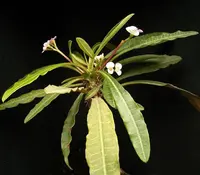
Euphorbia lophogona is a succulent shrub from Madagascar, valued for its upright, woody stems and narrow, glossy leaves that form a rosette at the tips. It often develops a thickened, gray-green trunk that gives it a small tree or bonsai-like look indoors.
In habitat it grows in dry, rocky areas, which explains its strong drought tolerance and preference for bright light and fast-draining soil. Its milky sap and tough structure make it resilient but also require some care when handling. Understanding how to care for Euphorbia lophogona helps keep it compact, healthy, and long-lived as a houseplant.

Care Difficulty
Moderate Care

Light Preference
Partial Sun

Water Requirements
Low Water

Temperature Preference
Tropical / Frost Sensitive

Hardiness Zone
11–12

Soil Texture
Sandy, Loamy, Rocky

Soil pH
Slightly acidic (6.5–7.0), Neutral (7.0)

Soil Drainage
Well-drained

Fertilization
Minimal (feed rarely)
Scan your plant to receive care tips personalized for your specific plant
Available on iOS and Android
This succulent shrub prefers bright, indirect light and gentle direct sun rather than intense exposure.
This species behaves like a succulent and needs thorough but infrequent watering with fast drainage.
This plant prefers warm, stable conditions and reacts poorly to cold and frost.
This species handles typical indoor humidity and rarely needs special humidity management.
This succulent prefers a very fast-draining, mineral-based substrate that prevents waterlogging around the roots.
This species is well suited to container growing when the pot supports its upright, somewhat top-heavy form.
This succulent shrub benefits from light feeding, as Euphorbia lophogona is adapted to lean, well-drained soils.
Pruning is mainly used to maintain shape and remove unhealthy growth on Euphorbia lophogona.
This species grows slowly and prefers relatively tight containers, so repotting is infrequent.
Propagation of Euphorbia lophogona is usually done from stem cuttings rather than seeds.
This species is frost-sensitive and requires sheltered winter conditions, especially in containers.

Plant Health Check
Not sure what's wrong with your plant? Check your plant's health inside the app.
This species is naturally restricted to dry, seasonal forests in Madagascar, where it often grows in rocky, well-drained sites with a pronounced dry season.
Euphorbia lophogona develops a swollen, woody base called a caudex that stores water and nutrients, an adaptation that helps it survive long dry periods in its native habitat.
The plant produces narrow, leathery leaves mainly clustered near the stem tips and may shed many of them in response to drought or seasonal stress, reducing water loss while keeping the stem alive.

This species is threatened in its natural range due to habitat loss and collection, and is included in international trade regulations under CITES (Convention on International Trade in Endangered Species), so legal export requires permits to help protect wild populations.
Lack of blooming usually comes from insufficient light, cool temperatures, or stress from recent repotting. Provide bright, warm conditions, avoid frequent disturbance, and keep nutrients moderate. Overfertilizing or keeping the plant potbound and shaded can also reduce flowering.
Keep your plants happy and healthy with plant identification, disease detection, and easy care guidance.

 POPULAR
Philodendron squamiferum
Philodendron squamiferum
Anthurium gaudichaudianum
Anthurium gaudichaudianum
congonita
Peperomia inaequalifolia
Variegated Upright Elephant Ear
Alocasia macrorrhizos 'Variegata'
Sugar apple
Annona squamosa
 POPULAR
Silver Dollar Vine
Xerosicyos danguyi
Resin spurge
Euphorbia resinifera
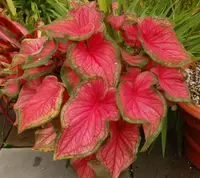
Heart of Jesus
Caladium bicolor