Anthurium gaudichaudianum Care

About Anthurium gaudichaudianum

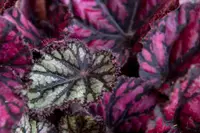
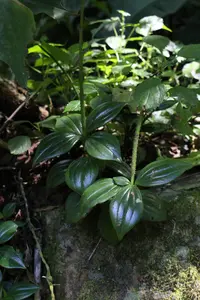
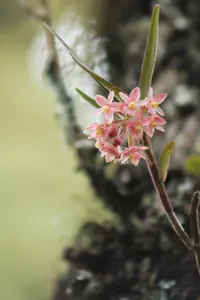
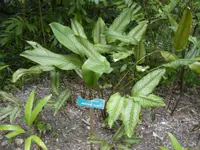
Anthurium gaudichaudianum is a tropical aroid with climbing or trailing stems and narrow, often elongated leaves that give it a refined, architectural look. It is typically grown as a foliage plant, as its flowers are small and less showy than many other Anthurium species.

This species is native to humid forests of Central and South America, where it grows as an epiphyte on trees or occasionally in leaf litter. Its rainforest origin means it prefers stable warmth, high humidity, and airy, organic-rich substrates. With consistent conditions and moderate, indirect light, it is considered manageable for growers who take time to learn how to care for Anthurium gaudichaudianum.

Main Plant Requirements

Care Difficulty

Hard Care

Light Preference

Bright Indirect Light

Water Requirements

Keep Soil Moist

Temperature Preference

Tropical / Frost Sensitive

Hardiness Zone

11–12

Soil Texture

Loamy, Peaty, Organic-rich

Soil pH

Acidic (5.5–6.5), Slightly acidic (6.5–7.0)

Soil Drainage

Moist but well-drained

Fertilization

Light (every 4–6 weeks)

Get Personalized Care Plan

Scan your plant to receive care tips personalized for your specific plant

Available on iOS and Android

How to Care for the Anthurium gaudichaudianum

This species prefers bright, filtered conditions that mimic light under a forest canopy.

  • Provide 6–8 hours of bright, indirect light each day, such as dappled shade beneath taller plants or behind a sheer curtain indoors for Anthurium gaudichaudianum.
  • Allow gentle early morning sun in east exposure, but avoid harsh midday and afternoon sun that can scorch leaves and cause pale, bleached patches.
  • In winter, move the plant slightly closer to the light source, and in summer shift it back or add shading if leaves curl, yellow, or feel hot to the touch.

Watering should keep the root zone evenly moist but never saturated.

  • Irrigate when the top 2–3 cm of the mix feels dry, using enough water to moisten the entire root area, then let excess drain completely.
  • Use a loose, airy medium with excellent drainage to reduce risk of root rot; leaves that yellow from the base and a sour smell usually signal overwatering.
  • In spring and summer, drying will be faster; in cooler months allow slightly deeper drying, watching for dull, drooping leaves that recover after watering as a sign of underwatering.

Stable, warm conditions support healthy growth and root function.

  • Aim for 65–80°F (18–27°C) for active growth, as this range supports good leaf expansion and root activity.
  • Avoid exposing the plant to temperatures below 55°F (13°C); brief dips may be tolerated, but frost will damage foliage and can kill the plant.
  • During hot periods above 85°F (29°C), increase airflow and protect from direct sun to limit heat stress, leaf scorch, and stalled growth, especially in enclosed spaces.

This species benefits from elevated humidity to maintain healthy foliage and root function.

  • Aim for 60–80% humidity, as Anthurium gaudichaudianum comes from moist forest habitats and dislikes very dry air.
  • Expect leaf edges to brown, curl, or develop dull patches when humidity is too low or airflow is harsh.
  • Increase humidity with a nearby humidifier, grouping plants, or a pebble tray, but avoid misting that keeps leaves wet for long periods.

This aroid prefers a loose, airy, organic-rich medium that mimics forest leaf litter on tree roots.

  • Use a chunky mix of fine orchid bark, perlite or pumice, and a small portion of peat or coco coir to hold some moisture.
  • Ensure very fast drainage so water runs through in seconds while roots stay evenly moist, not soggy or compacted.
  • Keep pH slightly acidic to neutral, around 5.5–6.8, which supports nutrient availability and healthy root growth in Anthurium gaudichaudianum.
  • Avoid dense, peat-only or garden soil that stays wet, compresses over time, and restricts aeration around roots.

This species grows well in containers when its epiphytic growth habit is considered.

  • Choose a pot that is deeper than it is wide to allow vertical root anchoring and room for a chunky substrate layer.
  • Select a stable, heavier container if the plant is staked or climbing so it does not tip as foliage mass increases.
  • Use a pot material with moderate breathability, such as unglazed clay or fabric, to reduce waterlogging while still retaining some moisture.

This species benefits from light, consistent feeding during active growth but is sensitive to excess salts.

  • Use a balanced liquid fertilizer around 1/4 strength (for example 10-10-10) every 4–6 weeks in spring and summer for Anthurium gaudichaudianum.
  • Apply only to moist substrate to limit root burn and avoid contact with leaves.
  • Skip or reduce feeding to 1 light dose in autumn and none in winter when growth slows.
  • Alternatively, incorporate a small amount of slow-release fertilizer or mature compost into the top layer once per growing season.

Pruning is mainly used to keep Anthurium gaudichaudianum tidy and channel energy into healthy foliage and inflorescences.

  • Carry out light pruning in late winter or early spring before strong new growth starts.
  • Remove yellowing, dead, diseased, or mechanically damaged leaves at the base using clean, sharp scissors or pruners.
  • Thin very crowded shoots to improve air movement and reduce fungal problems around the foliage.
  • Trim spent inflorescences to encourage further flowering and maintain a clean appearance.

Container-grown plants appreciate infrequent but timely repotting to maintain aerated, free-draining roots.

  • Check for roots circling the pot, emerging from drainage holes, or unexplained slow growth as signals to repot Anthurium gaudichaudianum.
  • Plan repotting in late winter to early spring every 2–3 years, moving up only 2–5 cm in pot diameter.
  • Use a chunky aroid mix with bark, perlite, and a small amount of peat or coco coir to keep roots well aerated.
  • Water the plant lightly after repotting, keep it shaded for 5–7 days, and avoid fertilizing for 3–4 weeks to limit root stress.

New plants are most reliably produced by division of mature clumps or stem sections with roots.

  • Divide during late spring or early summer when growth is active and temperatures are warm.
  • Separate sections so each division has at least 1–2 healthy leaves and a portion of root or a clear node.
  • Plant divisions into a moist, airy mix and maintain 70–80°F, high humidity, and bright filtered light for rooting.
  • Seed propagation is possible but slower; sow fresh seed on sterile, barely covered medium and keep evenly warm and slightly moist.

This species is frost tender and needs stable warmth and shelter during winter in temperate climates.

  • Keep night temperatures above 60°F; growth stalls and tissue may be damaged below about 55°F.
  • For container plants, move indoors or into a heated greenhouse before the first frost date in your area.
  • Maintain bright, indirect light and slightly drier soil, allowing the top layer to dry more between waterings.

Care Tips

Mounting support

Grow this species on a sturdy moss pole or slab of cork bark wrapped in sphagnum so its long leaves can hang naturally and aerial roots can attach, improving stability and overall vigor.

Root zone aeration

Repot into a slightly taller pot and keep a coarse, chunky layer (orchid bark, large perlite) at the bottom to prevent compaction at the root zone, which helps reduce root rot in long-term container culture.

Targeted leaf hygiene

Wipe the large leaves monthly with a soft damp cloth and inspect the undersides at the same time, as this both improves photosynthesis and allows very early detection of mites or scale on this broad-leaved species.

Seasonal nutrient tapering

Reduce fertilizer strength by about half in late fall and winter, since this plant slows growth in lower light and cool conditions, which lowers nutrient demand and helps avoid salt buildup in the potting mix.

Acclimated relocation

If moving the plant between rooms or from greenhouse to indoors, shift it over 7–10 days by gradually changing light and humidity conditions to prevent leaf stress and help with long-term success when caring for Anthurium gaudichaudianum.

Common Pests and Diseases

Mealybugs

This pest feeds on sap and often hides in leaf axils and along the midrib of the thick, pendent leaves. Symptoms include white cottony clusters, sticky honeydew, and slowed growth.

Solution

Remove visible insects with a cotton swab dipped in 70% isopropyl alcohol, then rinse foliage thoroughly with lukewarm water. For ongoing Anthurium gaudichaudianum care, repeat inspections weekly and use a light horticultural soap or neem oil spray on both leaf surfaces and petioles until populations decline.

Scale insects

These insects attach firmly to petioles and undersides of leaves, forming small brown or tan bumps that are easy to overlook on mature plants. Symptoms include yellowing patches, honeydew, and a general decline in vigor.

Solution

Gently scrape or wipe off individual scales with a soft cloth or cotton swab dipped in alcohol, then wash the plant under a gentle shower. Improve air circulation, isolate the plant, and apply an insecticidal soap or neem oil every 7–10 days to disrupt the life cycle.

Bacterial blight

This disease causes water-soaked lesions that start at leaf margins, often on older, arching leaves, and can spread quickly under warm, humid, stagnant air. Symptoms include yellow halos around spots and a foul smell if tissue is severely affected.

Solution

Immediately remove and discard affected leaves, cutting well into healthy tissue with sterilized tools and avoiding overhead watering. Increase airflow, keep leaves dry, and if the spread continues, consider a copper-based bactericide used carefully according to label directions.

Fungal leaf spot

This disease produces scattered round or irregular spots on the leathery leaves, sometimes with tan centers and darker borders. Symptoms include cosmetic damage, premature leaf drop, and more severe spotting under prolonged high humidity and poor air movement.

Solution

Prune out the worst-affected leaves and avoid wetting the foliage, especially in the evening. Provide stronger but indirect light, improve ventilation around the plant, and, if spotting progresses, apply a targeted houseplant-safe fungicide while keeping the potting mix from staying waterlogged.

Spider mites

This pest prefers the undersides of the long, drooping leaves where conditions are warm and dry, causing fine stippling, dull foliage, and delicate webbing. Symptoms include faded leaf color and slower growth over time.

Solution

Shower the plant thoroughly, focusing on the undersides of leaves, and repeat every few days to remove mites and eggs. Raise humidity to 50–60%, isolate the plant, and use insecticidal soap or neem oil at regular intervals until new growth appears clean.

Interesting Facts

Velvet-climbing foliage

This species develops elongated, climbing stems with softly velvety leaves that are adapted to life as an epiphyte on tree trunks rather than in soil on the forest floor.

Deeply furrowed midrib

Mature leaves often show a prominently sunken midrib and slightly raised lateral veins, a trait that helps distinguish it from other velvet anthuriums with smoother leaf surfaces.

Atlantic Forest native

It occurs naturally in the Brazilian Atlantic Forest, a biodiversity hotspot where it typically grows in warm, shaded, very humid habitats on trees or rocky outcrops.

FAQs about Anthurium gaudichaudianum

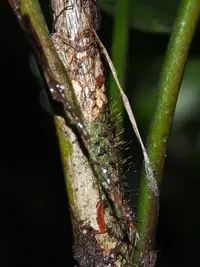
This species is primarily a climbing epiphyte, using aerial roots to attach to tree trunks or supports. In pots it tends to grow upward along stakes or boards rather than forming a wide, spreading clump on the ground.

Grow Healthy Plants with Botan Care

Keep your plants happy and healthy with plant identification, disease detection, and easy care guidance.

Botan plant care app — identify plants on mobile

Explore More Plants