Mounting On Slabs
Attach rhizomes to cork or hardwood slabs using soft ties or nylon fishing line, then pack a thin layer of long-fiber sphagnum around the roots to create an airy, epiphytic-style mount that suits this species’ natural growth habit.

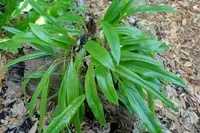
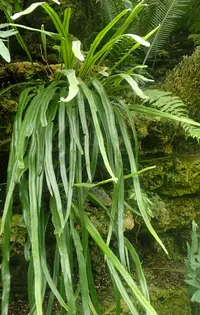
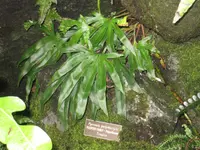
Lanceleaf tongue fern, Pyrrosia lanceolata, is an evergreen epiphytic fern that often grows on trees or rocks in tropical and subtropical Asia and the Pacific. It forms dense clumps of narrow, leathery fronds that can look slightly fuzzy due to fine surface hairs.
This species is adapted to cling to bark or stone, using a shallow root system and thick rhizomes to store moisture. Its tough foliage and moderate growth rate make it relatively forgiving indoors if humidity is adequate.
In cultivation it prefers bright, filtered light, regular but not excessive moisture, and a very well-drained, airy substrate. Understanding these natural habits helps explain how to care for Lanceleaf Tongue Fern successfully in containers or mounted displays.

Care Difficulty
Moderate Care

Light Preference
Partial Shade

Water Requirements
Moderate Water

Temperature Preference
Warm Climate

Hardiness Zone
10–11

Soil Texture
Loamy, Peaty, Organic-rich

Soil pH
Acidic (5.5–6.5), Slightly acidic (6.5–7.0)

Soil Drainage
Moist but well-drained

Fertilization
Minimal (feed rarely)
Scan your plant to receive care tips personalized for your specific plant
Available on iOS and Android
This fern prefers soft, filtered light that mimics a forest understory.
This species prefers consistently lightly moist conditions but not waterlogged soil.
This fern favors mild, stable temperatures with protection from frost and extreme heat.
This epiphytic fern prefers moderate to high humidity and reacts quickly to very dry air.
This fern prefers a loose, airy, organic-rich medium that mimics its natural epiphytic habitat.
This species is well suited to container growing, including mounted or shallow, wide pots.
Pyrrosia lanceolata is a light feeder that benefits from modest nutrition during active growth in spring and summer.
Pyrrosia lanceolata needs minimal pruning, mainly to maintain a clean, healthy clump of fronds.
This fern prefers to stay slightly root-bound and does not need frequent repotting or transplanting.
Pyrrosia lanceolata is most commonly propagated by division rather than from spores or seeds in home settings.
This fern has moderate cold tolerance but benefits from basic winter protection in cooler climates.

Plant Health Check
Not sure what's wrong with your plant? Check your plant's health inside the app.
This species is a naturally slow-growing fern that often takes many years to form dense mats on tree trunks or rocks in its native tropical Asian habitats, rather than producing large fronds quickly like many other ornamental ferns.
Its narrow, leathery fronds are covered with a tough cuticle and sparse hairs that reduce water loss, an adaptation that allows the plant to tolerate periodic drying when growing exposed on bark or rock surfaces.
The plant spreads through creeping, woody, corky-textured rhizomes that cling tightly to bark and stone, helping anchor the fern in place on vertical or sloping surfaces in forests and plantations.

In parts of its native range in Southeast Asia, this species naturally colonizes rubber and fruit tree plantations, forming persistent epiphytic mats on the trunks where it can withstand sun flecks, intermittent drying, and competition from mosses and lichens.
Brown leaf tips or patches usually come from low humidity, underwatering, or excess fertilizer salts. Check that the root zone stays lightly moist, increase ambient humidity, flush the pot occasionally, and trim only fully dead tissue.
Keep your plants happy and healthy with plant identification, disease detection, and easy care guidance.