Mounting technique
Attach the rhizomes firmly to a rough, long‑lasting slab (such as cork or hardwood) using soft ties or biodegradable twine, keeping the growing tips exposed so new fronds can spread over the surface.

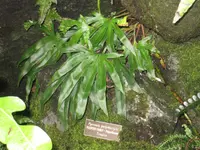
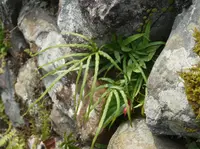
Pyrrosia polydactyla is an epiphytic fern, meaning it often grows on trees or rocks rather than in deep soil. It forms clumps of narrow, finger-like fronds that give it a distinctive, textured look.
In nature it is found in parts of East and Southeast Asia, where it grows in warm, humid forests with filtered light. The fronds are leathery and drought-tolerant once established, which can make it easier to manage than many delicate ferns.
It prefers stable moisture, good air movement, and a loose, well-drained medium, which is important to understand when learning how to care for Pyrrosia polydactyla.

Care Difficulty
Moderate Care

Light Preference
Partial Shade

Water Requirements
Moderate Water

Temperature Preference
Warm Climate

Hardiness Zone
9–11

Soil Texture
Loamy, Peaty, Organic-rich

Soil pH
Acidic (5.5–6.5), Slightly acidic (6.5–7.0)

Soil Drainage
Moist but well-drained

Fertilization
Minimal (feed rarely)
Scan your plant to receive care tips personalized for your specific plant
Available on iOS and Android
This epiphytic fern prefers soft, filtered light similar to a bright forest understory.
Watering should mimic a moist, but not soggy, forest environment around its roots or mounting surface.
This fern thrives in mild, stable temperatures without frost or extreme heat swings.
This fern prefers consistently moderate to high humidity to keep fronds healthy.
Use a loose, airy, epiphytic-style mix that drains quickly yet holds some moisture around the roots.
This species adapts well to container culture when the pot supports its shallow, creeping rhizomes.
This epiphytic fern needs only light feeding to stay healthy in containers.
Pruning needs are minimal and focus on cleanliness rather than shaping.
This fern prefers stable conditions and only occasional repotting or remounting.
Division is the most practical method for expanding a collection of Pyrrosia polydactyla.
This fern dislikes hard frost and benefits from moderate winter protection in cooler climates.

Plant Health Check
Not sure what's wrong with your plant? Check your plant's health inside the app.
The species has narrow, finger-like lobes on its fronds, which inspired the name polydactyla, meaning many-fingered, and helps distinguish it from other Pyrrosia species with entire or less divided leaves.
Its fronds carry a dense layer of brownish to rusty hairs on the underside, forming a felt-like indumentum that reduces water loss and protects the leaf surface from intense light on exposed rock faces.
This fern often grows as a lithophyte on rocks and cliffs in East Asia, anchoring to crevices with its rhizomes and accessing moisture from rain, fog, and brief water seepage rather than deep soil.

In parts of its natural range in East Asia, this species can form extensive mats over rock faces and old walls, creating a living crust that stabilizes small pockets of debris and helps other epiphytic and lithophytic plants establish over time.
This species is evergreen in normal indoor conditions and mild outdoor climates. Older fronds gradually age and shed, but new ones replace them, so foliage remains present year-round if light, moisture, and temperature stay reasonably stable.
Keep your plants happy and healthy with plant identification, disease detection, and easy care guidance.