Pyrrosia lingua Care

Pyrrosia lingua

About Pyrrosia lingua

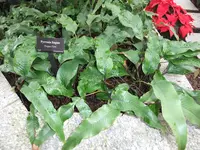
Pyrrosia lingua, often called tongue fern, is an evergreen epiphytic fern that naturally grows on rocks and tree trunks in East Asia. It forms low, slowly spreading clumps of firm, tongue-shaped fronds.

The foliage can be leathery or slightly fuzzy, depending on the form, and usually stays compact, which suits small indoor spaces and shaded outdoor spots. Its slow growth and moderate water needs make it manageable for most plant owners.

This fern prefers bright shade, consistent but not excessive moisture, and a loose, well-drained, bark-rich substrate. With these stable conditions, it is relatively straightforward to care for Pyrrosia lingua.

Main Plant Requirements

Care Difficulty

Moderate Care

Light Preference

Partial Shade

Water Requirements

Moderate Water

Temperature Preference

Warm Climate

Hardiness Zone

7–10

Soil Texture

Loamy, Rocky, Organic-rich

Soil pH

Acidic (5.5–6.5), Slightly acidic (6.5–7.0)

Soil Drainage

Moist but well-drained

Fertilization

Minimal (feed rarely)

Get Personalized Care Plan

Scan your plant to receive care tips personalized for your specific plant

Available on iOS and Android

How to Care for the Pyrrosia lingua

This fern prefers soft, filtered light that mimics woodland or shaded rock habitats.

  • Provide bright shade or dappled light, such as under open trees or on an east-facing wall with 1–3 hours of gentle morning sun.
  • Avoid strong midday and afternoon sun; fronds scorch and turn brown at leaf edges under several hours of direct summer sun.
  • In deep shade, growth becomes sparse; aim for consistent indirect light all year, adding light in winter with brighter exposure but still filtered.

Watering should keep the root zone lightly moist while allowing brief drying near the surface.

  • Let the top 2–3 cm of soil or substrate dry before watering again; use this as a touch test rather than a fixed schedule.
  • Increase watering in active growth during spring and summer, then reduce slightly in fall and winter so the medium never stays soggy.
  • Yellowing, soft fronds often signal overwatering or poor drainage, while crisp brown tips and slow growth usually indicate that Pyrrosia lingua is staying too dry.

Stable, mild temperatures support steady growth and prevent stress damage to fronds and rhizomes.

  • Aim for 60–80°F (16–27°C) for best growth, with slightly cooler nights acceptable if conditions stay above the minimum range.
  • Protect from frost; sustained exposure below 30°F (-1°C) can damage fronds, and prolonged drops below 25°F (-4°C) may harm rhizomes.
  • During hot spells above 85°F (29°C), provide extra shade and humidity, and avoid hot, dry winds that can desiccate foliage and growing surfaces.

This fern prefers moderate to moderately high humidity for steady growth.

  • Aim for 50–70% humidity; it tolerates brief dips lower but loses vigor in very dry air.
  • Crisping tips, dull fronds, and stalled new growth indicate humidity stress rather than underwatering.
  • Increase humidity with a nearby humidifier, grouped plants, or a pebble tray, keeping fronds out of standing water.

Pyrrosia lingua prefers an airy, epiphytic-style mix that drains quickly yet holds light, even moisture.

  • Use a loose blend such as 40% fine orchid bark, 30% peat or coco coir, 20% perlite, and 10% composted material.
  • Ensure fast drainage; the mix should feel springy and open, not compact or sticky after watering.
  • Keep pH slightly acidic to neutral, roughly 5.5–7.0, which supports nutrient uptake and healthy root activity.
  • Avoid heavy garden soil or dense potting mixes that stay wet for many hours and reduce oxygen around the roots.

This species grows well in containers, including shallow pots and baskets, when drainage and aeration are managed carefully.

  • Choose a wide, shallow pot to match its creeping rhizomes, preventing cramped growth and uneven moisture pockets.
  • Use rigid, stable containers if mounted or hung, as the spreading fronds can shift weight and twist flexible baskets.
  • In plastic pots that retain more moisture, further increase the proportion of bark and perlite to prevent persistently wet conditions.

This epiphytic fern needs modest feeding to maintain steady growth in containers or mounted displays.

  • Use a balanced liquid fertilizer (around 10-10-10) diluted to 1/4–1/2 strength for Pyrrosia lingua during active growth.
  • Feed every 4–6 weeks in spring and summer, skipping any application if growth is slow or stressed.
  • Stop feeding in fall and winter, when light is low and growth is minimal.
  • Alternatively, apply a very light topdressing of fine compost or a low-dose slow-release fertilizer at the start of spring.

Pruning needs are light and mainly focused on cleanliness and maintaining a neat outline.

  • In late winter or early spring, remove dead, yellowing, or damaged fronds at the base with clean, sharp scissors.
  • Thin out crowded or overlapping fronds to improve air flow and reduce fungal problems in dense clumps of Pyrrosia lingua.
  • Trim only a small portion of healthy fronds at one time to preserve photosynthesis and limit stress.
  • Disinfect tools with alcohol before and after use to prevent spreading disease between plants.

This fern prefers stable conditions and only occasional repotting or remounting when clearly needed.

  • Check for roots circling the pot, pushing through drainage holes, or noticeably slowed growth as signals to repot.
  • Plan repotting or transplanting in spring, about every 3–4 years, when new growth starts.
  • Move into a container only 2–3 cm wider, using a very free-draining, chunky mix suitable for epiphytic ferns.
  • Handle roots gently, keep the original root ball mostly intact, water lightly, then place in bright, indirect light while it recovers.

Propagation is usually done by division, since spores require more specialized conditions.

  • Divide established clumps in spring when new fronds emerge and the plant is actively growing.
  • Lift the plant from its pot or mount, then separate sections with several fronds and healthy rhizome pieces.
  • Plant each division in a loose, well-drained medium and keep humidity high with bright, indirect light.
  • Water lightly but consistently, avoiding waterlogged substrate while new roots establish over several weeks.

Mature plants are moderately cold tolerant but need some protection from hard freezes, especially in containers.

  • In USDA zones around 7–9, in-ground plants usually overwinter with minimal damage if soil drains well.
  • Apply a light mulch around the root zone, keeping it just away from the rhizomes to avoid rot.
  • Move container-grown Pyrrosia lingua into a frost-free, bright, sheltered area when temperatures approach freezing.

Care Tips

Mounting technique

Attach the rhizomes to a slab of hardwood, cork, or tree fern fiber with soft ties and a thin layer of long-fiber sphagnum around the roots, which improves air flow and mimics its natural epiphytic habit.

Rhizome inspection

Lift and inspect the creeping rhizomes every few months, trimming away any mushy or desiccated sections with sterilized scissors to prevent rot from spreading and to encourage fresh, healthy growth.

Leaf cleaning

Dust the leathery fronds with a soft, dry brush instead of wiping with a wet cloth, which protects the surface texture and maintains efficient photosynthesis without damaging the tissue.

Container choice

Use a shallow, wide pot or basket rather than a deep one to accommodate the horizontal rhizomes and allow them to spread, which stabilizes the plant and reduces the risk of overwatering pockets.

Seasonal resting phase

In late fall, reduce disturbance and avoid repotting or heavy division so the plant can maintain a mild rest period, then resume more active maintenance when new croziers (young fronds) appear in spring, which supports long-term Pyrrosia lingua care.

Common Pests and Diseases

Scale insects

This pest feeds on leaf surfaces and rhizomes, sucking sap and weakening the fronds over time. Symptoms include yellowing patches, sticky honeydew, and small, dome-shaped bumps on leaves or along the midrib.

Solution

Isolate the plant, then wipe fronds and rhizomes with a soft cloth or cotton swab dipped in diluted alcohol or insecticidal soap, repeating every 7–10 days until no new insects appear. Improve air movement and avoid overfertilizing, as soft, lush growth is more attractive to scale when caring for Pyrrosia lingua.

Mealybugs

These insects hide in leaf bases, rhizome crevices, and undersides of fronds, where they suck sap and excrete cottony white masses. Symptoms include stunted new fronds, sticky honeydew, and distorted growth at the crown.

Solution

Inspect tight folds and rhizome joints, then remove visible mealybugs with a cotton swab dipped in alcohol and rinse the plant thoroughly with lukewarm water. Follow with 2–3 treatments of insecticidal soap or a labeled systemic product, and reduce excess nitrogen feeding that encourages soft new growth.

Fern mites

This pest, often a type of spider mite adapted to ferns, prefers the leathery fronds and sheltered undersides, causing fine speckling and dulling of the foliage. Symptoms include subtle bronzing, tiny webbing in protected spots, and general loss of vigor in dry indoor air.

Solution

Increase humidity to 50–60%, rinse fronds thoroughly under a gentle shower, and wipe both sides of leaves to remove mites and eggs. Apply insecticidal soap or horticultural oil to the undersides of fronds every 5–7 days for several cycles, and keep the plant out of hot, dry drafts to prevent reinfestation.

Leaf spot

This disease causes round to irregular brown spots with darker margins on the fronds, sometimes coalescing into larger patches. Symptoms include premature yellowing and drop of older fronds, especially in plants kept constantly wet or crowded with poor air movement.

Solution

Remove and discard affected fronds, then allow the potting mix surface and leaf surfaces to dry slightly between waterings while still keeping the rhizomes from drying out fully. Water at the base in the morning, increase airflow around the plant, and if spots continue to spread, apply a fern-safe fungicide according to label directions.

Rhizoctonia blight

This disease attacks the creeping surface rhizomes and lower fronds where moisture lingers, causing sunken brown lesions and dieback along the rhizome. Symptoms include sudden collapse of sections of the plant, brown, dry rot at the rhizome, and failure of new fronds to emerge from affected segments.

Solution

Trim out and discard all visibly affected rhizome sections and attached fronds, sterilizing tools between cuts. Repot into fresh, well-drained but moisture-retentive mix, avoid burying the rhizomes, water in the morning only, and consider a targeted fungicide drench if the plant has a history of this problem.

Interesting Facts

Epiphytic and lithophytic habit

In nature this fern often grows as an epiphyte on tree trunks or as a lithophyte on rocks, anchoring itself with creeping rhizomes rather than rooting deeply into soil.

Velvety leaf surface

The upper surface of mature leaves is covered with tiny hairs that can give a faintly velvety feel and help reduce water loss by trapping a thin layer of still air.

Distinct fertile and sterile fronds

This species typically produces shorter, broader sterile fronds and longer, narrower fertile fronds whose undersides are densely covered with round brown sori, where spores are formed for reproduction.

Botan icon

Did you know?

Pyrrosia lingua has a natural distribution that spans from the Himalayan region across China, Taiwan, Korea, and Japan to parts of Southeast Asia, showing a strong ecological flexibility across different forest types and altitudes.

FAQs about Pyrrosia lingua

Brown leaf tips or patches usually come from low humidity, underwatering, or excess direct sun. Salt buildup from fertilizer and very dry indoor air also cause crisping. Trim damaged areas and correct the underlying moisture or light problem.

Grow Healthy Plants with Botan Care

Keep your plants happy and healthy with plant identification, disease detection, and easy care guidance.

Botan plant care app — identify plants on mobile

Explore More Plants