Ghost Fern Care (Athyrium 'Ghost')

Also known as: Lady Fern

About Ghost Fern

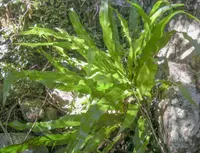
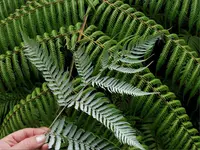
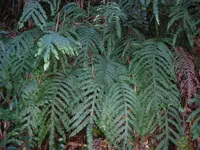
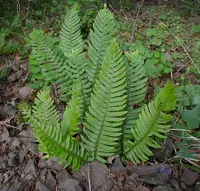
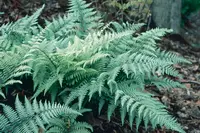
Ghost fern, Athyrium 'Ghost', is a deciduous clumping fern valued for its upright, arching fronds and soft silver-gray color with subtle green tones. It creates a layered, airy look that works well in mixed shade borders and under trees.

This cultivar is derived from woodland ferns of eastern North America, so it naturally suits cool, shaded, moist sites. It is generally reliable and low-maintenance once established, provided the soil stays evenly moist and rich in organic matter.

Understanding how to care for Ghost Fern mainly involves matching those woodland conditions with shade, consistent moisture, and good drainage rather than precise or complicated routines.

Main Plant Requirements

Care Difficulty

Moderate Care

Light Preference

Partial Shade

Water Requirements

Keep Soil Moist

Temperature Preference

Cold Hardy

Hardiness Zone

3–8

Soil Texture

Loamy, Peaty, Organic-rich

Soil pH

Acidic (5.5–6.5), Slightly acidic (6.5–7.0)

Soil Drainage

Moist but well-drained

Fertilization

Light (every 4–6 weeks)

Get Personalized Care Plan

Scan your plant to receive care tips personalized for your specific plant

Available on iOS and Android

How to Care for the Ghost Fern

This deciduous fern prefers cool, filtered light similar to a woodland edge.

  • Provide bright shade or dappled light, such as under open trees or on the north/east side of buildings, with 2–4 hours of gentle morning sun.
  • Avoid harsh afternoon sun, which scorches fronds and washes out the silvery tones of Ghost Fern; use shade cloth or taller plants as protection in hot regions.
  • In cooler climates, allow a bit more morning sun in spring and fall; in summer, shift toward deeper shade to reduce heat stress and moisture loss.

This fern performs best in consistently moist but not waterlogged soil.

  • Aim for evenly damp soil; in the ground, water when the top 2–3 cm feels just barely dry, adjusting frequency for rainfall and soil type.
  • Use rich, humus-heavy soil with good drainage so water moves through but organic matter holds moisture around the roots of Athyrium 'Ghost'.
  • In summer heat, monitor more often for wilting, crisp frond tips, or curling edges from dryness; yellowing, limp fronds and sour-smelling soil suggest overwatering.

This hardy fern is adapted to cool to mild outdoor conditions with seasonal dormancy.

  • Optimal growing temperatures are 60–75°F (16–24°C) during spring and early summer, with cooler nights supporting strong frond color.
  • Established plants tolerate winter lows down to about -20°F (-29°C) in the ground, dying back above soil while the crown survives under mulch or leaf litter.
  • In hot climates, once temperatures exceed 85°F (29°C), provide extra shade and moisture; prolonged heat and drying winds can cause frond scorch and early dormancy.

This fern prefers moderate, consistently moist air and reacts to very dry conditions.

  • Aim for 50–70% humidity to keep fronds lush and minimize browning.
  • Tolerates short periods of dry indoor air but may develop crisp tips and dull, drooping fronds.
  • Increase humidity with a pebble tray, grouping plants, or a small humidifier rather than frequent misting for Ghost Fern.

This fern needs evenly moist, airy soil that holds water yet drains freely.

  • Use a loose, humus-rich, loamy mix, such as 2 parts composted bark or leaf mold, 1 part peat or coco coir, and 1 part perlite.
  • Ensure the mix drains well but does not dry out quickly; water should seep through within seconds, not sit on the surface.
  • Aim for slightly acidic to neutral pH, roughly 6.0–7.0, which supports nutrient uptake and root health.
  • Avoid heavy clay, compacted, or sharply sandy substrates that either stay waterlogged or dry out too fast for Athyrium 'Ghost'.

This fern grows well in containers when moisture and stability are carefully managed.

  • Choose a wide, moderately deep pot that allows the rhizomes to spread horizontally rather than a very tall, narrow container.
  • Select a slightly heavier material like ceramic or clay to steady the plant as the fronds arch outward and catch wind.
  • Leave 2–3 cm between soil surface and pot rim so thorough watering does not overflow and can soak the root zone evenly.

This fern benefits from modest feeding to support steady frond production without overly rich soil.

  • Use a balanced liquid fertilizer (for example 10-10-10) at 1/4–1/2 strength for caring for Ghost Fern in containers or poor soil beds.
  • Feed every 4–6 weeks during spring and summer when new fronds are actively growing.
  • Skip synthetic fertilizer where soil is rich and instead top-dress with a thin layer of compost in spring.
  • Stop feeding in fall and winter to avoid forcing soft, weak growth during dormancy.

Pruning Athyrium 'Ghost' is mainly cosmetic and keeps the clump tidy and healthy.

  • Cut off dead, yellowing, or damaged fronds at the base using clean, sharp scissors or hand pruners.
  • In late winter or very early spring, remove all old fronds to make space for fresh new growth.
  • Thin out a few crowded inner fronds in large clumps to improve air flow and reduce disease risk.
  • Avoid cutting emerging fiddleheads; wait until they fully unfurl before assessing what to remove.

This fern is usually grown in the ground but can be divided or shifted when overcrowded or pot-bound.

  • Look for roots circling the pot, slow growth, or a congested clump as signs it needs more space.
  • Transplant or repot in early spring or early fall, about every 3–5 years, during cooler, moist weather.
  • Lift the clump carefully, preserving as many roots as possible, and replant at the same soil depth in humus-rich, moist soil.
  • Water thoroughly after moving and keep the plant shaded and evenly moist for several weeks to limit transplant shock.

New Athyrium 'Ghost' plants are most reliably produced by division rather than from spores.

  • Divide mature clumps in early spring just as new fiddleheads start to emerge, or in early fall in mild climates.
  • Lift the clump and gently tease or cut the root mass into sections, each with several healthy crowns and roots.
  • Replant divisions immediately into moist, humus-rich soil, keeping crowns at the same depth as before.
  • Keep divisions evenly moist and shaded until new frond growth indicates successful establishment.

This fern is cold hardy in much of the US and generally needs only light winter attention in garden beds.

  • Tolerates typical frosts in its hardiness range; fronds die back, but crowns survive in the soil.
  • Leave or add a 5–8 cm layer of leaf litter or mulch over the root zone in late fall for insulation.
  • For containers in colder zones, move pots into a sheltered, unheated but frost-sheltered spot and keep soil just barely moist.

Care Tips

Cool root zone

Mulch around the base with 3–5 cm of fine bark or leaf mold to keep the shallow rhizomes cool and evenly moist, but pull the mulch back 2–3 cm from the crown to prevent rot.

Staggered clump renewal

Every 3–4 years, lift and divide the clump in early spring, replanting only the most vigorous outer sections and discarding woody, congested centers to maintain tall, upright fronds and good color.

Wind and hail protection

In exposed gardens, place a low, open lattice or shrub screen upwind so fronds are filtered from strong gusts and hail, which reduces tearing and keeps the plant looking intact through the season.

Slug exclusion zone

In early spring, set a 10–15 cm ring of sharp grit or crushed lava rock around new croziers and combine it with timely iron phosphate bait placements outside the ring to limit slug damage on emerging fronds.

Moisture zoning in beds

Site plants slightly downslope or in shallow swales so they benefit from extra moisture capture, and group them near other shade perennials with similar water needs to simplify caring for Ghost Fern in mixed borders.

Common Pests and Diseases

Fern aphids

This pest feeds on tender frond tissue and new growth, causing puckered, distorted pinnae and sticky honeydew on the foliage. Symptoms include slow frond expansion and sometimes sooty mold growing on the honeydew in shaded, humid fern beds.

Solution

Rinse colonies off fronds with a firm stream of water, then spot-treat remaining clusters with insecticidal soap or a neem oil spray, coating both upper and lower leaf surfaces. Reduce excess nitrogen fertilization, remove heavily infested fronds, and encourage airflow to make conditions less favorable for aphid buildup when caring for Ghost Fern outdoors or in containers.

Fern scale

This pest appears as small, flat or dome-shaped bumps on frond midribs and stalks, often leading to yellowing, thinning fronds and sticky residue. This pest is often overlooked until fronds begin to decline or develop sooty mold.

Solution

Cut out and discard heavily infested fronds, then gently scrape or wipe remaining scales from stems using a cotton swab dipped in isopropyl alcohol. Follow with 2–3 applications of horticultural oil, spaced 7–10 days apart, ensuring thorough coverage of stems and leaf bases where scale shelter.

Leaf spot (fungal)

This disease causes tan, brown, or purplish spots on pinnae that may coalesce into larger dead areas, especially in consistently damp, shaded plantings. Symptoms include premature frond browning from the tips or edges inward and a generally patchy appearance to the clump.

Solution

Remove and discard affected fronds to reduce spore levels, and water at soil level rather than overhead so foliage dries faster. Improve spacing and airflow around the plant, avoid wetting fronds in the evening, and if needed use a labeled ornamental fern fungicide during prolonged wet periods.

Rust (fungal)

This disease produces orange, yellow, or brown powdery pustules on the undersides of pinnae, which may correspond to pale spots on the upper surface. Symptoms include gradual weakening of fronds, early dieback, and reduced vigor in dense, humid plantings.

Solution

Cut and dispose of infected fronds promptly, keeping debris out of compost, and increase spacing to promote airflow through the clump. Avoid overhead irrigation, keep fronds as dry as practical, and in severe or recurring cases apply a suitable rust-control fungicide according to label instructions on nearby ornamentals that share the site.

Slugs and snails

These pests feed on young croziers and soft pinnae, leaving irregular holes, shredded edges, and slime trails on and around the plant. Damage is often worst in cool, wet conditions and around mulched, shaded fern beds.

Solution

Hand-pick slugs and snails in the evening or early morning, and reduce hiding spots by limiting thick mulch and dense ground clutter near the clump. Use iron phosphate slug baits labeled for ornamental gardens, placing them around, not directly on, the crown, and reapply during extended wet spells to protect new frond flushes.

Interesting Facts

Natural hybrid origin

Athyrium 'Ghost' is widely accepted as a garden-origin hybrid between the Japanese painted fern (Athyrium niponicum var. pictum) and the lady fern (Athyrium filix-femina), combining the silvery color of one parent with the upright habit of the other.

Stable clonal cultivar

This fern does not grow true from spores; it is propagated vegetatively, so each plant is a clone that closely maintains the same size, color, and form as the original selection.

Color shifts with light

The characteristic pale, silvery fronds often appear brighter and more reflective in part shade, while in deeper shade the foliage tends to look greener and less metallic, which is useful to understand when growing Ghost Fern in different garden exposures.

Botan icon

Did you know?

Athyrium 'Ghost' gained particular prominence among shade gardeners after being selected as the Perennial Plant Association's Perennial Plant of the Year in 2004, a choice that highlighted ferns as serious ornamental perennials rather than background foliage.

FAQs about Ghost Fern

Yellowing fronds usually result from excess moisture, poor drainage, or natural aging of older leaves. Check for soggy soil, compacted mix, or waterlogged pots, and trim old fronds so new growth receives light and airflow.

Grow Healthy Plants with Botan Care

Keep your plants happy and healthy with plant identification, disease detection, and easy care guidance.

Botan plant care app — identify plants on mobile

Explore More Plants