Surface Depth Control
Keep the water only 5–15 cm deep or use floating frames so plants stay in full light at the surface and do not get shaded by wave action or drifting debris.

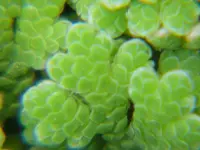
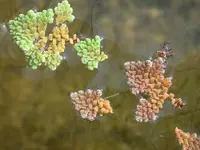
Water fern (Azolla filiculoides) is a tiny free-floating aquatic fern that forms dense, soft mats on still or slow-moving freshwater surfaces. Its overlapping, scale-like leaves often shift from green to red in strong light or cooler weather. Native to the Americas but now naturalized in many regions, it grows quickly and can cover ponds, canals, and water troughs. This species hosts nitrogen-fixing bacteria, which helps it thrive in nutrient-poor water and makes it valuable in natural ponds and water gardens. It prefers calm, shallow water, full sun to light shade, and does not need soil. Understanding how to care for water fern mainly involves managing its rapid spread and regular thinning.

Care Difficulty
Moderate Care

Light Preference
Full Sun

Water Requirements
Aquatic

Temperature Preference
Warm Climate

Hardiness Zone
7–11

Soil Texture
Silty, Peaty, Organic-rich

Soil pH
Acidic (5.5–6.5), Slightly acidic (6.5–7.0)

Soil Drainage
Waterlogged tolerant

Fertilization
Minimal (feed rarely)
Scan your plant to receive care tips personalized for your specific plant
Available on iOS and Android
This floating aquatic fern needs bright, gentle light to color up and grow dense mats.
This species is fully aquatic and depends on stable, clean, standing or very slow-moving water rather than soil moisture.
This floating fern prefers mild conditions and reacts quickly to temperature extremes in shallow water bodies.
This floating aquatic fern needs very high humidity and constant surface moisture to thrive.
This species grows directly on still or slow-moving water, so it does not use soil in the typical sense.
This species is suitable for shallow water containers rather than traditional pots with soil.
Azolla filiculoides usually needs little added fertilizer because its symbiotic cyanobacteria fix atmospheric nitrogen.
Pruning Azolla filiculoides is mainly about biomass control and keeping water surfaces usable and healthy.
This floating fern is not conventionally repotted; management focuses on moving or thinning colonies between water bodies.
Azolla filiculoides spreads rapidly by vegetative fragmentation rather than intentional propagation.
This water fern tolerates light frosts but may decline or die back in prolonged freezing conditions.

Plant Health Check
Not sure what's wrong with your plant? Check your plant's health inside the app.
This species hosts the cyanobacterium Nostoc azollae inside its leaf cavities, forming a stable symbiosis that allows the plant to fix atmospheric nitrogen and thrive in nutrient-poor water bodies.
It has been used for centuries in Asian rice paddies as a living green manure, where its rapid growth and nitrogen-fixing ability improve soil fertility and support higher rice yields when incorporated into the flooded fields.
The fronds often turn a striking red under high light and cool conditions, a color change linked to the accumulation of protective pigments such as anthocyanins that help shield its tissues from stress.
Azolla filiculoides experienced a massive global expansion in the Late Eocene, and large blooms of this fern are strongly associated with the Azolla Event in the Arctic Ocean, a phenomenon proposed by researchers as a contributor to long-term global cooling through large-scale carbon and nitrogen sequestration in sediments.
Yellow fronds usually indicate nutrient-poor water, especially low nitrogen or iron, or sudden changes in temperature or pH. Improve water quality, add a gentle aquatic fertilizer, and keep conditions stable to restore healthy green growth.
Keep your plants happy and healthy with plant identification, disease detection, and easy care guidance.