Rhizome positioning
Set the shallow, creeping rhizomes just below the substrate surface and angle them slightly downward on slopes so new fronds can emerge evenly and the plant anchors well in loose, sandy mixes.

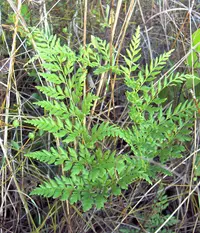
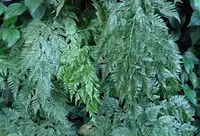
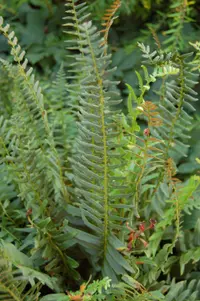
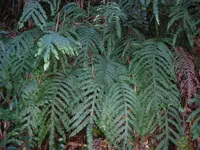
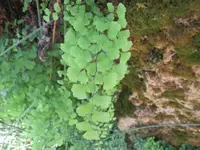
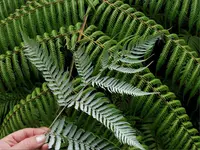
Pineland fern, Anemia adiantifolia, is a delicate terrestrial fern native to pine woodlands and scrub habitats in Florida, the Caribbean, and parts of Central and South America. It forms loose clumps of fine, divided fronds that give a soft, airy texture.
This species grows from a short rhizome and often appears among grasses or low shrubs, rather than in dense forest shade. It prefers bright filtered light, consistent moisture, and well-drained, slightly sandy soil. With stable humidity and protection from harsh sun and wind, it is moderately easy to care for pineland fern in suitable climates or controlled indoor conditions.

Care Difficulty
Moderate Care

Light Preference
Partial Shade

Water Requirements
Keep Soil Moist

Temperature Preference
Tropical / Frost Sensitive

Hardiness Zone
9–11

Soil Texture
Loamy, Sandy, Organic-rich

Soil pH
Acidic (5.5–6.5), Slightly acidic (6.5–7.0)

Soil Drainage
Moist but well-drained

Fertilization
Minimal (feed rarely)
Scan your plant to receive care tips personalized for your specific plant
Available on iOS and Android
This species prefers bright, filtered light that mimics open woodland or pine-rockland edges.
Anemia adiantifolia needs consistently moist but not waterlogged soil around its shallow roots.
This fern grows best in warm, frost-free conditions similar to its subtropical native habitats.
This fern prefers consistently moist air and reacts quickly to dry conditions.
This fern prefers loose, humus-rich soil that stays evenly moist but never stagnant.
This species adapts well to containers when moisture and root space are managed carefully.
Anemia adiantifolia benefits from light feeding but is sensitive to excess nutrients.
Pruning Anemia adiantifolia focuses on sanitation and maintaining a tidy clump.
Anemia adiantifolia prefers stable conditions and should be moved only when clearly necessary.
Anemia adiantifolia is most practically increased by careful division, with spore propagation more technical for home growers.
Anemia adiantifolia is suited to mild, frost-free or light-frost climates and needs some attention in colder regions.

Plant Health Check
Not sure what's wrong with your plant? Check your plant's health inside the app.
This species produces two distinct frond types on the same plant: broad, leafy sterile fronds for photosynthesis and much narrower, highly divided fertile fronds that carry the sporangia, a pattern known as frond dimorphism.
It naturally occurs in open, light-filled pine rocklands and pinelands of Florida, the Caribbean, and parts of tropical America, often growing in rocky, well-drained limestone soils rather than deep forest shade.
The plant has a slender, creeping rhizome (a horizontal underground stem) that allows it to resprout after dry or stressful periods, helping it persist in seasonally harsh pineland habitats.
In South Florida pine rocklands, this fern is considered an indicator species for relatively intact native habitat, since it tends to disappear quickly where fire regimes, canopy openness, or natural limestone substrate have been heavily altered.
Brown fronds usually result from low humidity, chronic underwatering, or hot, direct sun scorching the tissue. Salt or fertilizer buildup in the soil can also burn tips. Trim dead parts and correct the underlying moisture or light problem.
Keep your plants happy and healthy with plant identification, disease detection, and easy care guidance.