


Mulch Like Habitat
Apply a 3–5 cm layer of shredded leaves or fine bark around the rhizomes to mimic woodland leaf litter, keeping mulch a few cm away from the crown to prevent rot and frost heave.

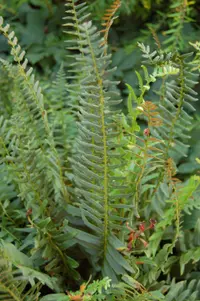
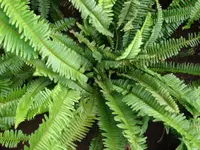
Christmas fern, Polystichum acrostichoides, is an evergreen woodland fern native to eastern North America. It forms dense clumps of arching, leathery fronds that stay green through winter in many climates.
This species typically grows on shaded forest floors, rocky slopes, and stream banks, where soils are rich in organic matter and drain well. Its tidy, non-spreading habit makes it suitable for shaded borders, naturalized areas, and understory plantings.
Christmas fern is generally considered easy to grow if given shade, consistent moisture, and humus-rich soil. Gardeners who learn how to care for Christmas fern usually find it a long-lived, low-maintenance groundcover.

Care Difficulty
Easy Care

Light Preference
Partial Shade

Water Requirements
Keep Soil Moist

Temperature Preference
Cold Hardy

Hardiness Zone
3–9

Soil Texture
Loamy, Silty, Organic-rich

Soil pH
Acidic (5.5–6.5), Slightly acidic (6.5–7.0)

Soil Drainage
Moist but well-drained

Fertilization
Minimal (feed rarely)
Scan your plant to receive care tips personalized for your specific plant
Available on iOS and Android
This fern prefers cool, shaded woodland-style light rather than direct sun exposure.
This fern prefers consistently moist but not saturated soil that mimics a woodland forest floor.
This hardy fern tolerates a wide temperature range but grows best in cool to mild conditions.
This fern prefers moderately moist air but usually adapts to typical home humidity if soil moisture is kept stable.
This species prefers consistently moist, humus-rich soil that drains freely yet never dries out completely.
This fern adapts well to container growing if moisture and stability are carefully managed.
This native woodland fern needs modest feeding, especially in containers or poor soils.
Pruning Polystichum acrostichoides is minimal and mainly for tidiness and plant health.
This fern is usually grown in the ground, with transplanting done only when clumps outgrow their space.
Polystichum acrostichoides is most commonly propagated by division rather than from spores.
This fern is cold-hardy in much of its native range and usually needs little winter care outdoors.

Plant Health Check
Not sure what's wrong with your plant? Check your plant's health inside the app.
Christmas fern keeps its fronds green through winter in much of its native range, providing rare evergreen cover on otherwise brown forest floors. The fronds typically lie flatter under snow and then stand more upright again in spring.
Dense clumps and fibrous roots help stabilize steep slopes and stream banks in eastern North American forests. It is often one of the first ferns to reestablish on disturbed, eroding woodland soils.
Evergreen fronds can reduce snow cover directly beneath the plant, creating small, slightly warmer microsites. This can influence where small animals forage and where some seeds or spores survive winter.

The common name Christmas fern comes from its historical use in eastern North America as a long-lasting green for Christmas decorations, since its leathery fronds remain fresh-looking when many other native plants have died back.
This species is evergreen in most climates where it is hardy. Fronds typically stay green through winter, though older fronds may lie flatter or look tattered by late season, then are replaced by new growth in spring.
Keep your plants happy and healthy with plant identification, disease detection, and easy care guidance.

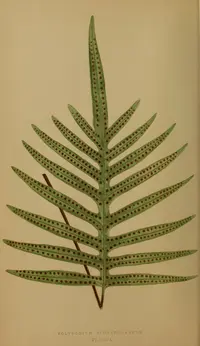
false golden polypody
Phlebodium pseudoaureum
 POPULAR
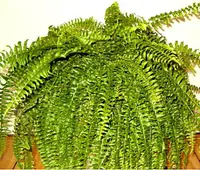
Southern Sword Fern
Nephrolepis exaltata
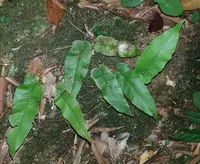
Thelypteris simplex
Thelypteris simplex
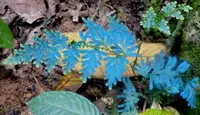
Peacock Fern
Selaginella willdenowii
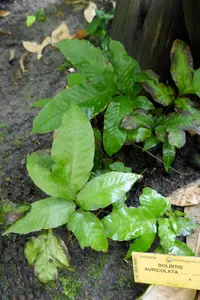
Bolbitis auriculata
Bolbitis auriculata
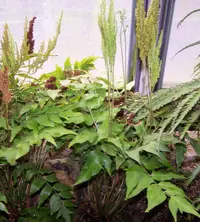
Mexican fern
Anemia mexicana
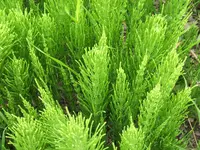
field horsetail
Equisetum arvense
Tuberous sword fern
Nephrolepis cordifolia