Bolbitis auriculata Care

Bolbitis auriculata

About Bolbitis auriculata

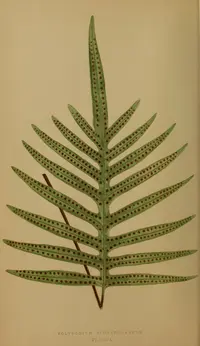
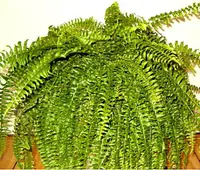
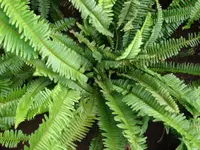
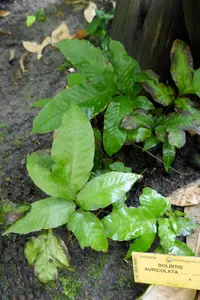
Bolbitis auriculata is a tropical fern known for its finely divided, glossy green fronds that create a soft, arching clump. It stays relatively compact, which makes it suitable for terrariums, paludariums, and shaded indoor displays.

This species naturally occurs in humid forests and along streams in parts of Asia, where it often grows on rocks or tree roots in constant moisture. It prefers stable moisture, high humidity, and gentle, filtered light, so it can be more demanding than common house ferns.

Because it dislikes drying out or harsh light changes, it is better suited to growers who can provide consistent conditions. Learning how to care for Bolbitis auriculata helps prevent frond damage and slow decline over time.

Main Plant Requirements

Care Difficulty

Moderate Care

Light Preference

Partial Shade

Water Requirements

Keep Soil Moist

Temperature Preference

Tropical / Frost Sensitive

Hardiness Zone

Unknown

Soil Texture

Loamy, Peaty, Organic-rich

Soil pH

Acidic (5.5–6.5)

Soil Drainage

Moist but well-drained

Fertilization

Light (every 4–6 weeks)

Get Personalized Care Plan

Scan your plant to receive care tips personalized for your specific plant

Available on iOS and Android

How to Care for the Bolbitis auriculata

This fern prefers soft, filtered light that mimics a shaded forest floor.

  • Provide bright shade or dappled light, such as under taller plants or 2–4 hours of gentle morning sun, avoiding direct midday and afternoon sun that can scorch fronds.
  • Tolerates deep to medium shade outdoors but grows denser with indirect light; too little light leads to sparse, elongated fronds and slow growth.
  • In summer, protect from strong sun with shade cloth or a north/east exposure; in winter, allow more indirect light if trees or structures cast heavy shade.

This species needs consistently moist conditions and does not tolerate drying out.

  • Keep the root zone evenly damp; the top 1–2 cm of soil or substrate should stay moist, not soggy, and never be allowed to dry completely.
  • Use humus-rich, well-drained soil or a loose, aquatic-style medium so water moves through freely, reducing the risk of root rot and yellowing fronds from stagnation.
  • In warm months, increase watering or misting when leaf edges crisp or fronds droop slightly; reduce frequency in cooler seasons while maintaining gentle, constant moisture.

This fern prefers mild, stable temperatures and reacts poorly to frost or extreme heat.

  • Aim for 65–80°F (18–27°C) for active growth; short exposures up to 85°F (29°C) are tolerated if humidity is high and the root zone stays moist.
  • Avoid temperatures below 55°F (13°C); prolonged exposure near 40–45°F (4–7°C) can cause frond damage, especially for Bolbitis auriculata in exposed garden sites.
  • Protect from cold drafts and rapid swings; in cooler seasons provide sheltered, frost-free spots, and in hot summers offer extra shade and moisture to prevent heat stress.

This fern needs consistently high humidity to maintain healthy fronds and steady growth.

  • Aim for 60–80% humidity; lower levels quickly dry the delicate fronds of Bolbitis auriculata.
  • Crisping tips, pale fronds, and slow unfolding of new leaves indicate humidity stress rather than underwatering.
  • Increase humidity with a nearby humidifier, grouped plants, and a pebble tray placed under but not touching the pot base.

This species prefers a loose, moisture-retentive yet airy mix that mimics a humus-rich forest floor or streambank edge.

  • Use an organic-rich, fine-textured mix such as 50–60% peat or coco coir with compost, 20–30% fine bark, and 10–20% perlite.
  • Ensure drainage is free-flowing so water does not pool; the mix should stay evenly damp but never waterlogged.
  • Aim for slightly acidic to neutral pH, roughly 5.5–7.0, which supports nutrient availability for Bolbitis auriculata.
  • Avoid heavy garden soil, high sand content, or compacted mixes, and refresh structure with extra bark or perlite if the medium compacts.

This fern is suitable for container growing, especially in shaded, humid locations.

  • Choose a wide, shallow container that allows surface rhizomes to spread without forcing them deep into the medium.
  • Select a heavier pot material such as ceramic to stabilize the container and reduce rapid moisture swings.
  • Raise the pot slightly on feet or spacers so drainage holes stay clear and excess water escapes quickly after watering.

This fern grows slowly and benefits from light, consistent feeding rather than heavy fertilization.

  • Use a balanced, diluted liquid fertilizer (around 10-10-10) at 1/4–1/2 strength suitable for ferns.
  • Apply every 4–6 weeks during the warm growing season, after watering so roots are moist.
  • Avoid compost or heavy slow-release pellets that can burn fine roots of Bolbitis auriculata.
  • Stop feeding in winter or dormancy, when growth pauses, to prevent weak, leggy fronds.

Pruning focuses on hygiene and maintaining an open, airy clump rather than reshaping this fern.

  • Best time to prune is during active growth in spring or early summer, when recovery is fastest.
  • Remove dead, yellowing, or damaged fronds at the base with clean, sharp scissors or pruners.
  • Thin out crowded inner fronds occasionally to improve air movement and reduce fungal problems.
  • Avoid cutting healthy fronds heavily, as this reduces photosynthesis and weakens the rhizome.

This fern prefers stable conditions and should be repotted or transplanted only when clearly root-bound or declining.

  • Look for roots circling the pot, pushing out of drainage holes, or noticeably slowed growth before repotting.
  • Plan repotting or transplanting in spring, about every 2–3 years, when new fronds are emerging.
  • Move into a slightly larger container with moisture-retentive, airy mix, handling rhizomes gently to limit stress.
  • Water thoroughly, keep humidity high, and shade from strong light for 1–2 weeks after disturbance.

Division is the most reliable method for increasing plants of this fern while preserving the parent’s traits.

  • Divide established clumps in spring, when new croziers are just emerging and conditions are mild.
  • Lift the plant carefully and separate the rhizome into sections, each with several fronds and healthy roots.
  • Plant divisions in a humus-rich, moist but well-drained mix, keeping rhizomes just at or slightly above the surface.
  • Maintain high humidity, steady warmth, and gentle shade until new frond growth confirms establishment.

This fern is frost sensitive and needs sheltered, mild conditions in winter, especially in container culture.

  • In regions with frost, grow Bolbitis auriculata in pots and move indoors or into a greenhouse before freezing nights.
  • Maintain indoor temperatures around 60–70°F and avoid cold drafts or heater blasts that dry fronds.
  • Keep soil slightly moist but reduce watering frequency as growth slows, never allowing complete dryness.
  • In very mild climates, grow outdoors in a shaded, wind-sheltered spot with thick organic mulch over the root zone.

Care Tips

Rhizome Mounting

Attach the rhizome to porous hardscape like lava rock, driftwood, or coarse bark with soft ties or cotton thread so water and air can reach all sides and the plant establishes a stable, long-lived clump.

Flow-Oriented Placement

Position the plant where it receives gentle, consistent water movement from a filter outflow or small circulation pump to keep fronds clean, discourage algae, and improve gas exchange without battering the foliage.

Cool-Root Management

In warm rooms, keep the root zone cooler by using unheated tanks, avoiding direct light on the container, and increasing surface agitation in aquaria to reduce heat buildup that can stress new fronds.

Frond Hygiene Check

During regular maintenance, gently fan or rinse fronds with tank or rainwater to dislodge fine debris and inspect for early signs of algae or fungal spotting so affected fronds can be trimmed before the issue spreads.

Slow Acclimation Routine

When changing tanks, water parameters, or moving between emersed and submersed setups, adjust conditions in small weekly steps to avoid shock, since gradual acclimation is key for growing Bolbitis auriculata successfully.

Common Pests and Diseases

Rhizoctonia leaf spot

This disease causes irregular brown to dark lesions on fronds, often starting where water sits on the leaf surface or along the midrib. Symptoms include expanding spots that can merge, leading to blighted frond sections in warm, humid conditions.

Solution

Remove and discard affected fronds, avoid overhead watering, and keep foliage dry where possible. Improve air movement around the plant, reduce crowding, and treat remaining fronds and substrate with a labeled fungicide containing azoxystrobin or chlorothalonil, following directions carefully.

Bacterial blight

Symptoms include water-soaked, translucent patches on pinnae that quickly turn brown or black and may have a greasy appearance. This problem often spreads rapidly in constantly wet, warm conditions and can move along the frond from the base outward.

Solution

Immediately remove and destroy infected fronds, sterilizing cutting tools between cuts with alcohol. Reduce leaf wetness by watering at the base, increase airflow, and avoid splashing water from plant to plant; if spread continues, discard heavily affected plants to protect nearby ferns.

Fern aphids

These insects cluster on young fronds and rachises, sucking sap and causing distorted, curled growth and sticky honeydew deposits. This pest is more common on tender new growth in shaded, protected positions.

Solution

Rinse colonies off fronds with a firm but gentle stream of water, repeating several times over a week. For persistent infestations, apply insecticidal soap or a light horticultural oil to all frond surfaces, ensuring good coverage, and avoid spraying during high heat or direct sun exposure.

Soft scale

These insects appear as small, dome-shaped bumps along frond midribs and on stipes, often accompanied by honeydew and sooty mold. This pest weakens plants over time, leading to yellowing fronds and reduced vigor.

Solution

Manually scrape or wipe scale from fronds with a cotton pad dipped in alcohol, then prune heavily infested fronds. Follow up with 2–3 applications of horticultural oil at 7–10 day intervals, ensuring thorough coverage of upper and lower frond surfaces and stems.

Interesting Facts

River rock specialist

This fern naturally grows attached to wet rocks and boulders along streams and waterfalls in tropical Southeast Asia, rather than in typical forest soil like many other ferns.

Ear-shaped pinnae bases

The specific epithet auriculata refers to the small ear-like lobes at the base of each leaflet segment, a feature that helps distinguish it from related Bolbitis species.

Dimorphic sterile and fertile fronds

Its fertile fronds, which bear spores, are narrower and more upright than the broader, more delicate sterile fronds, making the plant appear almost two-textured on the same rhizome.

FAQs about Bolbitis auriculata

This fern grows slowly to moderately, often adding only a few new fronds each year. Growth is faster in consistently warm, humid conditions with stable moisture. Patience is important when caring for Bolbitis auriculata indoors or in terrariums.

Grow Healthy Plants with Botan Care

Keep your plants happy and healthy with plant identification, disease detection, and easy care guidance.


Botan plant care app — identify plants on mobile

Explore More Plants