Rhizome positioning
When repotting, set the rhizome slightly above the soil surface and angled so new fronds can arch outward, which reduces crown rot and keeps the plant’s narrow fronds displayed cleanly.

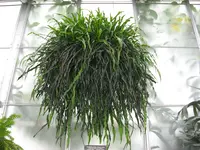
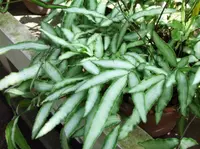
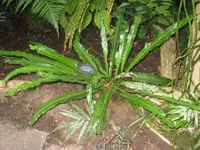
Narrow strapfern, Campyloneurum angustifolium, is an epiphytic fern often found growing on trees or rocks in warm, humid forests. It forms graceful clumps of long, narrow fronds that hang or arch elegantly.
This species occurs naturally in parts of Florida, the Caribbean, Central America, and northern South America, where it enjoys filtered light and consistent moisture. Its simple, strap-like fronds and relatively slow growth make it a neat, architectural foliage plant indoors.
Because it prefers steady humidity, gentle air movement, and a loose, airy substrate, it is moderately easy to manage once its needs are understood. Gardeners who want to learn how to care for narrow strapfern benefit from observing that it dislikes drying out completely or sitting in heavy, compacted soil.

Care Difficulty
Moderate Care

Light Preference
Partial Shade

Water Requirements
Keep Soil Moist

Temperature Preference
Tropical / Frost Sensitive

Hardiness Zone
10–11

Soil Texture
Loamy, Organic-rich

Soil pH
Acidic (5.5–6.5), Slightly acidic (6.5–7.0)

Soil Drainage
Moist but well-drained

Fertilization
Light (every 4–6 weeks)
Scan your plant to receive care tips personalized for your specific plant
Available on iOS and Android
This fern prefers bright, filtered light that mimics a forest understory.
Campyloneurum angustifolium prefers evenly moist conditions without staying soggy.
This species thrives in warm, stable temperatures similar to a humid subtropical forest.
This fern prefers consistently moist air and reacts quickly to very dry conditions.
This species prefers a loose, airy, organic-rich substrate that drains fast but does not dry out abruptly.
This fern adapts well to container culture when the pot supports its spreading, shallow-rooted habit.
Campyloneurum angustifolium benefits from light, consistent feeding during active growth but is sensitive to excess salts.
Pruning for Campyloneurum angustifolium focuses on hygiene and maintaining an open, graceful frond display.
This fern prefers a slightly snug pot and only needs repotting when growth or roots indicate crowding.
Propagation of Campyloneurum angustifolium is usually done by careful division of the rhizome rather than by spores at home.
Narrow strapfern prefers mild, frost-free conditions and needs protection in regions with cold winters.

Plant Health Check
Not sure what's wrong with your plant? Check your plant's health inside the app.
This species produces unusually narrow, strap-shaped fronds that often grow well over 60 cm long while remaining only a few centimeters wide, giving it a distinctive ribbon appearance compared with many broader-leaved ferns.
In its native tropical American habitats, it commonly grows as an epiphyte on tree trunks and branches, anchoring to bark rather than soil and absorbing moisture and nutrients from rain, leaf litter, and humid air.
The undersides of the fronds develop small, round sori arranged in irregular rows between the midrib and margins, a spore pattern that helps distinguish it from similar strap-leaved fern species.
Yellowing fronds usually point to chronic overwatering, poor drainage, or natural aging of older leaves. Check that the root zone is airy, not waterlogged, and remove only fully spent fronds, not healthy green tissue.
Keep your plants happy and healthy with plant identification, disease detection, and easy care guidance.