Mounting on Slabs
Attach the fern to cork bark or tree-fern slabs using soft ties and a thin layer of sphagnum moss to mimic its epiphytic habit and improve root aeration.

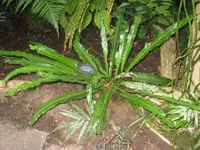
Long strapfern, Campyloneurum phyllitidis, is an epiphytic fern often found growing on tree trunks or rocks in warm, humid forests. It forms arching rosettes of long, narrow, leathery fronds that create a clean, architectural look.
In nature it occurs from Florida and the Caribbean through Central America to parts of South America. Its main appeal lies in its simple frond shape and moderate growth rate rather than showy flowers.
This species is considered moderately easy if its basic needs are met, which include steady moisture, good air movement, and a loose, well-drained substrate. Learning how to care for long strapfern mainly means avoiding waterlogging and very dry air.

Care Difficulty
Moderate Care

Light Preference
Partial Shade

Water Requirements
Keep Soil Moist

Temperature Preference
Tropical / Frost Sensitive

Hardiness Zone
10–11

Soil Texture
Loamy, Organic-rich

Soil pH
Acidic (5.5–6.5)

Soil Drainage
Moist but well-drained

Fertilization
Light (every 4–6 weeks)
Scan your plant to receive care tips personalized for your specific plant
Available on iOS and Android
This fern prefers bright, filtered light that mimics dappled forest shade.
This species needs steadily moist but not waterlogged conditions.
This fern grows best in warm, frost-free conditions similar to a tropical understory.
This fern prefers consistently moist air and reacts quickly to very dry conditions indoors.
This species grows best in loose, aerated, organic-rich media that never stay waterlogged.
This species adapts well to container culture when the pot supports its shallow, spreading root system.
Campyloneurum phyllitidis benefits from light, steady feeding during the warm growing season.
Pruning needs for Campyloneurum phyllitidis are light and mainly hygienic.
Campyloneurum phyllitidis prefers stable conditions and only needs repotting when clearly rootbound.
Propagation of Campyloneurum phyllitidis is usually done by careful rhizome division rather than spores for home growers.
This tropical fern is frost-sensitive and needs mild, frost-free conditions in winter.

Plant Health Check
Not sure what's wrong with your plant? Check your plant's health inside the app.
This fern often grows as an epiphyte on tree trunks and as a lithophyte on rocks in tropical forests, anchoring itself to bark or stone rather than rooting in deep soil.
Its long, narrow, leathery fronds can reach notable lengths while staying relatively narrow, which helps the plant shed excess water quickly in humid, rainy habitats.
This species occurs naturally in South Florida, the Caribbean, Mexico, Central America, and parts of northern South America, where it contributes to the epiphytic fern layer in warm, moist forests.
This species performs best outdoors in warm, humid, frost-free climates, especially in shaded, sheltered spots. Indoors it can do well if humidity is raised and air is gentle, making long strapfern indoor care slightly more demanding.
Keep your plants happy and healthy with plant identification, disease detection, and easy care guidance.