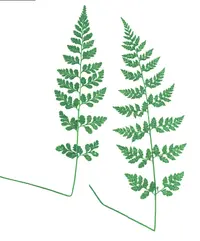
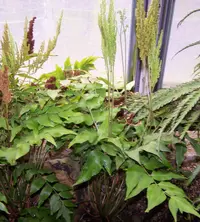
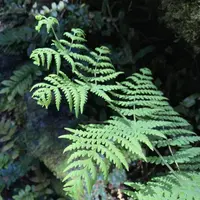
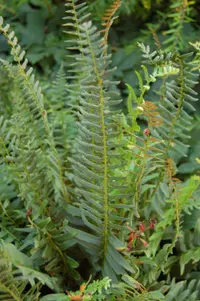
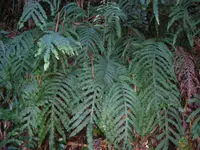
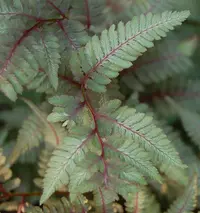
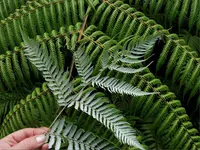
rare clubmoss Care (Lycopodium obscurum)

rare clubmoss

About rare clubmoss

Rare clubmoss (Lycopodium obscurum) is an evergreen, fern-like clubmoss that forms low, dense carpets of soft, needle-like foliage. It is not a true moss or fern but a primitive vascular plant. In nature, it grows on shaded forest floors, often in cool, humid, coniferous woods with acidic, well-drained soil. Its creeping stems and upright, branching shoots create a delicate, mini-forest look. This species can be slow to establish and dislikes disturbance, which makes it more challenging to transplant or divide. Stable moisture, consistent humidity, and gentle, filtered light are key if you want to care for rare clubmoss successfully.

Main Plant Requirements

Care Difficulty

Hard Care

Light Preference

Shade

Water Requirements

Keep Soil Moist

Temperature Preference

Cold Hardy

Hardiness Zone

3–7

Soil Texture

Loamy, Peaty, Organic-rich

Soil pH

Strongly acidic (4.5–5.5), Acidic (5.5–6.5)

Soil Drainage

Moist but well-drained

Fertilization

Minimal (feed rarely)

Get Personalized Care Plan

Scan your plant to receive care tips personalized for your specific plant

Available on iOS and Android

How to Care for the rare clubmoss

Lycopodium obscurum prefers cool, forest-like light that mimics its native woodland understory.

  • Provide bright, dappled shade or filtered light with 1–3 hours of soft morning sun and no direct midday or afternoon sun to prevent needle scorch.
  • Plant under deciduous trees or on the north or east side of structures so it receives indirect light most of the day, similar to rare clubmoss in mixed woods.
  • In summer, increase shade if fronds yellow or crisp from excess sun; if growth becomes sparse or leggy, move to a slightly brighter but still protected site.

This woodland species needs consistently moist but not saturated soil around its shallow roots.

  • Aim for soil that stays evenly damp; in the ground, water when the top 2–3 cm feel just starting to dry, usually more often in hot, windy weather.
  • Use loose, humus-rich soil with good drainage so water moves through yet organic matter holds moisture, reducing the risk of root rot.
  • In spring and summer, monitor closely and deepen watering during dry spells; in cool, wet seasons, cut back if foliage looks limp, blackened, or mossy, which suggests excess moisture.

This species thrives in cool to mild climates that mirror shaded coniferous or mixed forests.

  • Optimal growth occurs around 50–70°F (10–21°C), with strongest performance where summers stay relatively cool under tree cover.
  • Plants tolerate down to about 20°F (-6°C) with insulating snow or leaf litter but suffer damage in exposed, freeze–thaw conditions without protection.
  • Heat above 80°F (27°C), especially with full sun or low humidity, stresses plants, so increase shade and soil moisture during hot spells while avoiding waterlogged conditions.

This species needs consistently high humidity to mimic its cool, moist woodland habitat.

  • Aim for 60–80% humidity, as dry centrally heated rooms often stress rare clubmoss.
  • Crisping shoot tips, dull foliage, and slowed growth indicate air is too dry.
  • Use a cool-mist humidifier, grouped plants, and a wide pebble tray to raise local humidity around the plant.

This species prefers an airy, humus-rich, consistently moist but well-drained substrate.

  • Use a mix of roughly 40% fine pine bark, 30% peat or coco coir, and 30% perlite or coarse sand for Lycopodium obscurum.
  • Target a slightly acidic pH around 5.0–6.0, similar to conifer forest soils.
  • Ensure the mix feels springy, not compacted, so fine roots get both moisture and air.
  • Avoid heavy clay, unamended garden soil, and mixes that stay waterlogged or form a hard crust on top.

This species can be grown in containers if moisture and stability are carefully managed.

  • Choose a low, wide container to accommodate shallow, spreading stems and keep the plant from tipping.
  • Select a thicker-walled plastic or glazed pot to slow surface drying and buffer moisture swings.
  • Elevate the pot on feet or a stand so drainage holes stay clear and runoff leaves the container quickly.

This woodland species needs only modest feeding under cultivation, similar to other native plants.

  • Use a very dilute balanced liquid fertilizer (around 1/4 strength, such as 10-10-10) or weak fish emulsion for rare clubmoss in containers.
  • Apply once every 6–8 weeks during active growth in spring–summer if foliage looks pale or growth is poor.
  • Avoid fertilizing in fall–winter, when growth slows, to prevent root burn and weak, elongated shoots.
  • Always water the plant well before and after applying any fertilizer to reduce salt stress on the fine roots.

Lycopodium obscurum needs only light pruning to maintain shape and remove stressed tissue.

  • Best time is late winter to early spring, before new growth fully extends, or immediately after any damage occurs.
  • Use clean, sharp scissors to snip off dead, brown, or broken branch tips at their base without tearing tissue.
  • Thin out a few crowded, tangled stems to improve light and air flow through the mat-like foliage.
  • Avoid heavy cutting back, which can weaken shallow stems and slow recovery in this slow-growing species.

This species is usually grown in the ground, and transplanting must be done carefully due to its delicate, shallow roots.

  • Transplant in early spring or early fall, when temperatures are mild and soil stays evenly moist.
  • Move plants only when growth stalls, patches decline, or clumps clearly outgrow their space; many can remain undisturbed for years.
  • Lift a broad, deep soil slab to keep roots and underground stems intact, then replant at the same depth in acidic, well-drained soil.
  • Water thoroughly, shade from direct sun, and maintain consistent moisture for several weeks to reduce transplant shock.

Propagation of this clubmoss is slow and technically demanding, so it is rarely attempted by home growers.

This species is cold hardy in much of its native range and usually needs minimal winter care in the ground.

  • In colder areas, apply a light mulch of leaves or pine needles around the root zone after the ground cools but before deep freezes.
  • Avoid heavy, wet mulch directly on the foliage, which can cause rot during freeze–thaw cycles.
  • Container-grown plants in cold climates benefit from overwintering in a cool, frost-free, bright location with slightly moist soil.

Care Tips

Shade-mimicking placement

Position the plant under the dappled cover of taller foliage or use a slatted shelf or lattice to break up direct light and better mimic its natural woodland understory conditions.

Cool root management

Keep the root zone insulated with a loose layer of fine orchid bark or pine needles over the substrate so roots stay cool, evenly moist, and protected from rapid temperature swings.

Horizontal layering propagation

Gently pin down a healthy, flexible stem onto fresh moist substrate using a U-shaped wire or plant clip and leave it in place for several weeks until roots form, then separate the new section as an independent plant.

Moisture micro-zoning

Group this plant with other moisture-loving species on a shared tray of damp pebbles to create a slightly more humid micro-zone around the foliage without waterlogging the pot.

Seasonal rest adjustment

In late fall and winter slightly reduce handling, feeding, and any repotting work so the plant can maintain a mild rest period, which supports steadier growth and longer lifespan when caring for rare clubmoss.

Common Pests and Diseases

Scale insects

This pest attaches to stems and leaves, sucking sap and causing yellowing, stunting, and eventual decline of shoots. Symptoms include small, rounded, brown or tan bumps that feel hard and do not move when touched.

Solution

Prune and discard heavily infested stems, then gently wipe remaining shoots with a cotton pad dipped in diluted insecticidal soap or horticultural oil, taking care not to crush the fragile stems. Repeat treatments every 7–10 days while monitoring for new crawlers, and maintain higher humidity and stable moisture to reduce stress that favors outbreaks in Lycopodium obscurum care.

Spider mites

These insects are tiny sap feeders that thrive in dry, warm air and can cause fine speckling, dull foliage, and thinning of the needle-like leaves. Symptoms include very fine webbing deep in the foliage or at stem forks.

Solution

Increase humidity around the plant, then rinse foliage thoroughly under a gentle stream of lukewarm water, directing flow into the interior of the clump. Follow with applications of insecticidal soap or a light horticultural oil spray every 5–7 days, ensuring good coverage of the undersides of leaves while avoiding waterlogged soil conditions.

Rhizoctonia blight

This disease is caused by a soilborne fungus that leads to brown, sunken lesions at stem bases, followed by collapse of prostrate stems and patchy dieback in dense mats. Symptoms include irregular brown patches where stems and leaves turn limp and fail to recover even after watering.

Solution

Remove and discard all affected stems and adjacent soil, then thin dense clumps to improve air movement at the soil surface. Allow the surface medium to dry slightly between waterings, avoid overhead watering, and, if losses continue, repot small indoor specimens into fresh, well-drained, sterile mix and a clean container to interrupt the pathogen cycle.

Pythium damping-off

This disease primarily affects young plants and spores, causing blackened, water-soaked stem bases and sudden collapse of newly established segments. Symptoms include softened, mushy tissue at soil contact points and rapid loss of entire small sections in propagation trays or pots.

Solution

Dispose of severely affected plugs or trays and start new propagations in pasteurized, free-draining substrate with careful watering so the surface does not stay saturated. Use clean tools, avoid crowding, and provide moderate air circulation; for valuable collections, a biological fungicide containing beneficial microbes can help suppress Pythium during how to take care of rare clubmoss in intensive propagation setups.

Interesting Facts

North American endemic

This species is native to eastern North America, where it forms dense colonies in cool, acidic coniferous and mixed forests, especially under pines and hemlocks.

Distinctive upright shoots

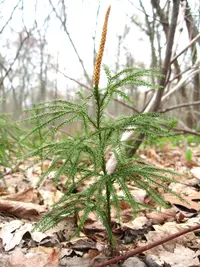
Unlike many clubmosses that creep flat along the ground, it produces tree-like, upright shoots that can reach 10–15 cm tall, with a separate system of creeping stems hidden in the moss and leaf litter.

Slow reproductive cycle

Its spore-bearing cones (strobili) develop on specialized upright stalks, and the spores can take several years to grow into the tiny gametophytes that eventually produce new sporophyte plants.

Botan icon

Did you know?

Historically, its dry spores were collected and used in early photography and stage pyrotechnics because they form a fine, highly flammable powder that produces a quick flash when ignited.

FAQs about rare clubmoss

This species stays low and creeping, usually under 10–20 cm tall, but individual upright shoots can be a bit taller. It spreads horizontally through trailing stems, forming dense mats rather than developing into a tall, vertical plant.

Grow Healthy Plants with Botan Care

Keep your plants happy and healthy with plant identification, disease detection, and easy care guidance.

Botan plant care app — identify plants on mobile

Explore More Plants