


Spring crown division
Every 3–4 years in early spring, lift and gently divide crowded clumps into sections with at least 3–5 healthy fronds and firm rhizomes, then replant at the same depth to maintain vigor and create more plants.

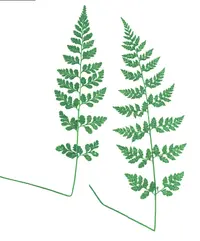
Lowland bladderfern, Cystopteris protrusa, is a small deciduous fern native to eastern North America. It typically grows in loose clumps on shaded forest floors and rocky slopes.
The fronds are delicate, light green, and finely divided, giving the plant a soft, airy look that contrasts well with bolder shade plants. It spreads slowly by short rhizomes, forming modest colonies rather than aggressive groundcover.
This fern prefers cool, moist, well-drained soil rich in leaf mold and does best in consistent shade or dappled light. Its moderate drought sensitivity and need for steady moisture are the main factors that influence how to care for lowland bladderfern.

Care Difficulty
Moderate Care

Light Preference
Partial Shade

Water Requirements
Keep Soil Moist

Temperature Preference
Cold Hardy

Hardiness Zone
3–8

Soil Texture
Loamy, Silty, Organic-rich

Soil pH
Acidic (5.5–6.5), Slightly acidic (6.5–7.0)

Soil Drainage
Moist but well-drained

Fertilization
Minimal (feed rarely)
Scan your plant to receive care tips personalized for your specific plant
Available on iOS and Android
This woodland fern prefers soft, indirect light that mimics a shaded forest floor.
This fern prefers consistently moist but not waterlogged soil.
This species is a cool-temperate fern adapted to seasonal outdoor conditions.
This fern prefers moderately moist air similar to a shaded woodland edge.
Soil should mimic a moist, humus-rich forest floor with consistent moisture yet no waterlogging.
This species adapts reasonably well to container growing when moisture is managed carefully.
Cystopteris protrusa is a woodland fern that needs only light feeding in containers or nutrient-poor garden soils.
Pruning for Cystopteris protrusa focuses on hygiene and maintaining a tidy clump rather than shaping.
This fern is more often grown in the ground, so care usually centers on gentle transplanting rather than frequent repotting.
Propagation of Cystopteris protrusa is most practical by division of established clumps.
This native lowland bladderfern is generally cold hardy and needs minimal winter care in most temperate climates.

Plant Health Check
Not sure what's wrong with your plant? Check your plant's health inside the app.
This species is among the first woodland ferns to unfurl in early spring, often taking advantage of higher light levels on the forest floor before tree canopies fully leaf out.
It commonly grows on thin soils over limestone or other calcareous rock in eastern North America, anchoring its roots into crevices where competition from larger plants is reduced.
Individual fronds are relatively short-lived, yet the plant maintains itself for many years through its fibrous rhizome, which slowly expands and produces new crowns over time.

The species name protrusa refers to the way its rhizome tip often sticks out, or protrudes, beyond the current season’s fronds, a distinctive feature that helps botanists separate it from closely related bladder ferns in the field.
This species spreads slowly to moderately by short rhizomes and spores. In garden beds it can form small colonies but rarely becomes problematic. It is usually easy to control by lifting unwanted crowns or edging planting areas.
Keep your plants happy and healthy with plant identification, disease detection, and easy care guidance.

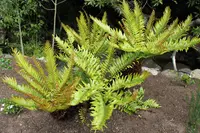
Mountain Deerfern
Blechnum tabulare
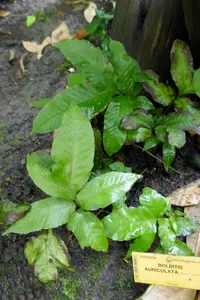
Bolbitis auriculata
Bolbitis auriculata
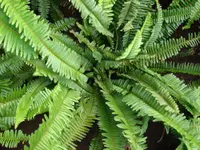
Tuberous sword fern
Nephrolepis cordifolia
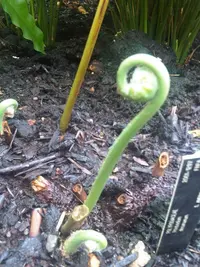
creeping golden polypody
Phlebodium decumanum
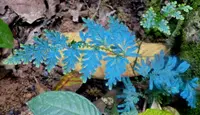
Peacock Fern
Selaginella willdenowii
 POPULAR
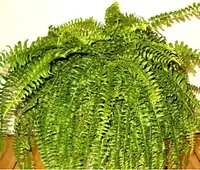
Southern Sword Fern
Nephrolepis exaltata
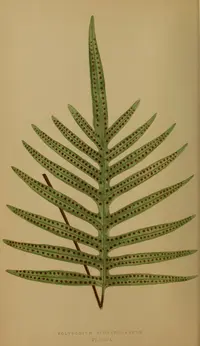
false golden polypody
Phlebodium pseudoaureum
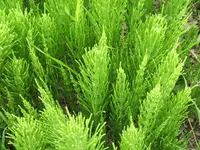
field horsetail
Equisetum arvense